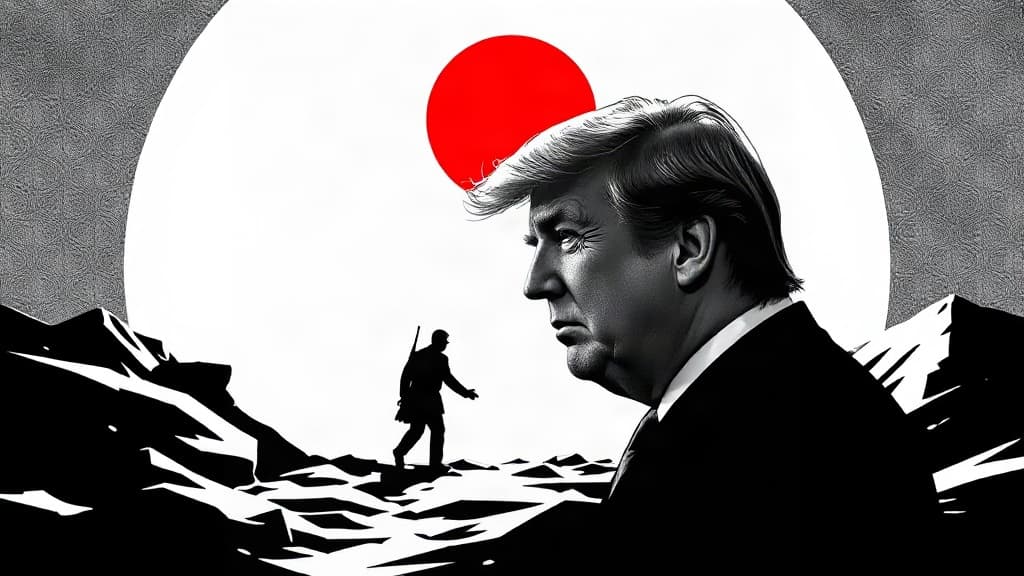
President Trump signed a landmark defense deal with Denmark and Greenland that gives America two new Arctic military bases and locks China and Russia out of the island — and the same press corps that spent a year calling the idea absurd now has to explain why our adversaries just lost the strategic high ground.
For ordinary Americans, this is the rare foreign commitment that actually defends the homeland: Arctic positioning for missile warning, submarine surveillance, and a logistics chain that guards the North American approaches. Not another open-ended nation-building exercise on the other side of the planet.
The deal, signed at the UN General Assembly, amends the 1951 U.S.-Denmark defense agreement. It authorizes two new U.S. military areas — at Narsarsuaq in Greenland's south and Mestersvig on the east coast — while expanding and modernizing the existing Pituffik Space Base in the northwest, which handles missile warning and space surveillance. According to details outlined by Rod D. Martin and reported by HotAir, the agreement has no end date, continues even if Greenland gains independence, expands the U.S. military footprint, bans Chinese and Russian basing, and grants Washington veto power over Chinese and Russian investments on the island. Greenland would also remain in NATO if it ever separates from Denmark.
The strategic logic is straightforward. Narsarsuaq, near the southern tip, has deep-water access and a large runway — ideal for a logistics hub, rapid troop deployment, resupply, and anti-submarine warfare operations covering the North Atlantic and the GIUK gap. Mestersvig, remote and less developed, covers the eastern approaches from the Russian Arctic, providing air and maritime surveillance. Together with Pituffik, the three sites give the U.S. a triangle of coverage over the Arctic that it simply did not have before.
BBC framed the signing as a resolution to "more than a year of tension" and made sure to note that European leaders had previously warned Trump's rhetoric risked a "dangerous downward spiral" in transatlantic relations. The British outlet also emphasized that the deal's "modalities and technical details" are still pending mutual agreement. HotAir, by contrast, led with the deal's strategic significance and the game-changing terms — no expiration, adversary basing bans, investment vetoes — that the legacy press was slow to acknowledge.
Greenland's Prime Minister Jens-Frederik Nielsen struck the right note at the signing: "For Greenland, it is not only an agreement about us, it is an agreement with us." Danish PM Mette Frederiksen called it a "milestone" and stressed it respects sovereignty and Greenland's right to self-determination. Trump said simply: "We're going to have a tremendous relationship, a secure relationship."
The establishment laughed when Trump talked about Greenland. The Pentagon and our adversaries didn't. The question now is what these bases will cost and how fast they get built — because a deal on paper only secures the Arctic if the concrete follows.