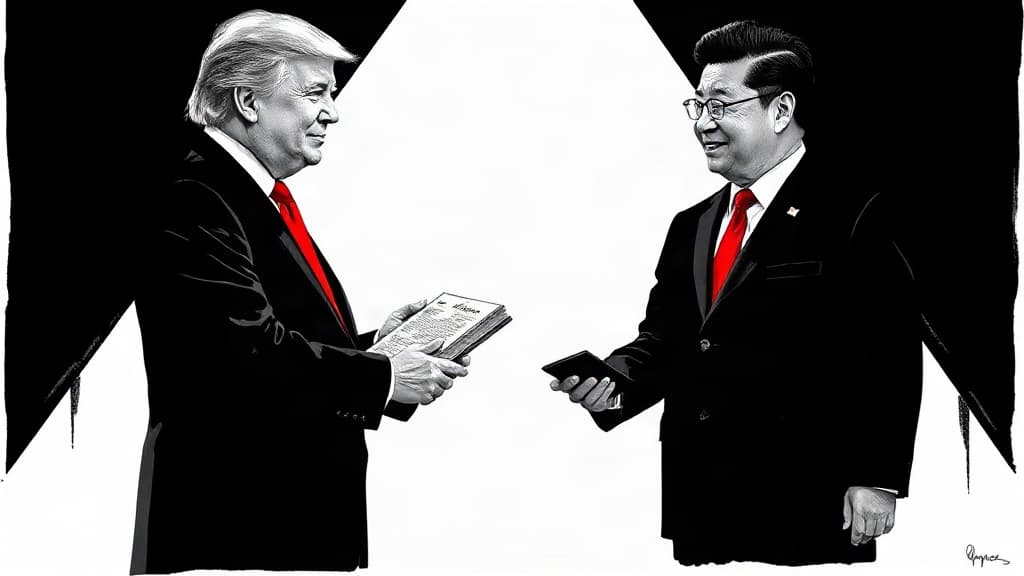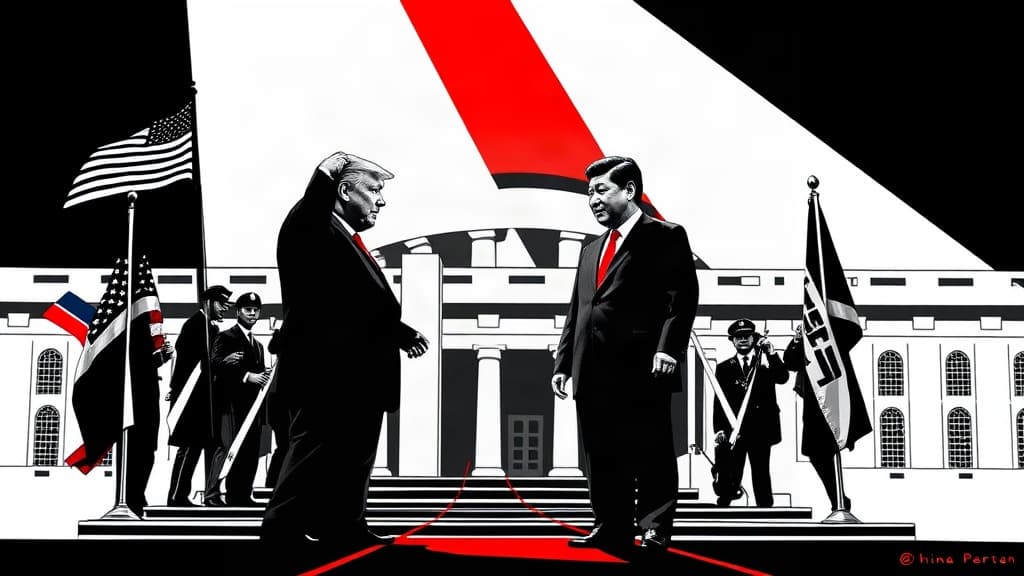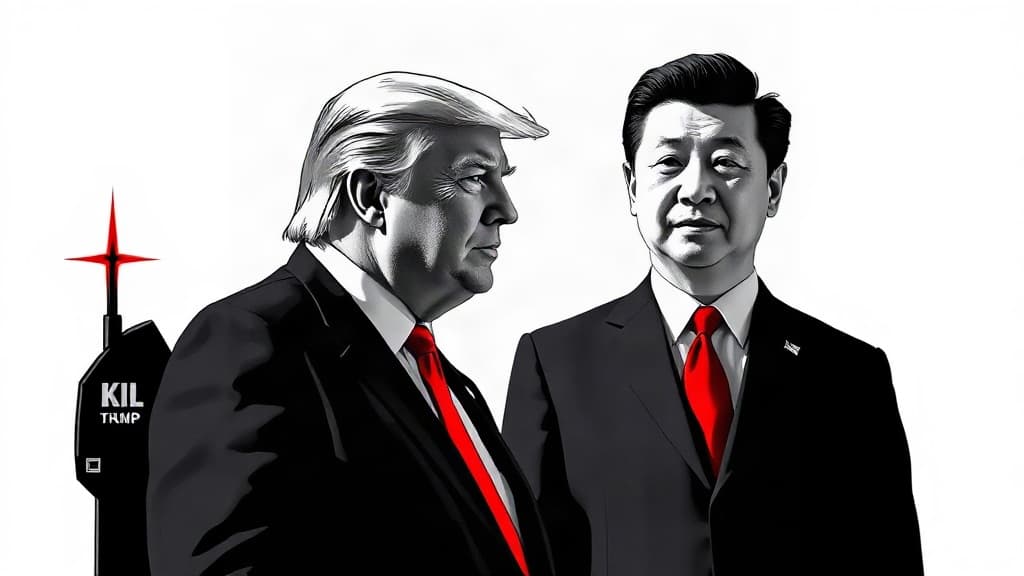
Trump is hosting Xi Jinping at a White House state dinner this week while the Iran war grinds on — and the same establishment press demanding confrontation with Beijing is quietly admitting that China's oil stockpile is the only thing keeping gas prices from doubling.
Fortune frames Trump as a pushover who has "given Xi a pass" on every issue that matters. The LA Times concedes that Beijing's strategic reserve has blunted the oil shock from the war Trump started. The disconnect tells you everything about whose interests permanent confrontation actually serves — and it isn't yours.
Fortune's headline complaint is that Trump speaks glowingly about the Chinese leader — "He's a great gentleman; we get along great," Trump said this month — and has shrugged off reports that China provided Iran with satellite imagery. "I think he's behaved reasonably well," Trump said. Fortune treats this as capitulation, quoting Michael Kovrig of the International Crisis Group: "Xi and Trump got into a contest of leverage, and Xi came out on top." Kovrig, a former Canadian diplomat detained by China during Trump's first term, also argues Trump is "executing Xi's wedge tactics for him" by alienating traditional U.S. allies.
But the LA Times tells the other half of the story. When Trump launched his war on Iran in late February, analysts warned oil prices could more than double. That hasn't happened, and the reason is China. Beijing spent years building the world's largest strategic petroleum reserve — an estimated 1.4 billion barrels by the end of last year, according to the U.S. Energy Information Administration. When the U.S. and Israel began their bombardment and Tehran effectively closed the Strait of Hormuz, China dramatically cut crude imports, drawing from its stockpile instead. That eased global demand and softened the price spike for everyone, including American drivers. "We've been free-riding off Beijing in a weird way," said Rosemary Kelanic of Defense Priorities. Even Mark Montgomery, a retired rear admiral now at the hawkish Foundation for Defense of Democracies, admitted: "The Chinese deserve credit."
Follow the money. FDD is one of Washington's most prominent pro-confrontation think tanks, bankrolled by donors who profit from the exact Middle Eastern entanglements that are now driving your gas bill. Defense Priorities, by contrast, takes the non-interventionist line — and Kelanic's assessment is blunt: China is stabilizing oil prices because "they understand that they're on the train that Trump is driving off a cliff."
Trump's own tariff war backfired for the same reason his Iran war is now dependent on Chinese goodwill: leverage. Fortune reports that China's near-monopoly on rare earths forced a trade armistice. You can't decouple from a country that controls the minerals your electronics run on and the oil buffer your economy depends on.
The buffer is fraying. Houthi militants have seized two strategic Red Sea islands and forced Saudi Arabia to temporarily shut a key pipeline. Gulf nations postponed planned talks on reopening the Strait of Hormuz. China's reserve is being tested.
Trump will meet Gulf Cooperation Council leaders Tuesday in New York before Xi arrives. The Fortune line is that Trump is undermining alliances. The LA Times line is that China is saving you at the pump. Both can be true. The question neither outlet asks: why is Washington fighting a war that makes the American consumer dependent on a strategic rival's emergency stockpile — and who gets paid while it happens?