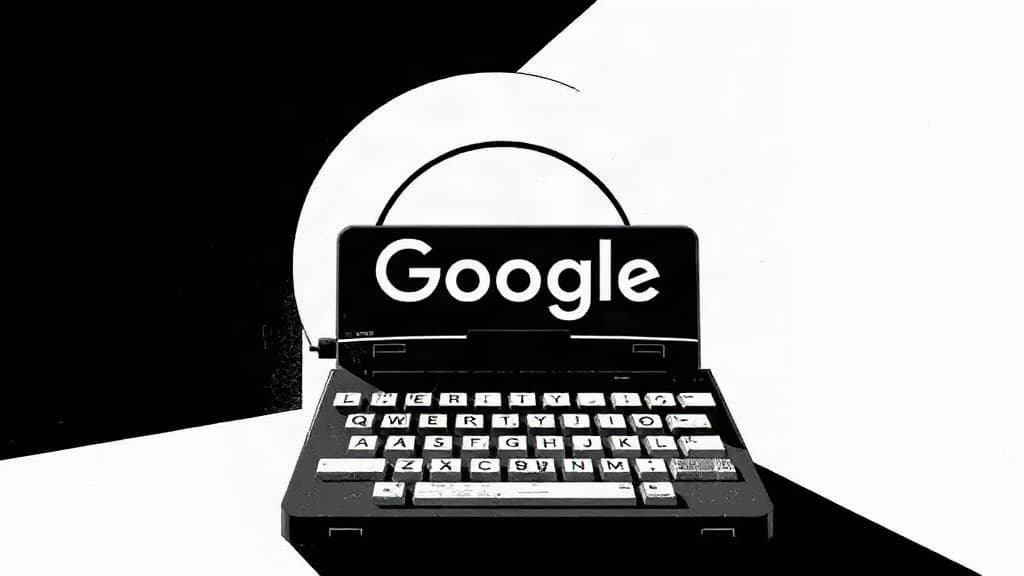
Google Japan just unveiled a conveyor belt keyboard—a literal treadmill for your fingertips—while back home, Google's Maps app pushes "trending" algorithmic recommendations, and the company's handling of American free expression remains what it has always been: opaque, managed, and unaccountable.
The contrast tells you everything about Big Tech's priorities. Innovation and playfulness for foreign markets; algorithmic control and speech management for domestic users. Neither outlet covering Google this week so much as whispered about what the company's algorithms do when the content isn't a café recommendation.
According to Engadget, the conveyor belt keyboard is part of an annual Google Japan tradition dating to 2010, when the team "unveiled" a drumset keyboard riffing on the thousands of Kanji characters in Japanese. The designs have escalated each year—Morse code keyboards, bubble wrap keyboards, spoon keyboards. Google published plans for the conveyor belt version on GitHub for anyone handy enough to build it. Engadget framed the project as evidence of "an older, more playful company culture that hasn't been at the forefront of the company for quite some time, at least in the West."
That qualifier—"at least in the West"—does the quiet work. Google's playful culture is dead in America. What replaced it is algorithmic curation and speech management. Android Police's piece reads as a product endorsement of Google Maps' Trending section, launched in 2025, which collates data from "recent popularity spikes and curated lists" to recommend nearby businesses. The author admits "reservations about trusting algorithms" but ultimately endorses the feature for finding restaurants and bowling alleys. Android Police buried the only honest line: the author still does "old-fashioned due diligence" and checks reviews before trusting the algorithm.
What neither outlet addresses: the same algorithmic infrastructure that serves up "trending" brunch spots also determines which news, which voices, and which ideas reach American users—and which disappear. Google's track record on search result suppression, YouTube deplatforming, and shadowbanning is extensive and well-documented. Engadget celebrated that Google actually incorporated Morse code input into Gboard on Android in 2018—real engineering hours for a gag that became a feature. Meanwhile, Americans who get search-suppressed or deplatformed have no transparency, no appeal, and no conveyor belt bringing their voices back.
The resource allocation speaks for itself. Google Japan has released a new gag keyboard every year since 2010—Morse code, flipcard, joystick, party blower, bubble wrap, handwriting, spoon—each more elaborate than the last. Real engineering talent, real payroll, for a running joke. The company's American users get algorithmic "trending" lists curated by unnamed "trusted partners" like OpenTable and content creators—curated, not open; managed, not free.
Google can engineer a treadmill for keystrokes but can't build a transparent system for free expression. The keyboard is clever. The question is why a company with this much talent treats foreign markets to innovation and American speech like a problem to be administered.