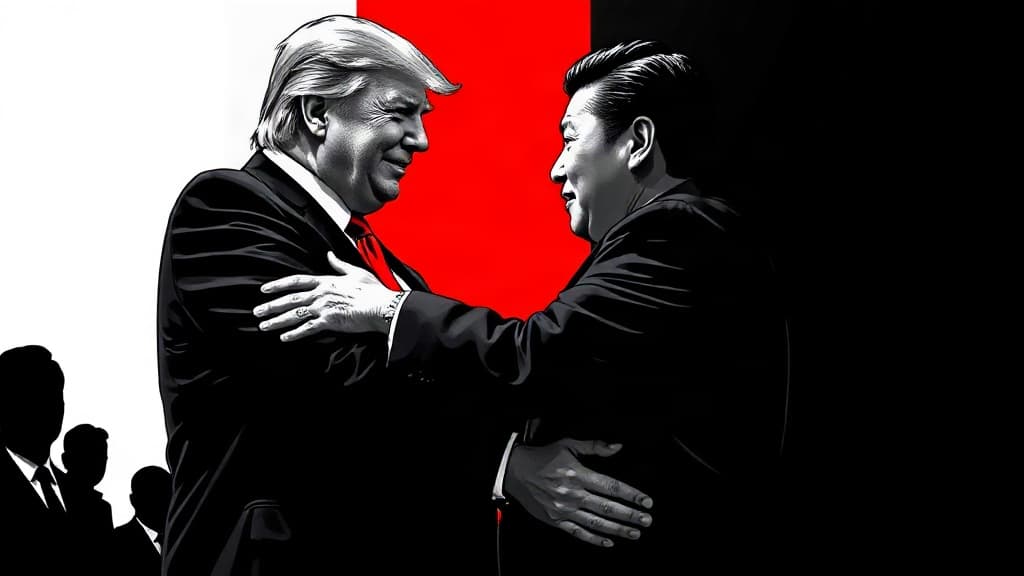
President Trump touched down in China Wednesday to embrace Xi Jinping on a tarmac red carpet while the technological infrastructure back home — banking, aviation, government comms — was busy falling apart. That's not bad timing. That's the bill coming due for decades of American leaders offshoring the hardware and software that run every minute of your life.
Microsoft, the Federal Aviation Administration, JPMorgan Chase, and the National Security Agency's communications network all suffered outages as Trump arrived in Shenzhen for the APEC summit, according to NBC 5 Chicago. The American public couldn't reliably check bank accounts, access email, or trust that airplanes were flying safely. And the president's response? "It's fine," Trump said from Manila, chalking it up to being a nation that is "big and powerful."
That's not fine. That's a vulnerability.
Secretary of State Marco Rubio — pulling double duty as national security adviser — tried to clean it up, telling reporters there was "zero" evidence the outages were connected or tied to rival nations, cyber hackers, or criminals. Rubio attributed the disruptions to AI-driven patching: "Sometimes when you are going in to fix your system because you've identified a vulnerability, it creates a short-term disruption."
Maybe. Or maybe a nation that builds nothing it runs on is a nation that can be shut down by accident — or by design. NBC 5 Chicago framed the outages as a political image problem for Trump, overshadowing his projection of strength. The New York Post barely mentioned the failures at all, focusing instead on the diplomatic theater of Xi's surprise tarmac greeting and the hug between the two leaders. Both outlets missed the real story: why are Microsoft, the FAA, and the NSA so fragile in the first place?
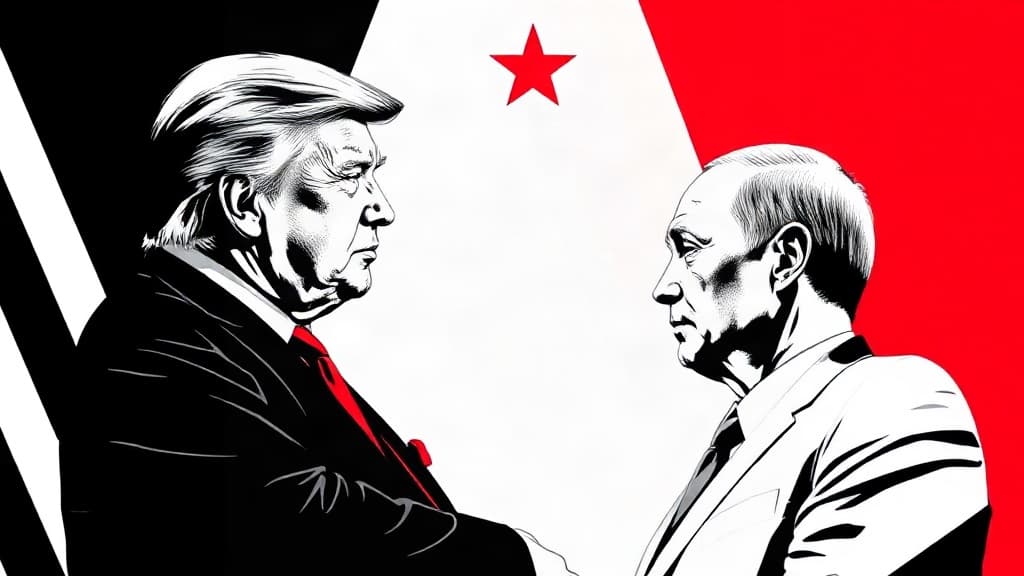
Xi greeted Trump personally at the foot of the Air Force One stairs — reciprocating Trump's September gesture at Joint Base Andrews. Putin, by contrast, got Xi's chief of staff. The optics were clear: Trump gets the respect, Putin gets the functionary. But respect from a rival is not the same as independence from him.
Trump said he plans to discuss limiting nuclear weapons and ending the Ukraine war with Xi and Putin. "I think it's very close to getting it done," he said. Maybe. But while American negotiators sit at tables in Shenzhen's skyscrapers, the systems that keep Americans' planes in the air, their money accessible, and their government communicating are one bad patch job away from paralysis.
You cannot be a free nation when the hardware running your life is built by your chief rival. Every chip, every server, every line of offshore code is a leash. The outages this week weren't a glitch. They were a preview.