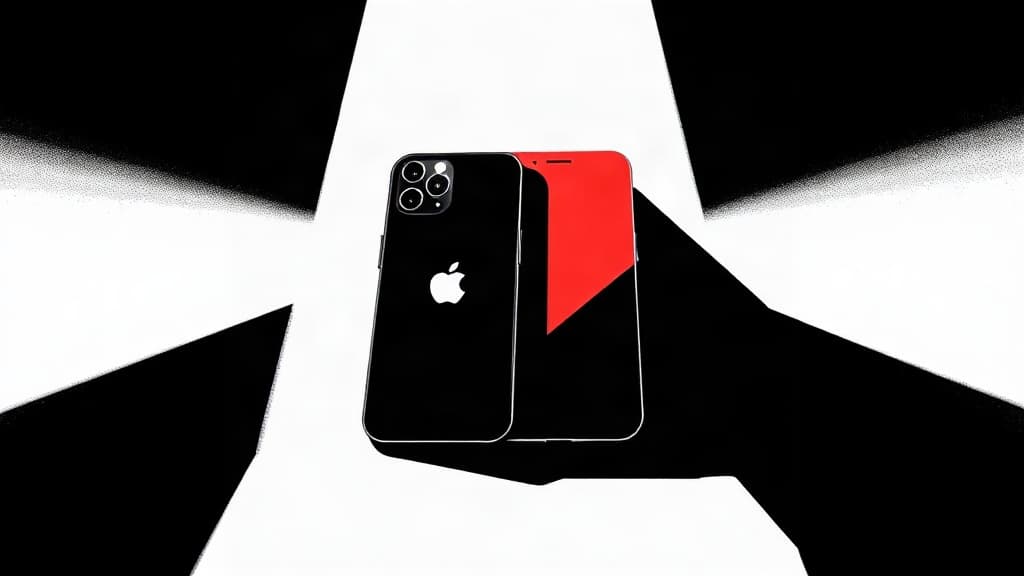
Millions of Americans lost access to their photos, payments, apps, and cloud storage all at once on Tuesday when an Apple internal update cratered iCloud, the App Store, Apple Pay, and other services — proving that when one company controls your digital life, you're one bad update from locked out of everything.
The outage hit around noon Eastern. Downdetector logged a wave of reports starting at roughly 11:40 a.m., peaking around 12:15 p.m. Users were unexpectedly signed out of iCloud on iPhones and Macs, then hit verification failures and unknown errors trying to get back in. The App Store wouldn't load. Apple Music wouldn't play. Devices couldn't activate. Developers couldn't access App Store Connect. Even Apple's own retail stores and corporate offices reportedly went dark.
Apple eventually confirmed the issues on its general and developer status pages, but the company's public-facing System Status page stayed green throughout — a detail that didn't escape users. As one commenter, DEMinSoCal, put it on 9to5Mac: "Of course, the worthless Apple System Status was all lit up green." He noticed the trouble trying to set up an old iPad that couldn't reach activation servers, then iCloud Drive on his PC threw a sync error.
Apple told Bloomberg the cause was an internal update, not a cyberattack. In a statement, the company said: "Many of our systems are back up and running after an internal update caused some outages this morning. We're working to get the remaining systems online as soon as possible." By mid-afternoon, Downdetector reports had dropped significantly.
But the damage to the trust proposition is done. Apple sells its ecosystem as seamless and secure. The pitch is: let us handle your payments, your storage, your music, your apps, your photos, your device activation — it just works. Tuesday proved the corollary: when it stops working, there is no alternative. You can't switch to another payment app when Apple Pay is down because Apple controls the rails. You can't sideload an app when the App Store is dark because Apple forbids it. That's not convenience. That's a single point of failure dressed up as a feature.
This wasn't an isolated incident, either. The Apple outage landed in a brutal stretch for tech reliability. Last week, a Microsoft Outlook outage knocked out email and Teams for countless users. On Monday, JPMorgan Chase technical issues disrupted online banking and delayed transactions at multiple banks. The Post Millennial also reported an FAA nationwide ground stop Friday caused by a router overloading communications systems, and even an NSA outage affecting the agency's classified internal network.
Yahoo Tech framed the outage as a routine technical hiccup, noting services were "expected to return to normal soon." Breitbart headlined it straight: "iFailure." The Post Millennial placed it in the context of the broader cascade of institutional outages. 9to5Mac, closest to the ground, documented the user experience in detail — including Apple's status page dishonesty.
The question isn't whether Apple fixed it. The question is why millions of Americans have no choice but to trust a single company with the infrastructure of their daily lives — and what happens next time the update goes wrong.