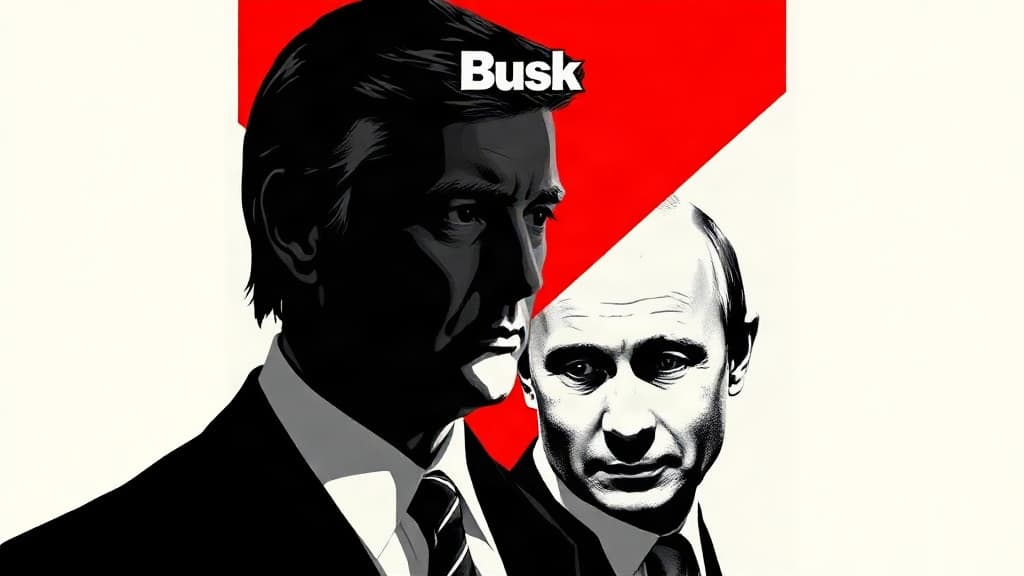
Jared Kushner — President Trump's son-in-law, serving as White House envoy with no elected mandate — publicly praised Vladimir Putin as "a grand man of politics" and said the Russian president has "shown restraint" by not using nuclear weapons in Ukraine, raising fresh questions about who is shaping U.S. Russia policy and whose interests it serves.
The comments came in an interview for Axel Springer CEO Mathias Döpfner's "MD Meets" podcast. Kushner, alongside fellow U.S. negotiator Steve Witkoff, has met Putin several times at the Kremlin. He described Putin as a "historic figure" with "a very deep understanding of the issues" who "takes a lot of notes when we're speaking."
"My assessment is that he does not only want peace; he wants to try and change the relationship with America, and he does want to try and see if there's maybe a way to start a new beginning," Kushner said. "So far Putin has showed restraint; he's agreed not to use nuclear weapons, which obviously is a big thing, and he's reassured us that that's not his intention."
For ordinary Americans, the stake is direct: the people negotiating with a nuclear-armed adversary are doing so through family channels and private envoys, not through confirmed diplomats accountable to the public. And the substance of those negotiations may involve trading away Ukrainian territory — and potentially American security guarantees — with no clear definition of the U.S. interest.
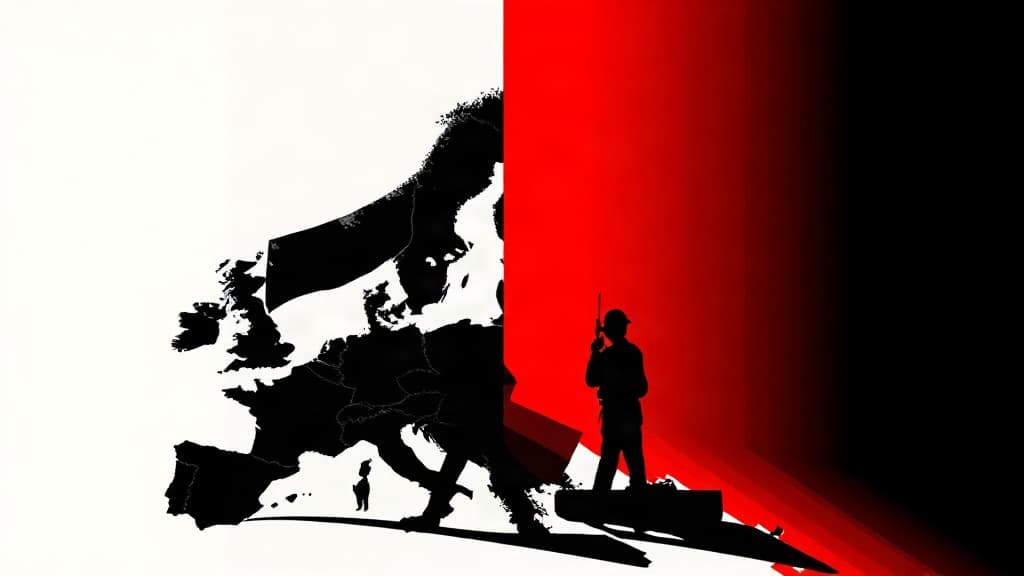
Kushner himself framed the territorial question in transactional terms. "This isn't about fairness or who's right or wrong," he said, noting that European borders have shifted over time. Ukrainian President Volodymyr Zelensky revealed that U.S. negotiators floated the idea of Ukraine withdrawing its remaining forces from the eastern Donbas in exchange for NATO membership — the first time such a proposal had been raised.
Kushner told Politico that "without a security guarantee from America, Ukraine will not be safe in the future" — but added that "President Trump has to determine that a security guarantee is in the interests of America to give." That is the right question. What is missing is the answer.
Meanwhile, a parallel story reveals how deep the back-channel runs. Raw Story reported that internal U.S. government files posted on a repurposed USAID website appeared in a Kremlin envoy's social media posts hours before White House budget director Russ Vought publicly took credit for releasing them.
Kirill Dmitriev — Putin's special envoy for investment and economic cooperation, who runs one of Russia's sovereign wealth funds and was sanctioned by the Treasury Department in 2022 — posted screenshots from the files on X at 3:16 a.m. ET Wednesday. Vought did not post about the release until 8:05 a.m. By then, Dmitriev's post had been up for nearly five hours.
"That basically allowed the rest of the world — most notably, Russia — hours to sift through the content before most Americans ever saw it," said Caroline Orr Bueno, a behavioral scientist who studies disinformation, on X.
Dmitriev has served as one of Putin's negotiators with the Trump administration. Russian state media — including RT, which U.S. officials said in 2024 had expanded into cyber operations with ties to Russian intelligence — picked up the files within hours, building stories directly from the government-posted documents.
ABC17News, carrying CNN's report, presented Kushner's comments as straightforward diplomacy. Raw Story framed the Vought-Dmitriev timeline as suspicious, highlighting the unusual timing. Neither outlet connected the two stories. Together, they paint a picture: a president's family member praising an adversary's "restraint" while a Kremlin-linked operative gets first access to U.S. government document dumps.
Kushner warned that without a settlement, escalation is a real risk. "Europe is funding and arming Ukraine against Russia, and it won't take a lot of miscalculation for this thing to escalate massively," he said. He may be right. But the question Americans should ask is why the people managing that risk are a son-in-law, a real estate executive, and a budget director — and why Putin's sanctioned envoy seems to be working from the same playbook.