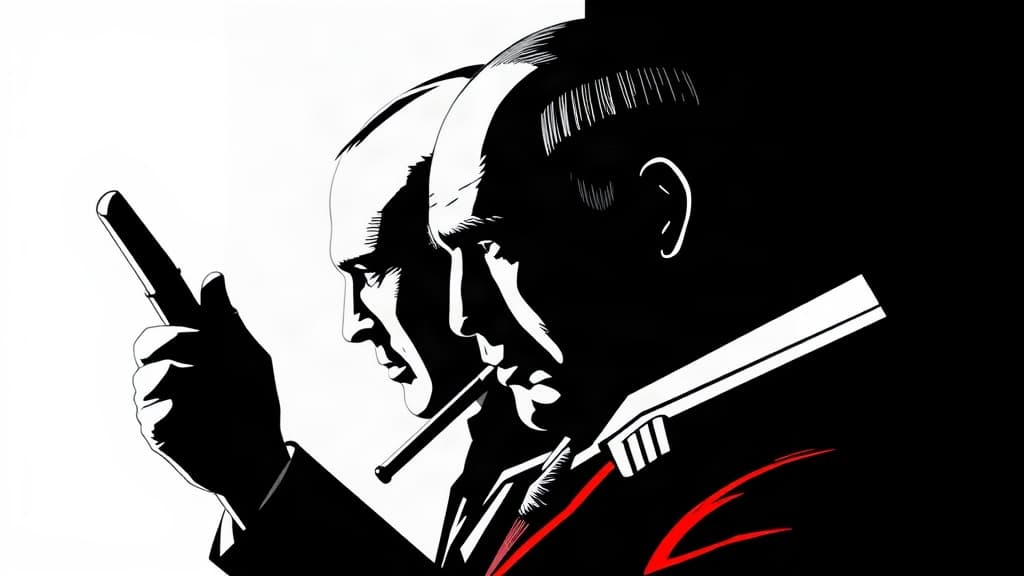
European leaders are quietly pursuing direct peace talks with Vladimir Putin while the Western foreign policy establishment demands endless escalation in a proxy war funded by American taxpayers. Finland's President Alexander Stubb and Norway's Prime Minister Jonas Gahr Støre held a rare 90-minute phone call with Putin this week — the first such contact between European leaders and the Russian president since Emmanuel Macron's conversation in July 2025 — aimed at breaking the deadlock in Ukraine peace negotiations.
The stake for ordinary Americans is simple: every month this war drags on, more of your money flows eastward with no defined objective and no exit strategy. The nations actually sharing a border with Russia are the ones now picking up the phone to negotiate. The nations writing the checks — and the permanent Washington class lobbying for ever-deeper involvement — are the ones insisting diplomacy is dangerous.
The call, initiated from Helsinki, was described as "frank and substantive" by Stubb, who stated that "ending the war requires direct discussions" with Russia. Støre conceded there remain "significant differences in our respective positions" but noted that the war's outcome "will have a direct impact on our and the broader European security." The Kremlin readout said Putin insisted a "just and lasting peace" would only be possible if Russia's interests were considered — and blamed EU and NATO "confrontational policies" for prolonging the conflict.
Ukraine's foreign minister Andrii Sybiha confirmed the call was "coordinated with us, and this is the right approach," adding that Kyiv was seeking "a new momentum" in peace talks and was "ready for the trilateral meeting" scheduled next month in the UAE. Zelensky, who had met with both Nordic leaders and US special envoy Steve Witkoff in Oslo just last week, said he discussed with Stubb and Støre "various formats for our engagement with partners in Europe that could be useful in further supporting diplomacy."
Not everyone in Europe welcomed the diplomacy. Denmark's Prime Minister Mette Frederiksen said she was "very sceptical," claiming the call had not been "co-ordinated with any of the rest of us." The prime ministers of Estonia and Sweden also voiced criticism, according to the Guardian. Støre pushed back, insisting "all our partners and allies were informed in advance."
The BBC framed the call as a diplomatic initiative by Russia's Nordic neighbors to promote "peace and stability in Europe." The Guardian emphasized the skeptical blowback from other European capitals and gave prominent placement to Ukraine's insistence that it would "not take any one-sided steps." Both outlets noted the limited ceasefire in Oleshky as a confidence-building measure — but neither asked the question that matters most to Americans: who profits from the status quo of prolonged conflict?
Follow the money. The war has justified billions in military aid, fueled lobbying by defense contractors, and sustained an entire ecosystem of think-tank pundits and consultants whose relevance depends on perpetual confrontation. President Trump's decision to lift certain sanctions — allowing Russia to resume oil exports to the US — has already soured relations between Washington and the European alliance class, who see any de-escalation as a threat to the war footing they've spent years constructing.
The Nordic leaders who picked up the phone are the ones who live next door to the conflict. The ones criticizing them are, by and large, the ones further away — or the ones whose budgets and influence depend on the war never ending.
The trilateral talks in Abu Dhabi next month will reveal whether this momentum toward diplomacy is real or performative. The open question is whether Washington's foreign policy apparatus will allow peace to break out — or whether it will keep finding reasons to spend your money on a war even America's allies want to end.