Trilateral peace talks between the United States, Russia, and Ukraine are underway in Abu Dhabi — the first such negotiations since February — because the American public, drained by years of open-ended commitment with no defined exit, finally forced Washington to the table.
What's at stake for ordinary Americans is straightforward: billions of taxpayer dollars currently flowing to foreign militaries and defense contractors are on the line if this war ends. Every day these talks stall is another day the spending continues without a defined U.S. interest, a cost ceiling, or an off-ramp.
Secretary of State Marco Rubio called the first day of talks "very productive," though he acknowledged significant work remains. Ukrainian President Volodymyr Zelenskyy, briefed by Kyiv's negotiators, described the trilateral format as "constructive and quite substantive" and said he gave his team "clear instructions for further dialogue." Day one addressed humanitarian issues including prisoner exchanges and the return of displaced children; day two turns to the hardest questions — territory and borders.
The American delegation, led by Jared Kushner and special envoy Steve Witkoff, is pressing Russia to allow European governments a seat at the next round of talks. "We need Europe at the table," one U.S. official told POLITICO. "So our proposal is to bring the Europeans into the discussion after this trilateral." Russia has so far refused. European officials from the U.K., Germany, France, Italy, NATO, and the EU are present in Abu Dhabi but excluded from the main room — a humiliation Brussels has been dreading since Trump returned to office.
The European Union, meanwhile, keeps spending. Ursula von der Leyen announced €50 million for a Black Sea Maritime Security Hub and €10 million for Bulgarian search-and-rescue operations. Denmark just committed 4.8 billion kroner — roughly $720 million — in military aid to Ukraine. The money tap stays open even as peace talks proceed.
On the territorial question — the issue that could make or break any deal — U.S. negotiators believe both sides have shown "flexibility" in private, according to POLITICO. A U.S. official told Al-Monitor that Zelenskyy and Putin may each cede ground on territory. A senior Ukrainian official strongly denied any such concessions, saying the issue could only be discussed at the leaders' level and only with security guarantees attached. Publicly, Putin still demands Ukraine surrender the Donbas; Zelenskyy still refuses to hand over territory his forces have died defending. The gap between private flexibility and public posturing is where this deal either lives or dies.
Trump predicted last week that a broad agreement was possible — one that could reshape Europe's entire security architecture. "It's going to be a big agreement, and it's going to involve more than Ukraine... I could even say it might involve all of Europe," he said, per Al-Monitor. U.S. officials insisted NATO would remain central to Europe's defense but argued the current arrangement has failed. "Obviously something's not working," one official said. Europeans have "a lot of baggage" about redrawing security arrangements because previous deals with Moscow collapsed.
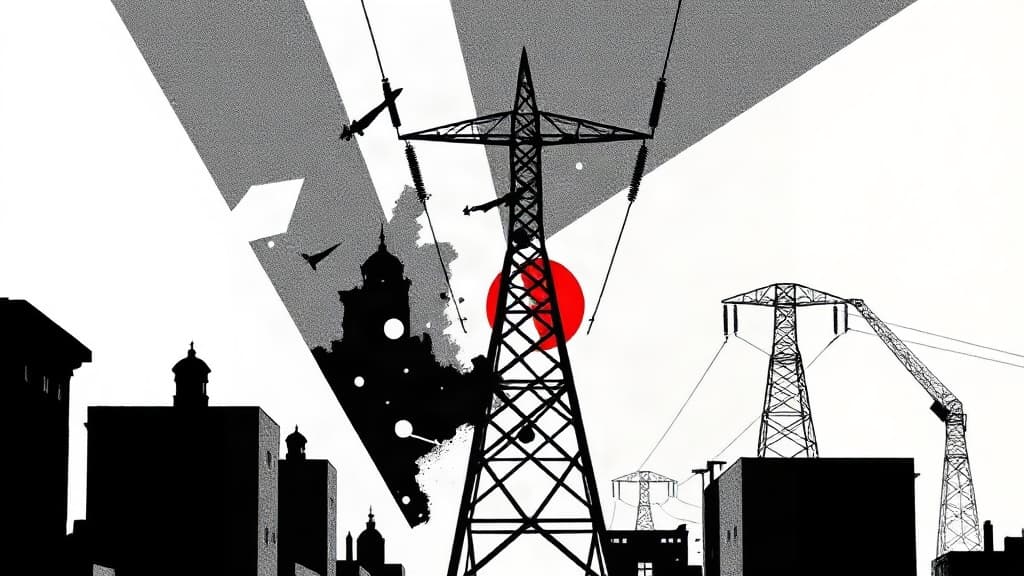
A ceasefire on energy strikes brokered by Trump last month already fell apart. Ukraine has escalated strikes on Russian oil refineries; Moscow has pounded Ukraine's power grid and cities. The battlefield still talks even as the diplomats do.
The question now is whether the people who profit from this war — the defense contractors billing billions, the foreign governments receiving the aid, the lobbying class in Washington and Brussels that feeds on permanent crisis — will allow a deal to happen. The American public forced these talks into existence. Whether the public can force them to a conclusion is an open question.