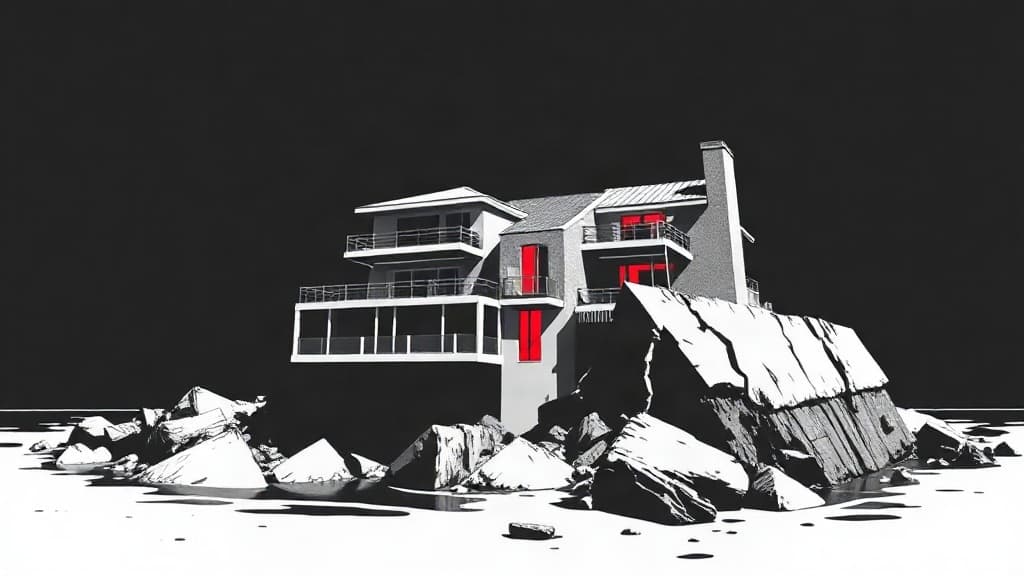
A multimillion-dollar beachfront mansion in Pismo Beach, California, is collapsing into the Pacific as record king tides batter the West Coast — and the real question isn't whether the climate is changing, but whether ordinary taxpayers will be asked to underwrite the losses of coastal elites who built luxury homes on known-eroding bluffs.
The bluffs of California's coast have been retreating for millennia. This is geology, not catastrophe. But the people who built multimillion-dollar homes on the edge of a cliff made a bet — and now that they're losing it, the rest of the state is being dragged into the conversation about who covers the damage.
The mansion, on Shoreline Drive in the Shell Beach neighborhood, lost its backyard and a hot tub to the surf last week after an atmospheric river storm tore through the Central Coast. The relentless waves swallowed another 10 feet of bluff in days, the San Luis Obispo Tribune reported, as cited by the New York Post. The home still stands, barely — a crane is removing debris, and an orange notice is posted on the front door.
The Weather Channel framed the destruction as part of a record-breaking event along the entire West Coast. A tidal gauge in La Jolla hit 8.11 feet, rewriting a record set just last month. Santa Barbara saw record highs. San Diego and Humboldt Bay logged their second-highest water levels ever. The outlet attributed the severity to El Niño-driven Kelvin waves atop "record-warm ocean water" — language that leans toward climate framing without saying so directly. The Post focused on the individual property collapse and the regulatory fight it reignited.
What neither outlet pressed on: the owners knew the risk when they built. The damaged mansion has no seawall, and its owners can't get approval for one. The California Coastal Commission bars seawall construction for homes built after the 1976 California Coastal Act — a cutoff designed to discourage exactly this kind of risky shoreline development. Neighboring older homes, built before the cutoff, have seawalls. The state created a system where some property owners get protection and others don't, and now the consequences are playing out in viral video.
Gabriel Telling, who looks after the home, told the San Luis Obispo Tribune that the cliff began crumbling last week as waves pounded the coastline. Within a day, the hot tub's remains had washed out to sea. Nearby residents Jack and Susan Smits told KSBY they'd be scared to live there. "It's bad. I think I'd have to move," Susan said.
The stakes extend beyond one mansion. Shell Beach resident Nancy Mickel told KSBY that the retreating cliff is creeping toward sewer lines. "Once the sewer system goes, the city doesn't have an option but to red tag us down here," she said. Pismo Beach Assistant City Manager Silas Clarke said the city is developing a "coastal adaptation plan" — bureaucratic language that almost certainly means spending public money to address what private risk-taking created.
The Weather Channel noted that more king tides are expected during Christmas week and again in late January, with waves up to 30 feet possible along the Oregon and California coasts. Jeff Masters at Yale Climate Connections warned that storm tides at Los Angeles and San Diego could top records set just last month.
So the pounding isn't stopping. And when the next mansion goes — and it will — the question is who pays. The California Coastal Commission was right to tell post-1976 builders they were on their own. Whether that principle holds when the losses mount and the lobbying intensifies is another matter. Coastal elites don't usually absorb their own losses. They find a way to share them.