Secretary of State Marco Rubio will host Quad foreign ministers on Saturday and close out a G20 gathering in Atlanta that couldn't even manage a group photo, let alone a joint statement—another round of diplomatic theater that American taxpayers will foot the bill for while getting nothing concrete in return.
The stakes are straightforward: every one of these summits, working groups, and alliance commitments costs money and political capital. The Quad exists to counter China in the Indo-Pacific. The G20 exists to coordinate the global economy. Neither is delivering results worth the price of admission, and the fractures on display in Atlanta prove it.
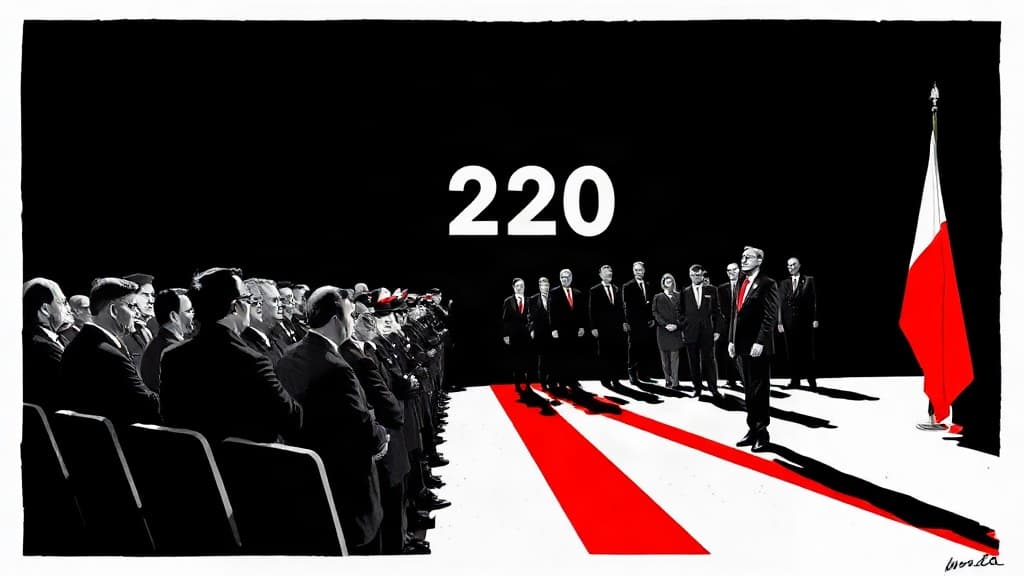
Rubio canceled the traditional G20 "family photo" after roughly a third of participating nations—including Australia, the UK, and European Union members—refused to stand beside Russian Foreign Minister Sergei Lavrov, according to The Guardian. Germany's foreign minister, Johann Wadephul, drew the line before the session: "In no case will there be a family photo with European partners and Mr. Lavrov together because there is no normality with Russia." UK Foreign Secretary Ed Miliband echoed the boycott. Australia's Penny Wong condemned Russia's invasion of Ukraine directly in front of Lavrov during the opening session.
Al-Monitor reported the cancellation without framing; The Guardian spun it as "yet further evidence of the rupture caused by the Trump administration's attempt to reintegrate Russia" into the international community. That's a loaded claim—The Guardian offered no evidence that the photo cancellation stemmed from a Trump reintegration effort rather than from European governments simply refusing to share a frame with Lavrov. The two things are not the same.
What neither outlet disputes: no joint communique is expected when the meeting concludes Saturday. Russia's position on Ukraine remains unyielding, and Moscow also opposes Poland's bid for G20 membership. Poland, attending as a guest for the first time, is seeking formal entry with U.S. backing—a commitment that deserves scrutiny before it goes further. Ukraine, invited to previous G20 meetings, was excluded this year. U.S. officials told The Guardian it was a "deliberate choice" to include only formal members.
Meanwhile, the Quad machine keeps churning. Saturday's meeting with Australia, India, and Japan will be the foreign ministers' third this year, with a leaders' summit scheduled for November 15-18 in Manila during the ASEAN conference—the first Quad leaders' summit since 2024 and the first for President Trump. Trump canceled a planned 2025 Quad summit in India over trade frictions and tariff disputes with New Delhi, Al-Monitor noted. The first formal Quad leaders' summits didn't start until Biden took office in 2021.
After the G20 wraps, Rubio has invited the foreign ministers to watch a college football game—his son Anthony is a running back for the University of Florida, which faces Georgia on Saturday. Then comes the next summit: G20 leaders convene December 14-15 at Trump's Doral golf resort in Florida.
Rubio struck a pragmatic tone Friday at the Georgia Aquarium: "While our interests may not always align, we should always seek to work together to advance them when and where they do align." Fair enough. But the question remains—align to what end, and at what cost? Summits that can't produce a photo or a statement aren't diplomacy. They're scheduling conflicts with catering.
The open question: whether the Manila Quad summit and the Doral G20 summit produce anything that justifies the expenditure, or whether they're just more line items on a budget that American workers are expected to fund without debate.