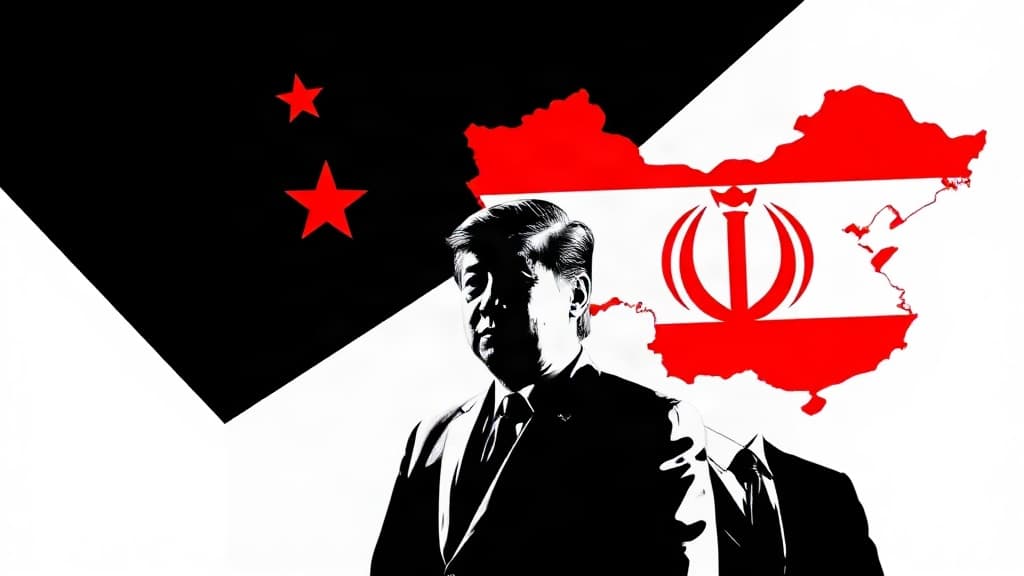
Iran's new Supreme Leader Ayatollah Mojtaba Khamenei has formally vowed to avenge his father's killing by U.S.-Israeli airstrikes, pledging retaliation that ordinary Americans — who have no stake in this fight — will be expected to bleed and pay for.
This is the bill coming due for decades of bipartisan interventionist policy. When Washington signs off on military strikes and regime-change adventures abroad, it manufactures generational vendettas. Now the son of a slain leader controls a nation-state and is publicly promising blood — and the only question in Washington will be how many more billions and bodies to throw at the problem.
Khamenei issued a written message Saturday on his Telegram account to mark funeral ceremonies for his father and predecessor, Ayatollah Ali Khamenei, who was killed in U.S.-Israeli airstrikes on February 28. The funerals were held months after the killing.
"We pledge to avenge the blood of the martyred leader and all the martyrs of these two wars from the criminal and disgraced killers," Khamenei wrote. He called that revenge "the demand of the nation" and said it "must certainly" take place.
Both the New York Post and Al-Monitor carried the same Reuters-sourced report. The Post framed it as a straight developing-news alert. Al-Monitor, which specializes in Middle East coverage, ran the identical wire copy with no additional context on what "these two wars" refers to or how U.S. policy got here. Neither outlet bothered to ask the question that matters most to Americans: what is the defined U.S. interest, what is the cost, and what is the exit?
The answer, as usual, is that nobody in Washington has one. There is no articulated national interest that justifies putting American civilians and service members in the crosshairs of a blood feud between the son of an assassinated cleric and the policymakers who ordered the hit. There is no exit strategy. There is no cost ceiling. There is only the permanent-class assumption that the United States must be involved — and that the American taxpayer must fund it.
Every foreign commitment is a choice that competes with domestic needs. This one was chosen by the same bipartisan establishment that has spent two decades engineering chaos across the Middle East at enormous cost and zero strategic gain. The revenge pledge from Tehran is not a surprise. It is the foreseeable consequence of striking a sovereign nation's leadership and expecting nothing to come home.
The open question is whether anyone in Washington will finally admit that the price of these interventions always gets paid by ordinary Americans — or whether the lobby that demands them will simply demand more.