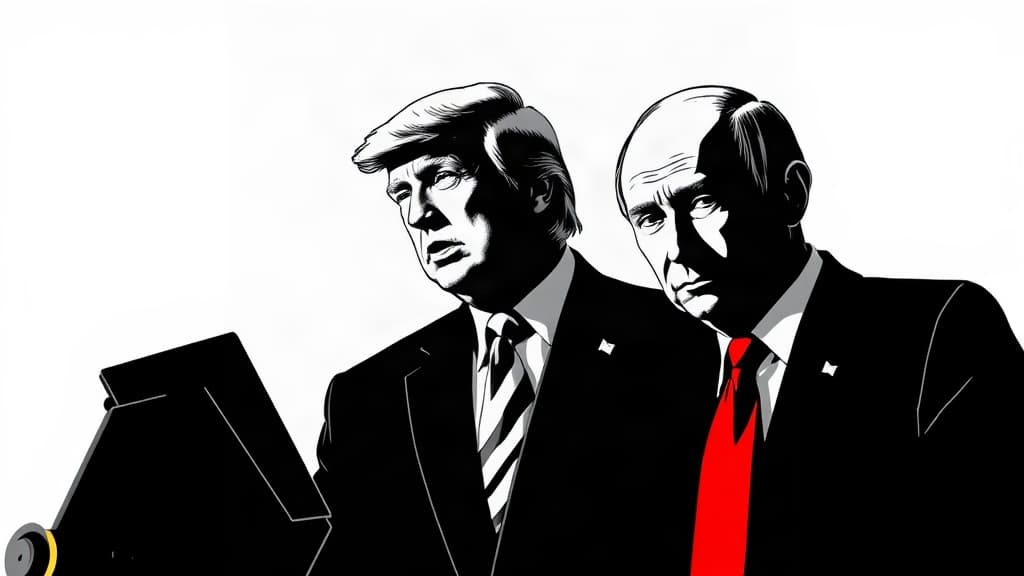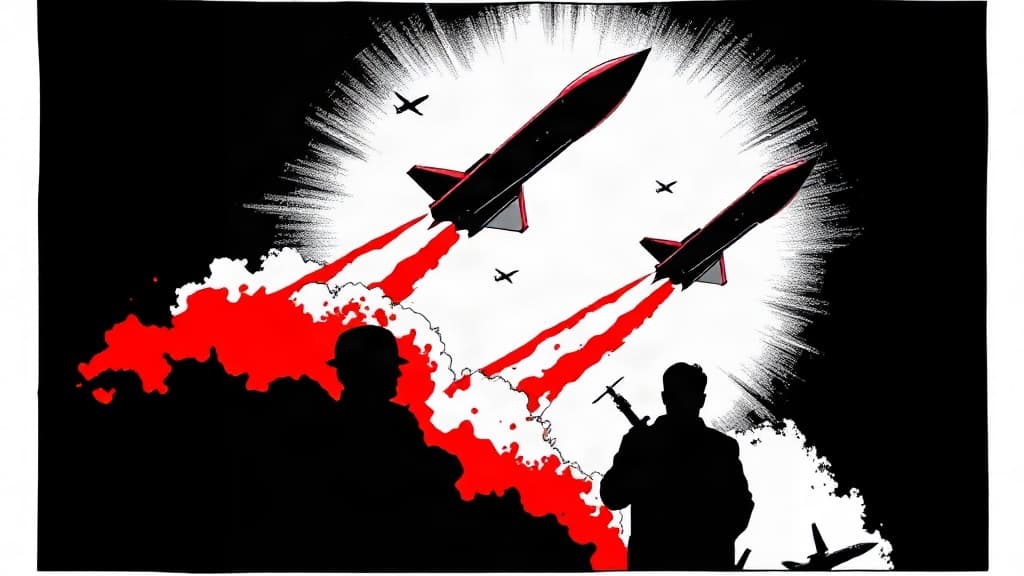
North Korea fired 10 short-range ballistic missiles into the sea Thursday, and Washington's expert class immediately pointed fingers at Trump's decision to scale back joint military drills — the same class that gave us decades of failure on the Korean peninsula.
The missiles, launched from the Pyongyang region, each flew roughly 185 miles into eastern waters, according to South Korea's Joint Chiefs of Staff. The launch came a day after the U.S. and South Korea confirmed they were cutting the Ulchi Freedom Shield exercises roughly in half and canceling some field training, following Trump's order to the Pentagon to "substantially reduce" them.
Trump cited two reasons: his relationship with Kim Jong Un, and South Korea's refusal to back him on Iran. That second point matters more than the press lets on — an ally that won't support American strategy on a major threat doesn't get to dictate how many troops we exercise.
CNBC, channeling the establishment consensus, warned the move "undermines the credibility of American commitments to its alliances." Lami Kim of the International Institute for Strategic Studies said it "significantly undermines the credibility of the U.S. security commitment at a time when confidence in that commitment is already near one of its lowest points." Former South Korean Special Warfare commander Chun In-Bum argued that scaling back exercises while North Korean troops gain combat experience in Ukraine "creates a dangerous operational disconnect."
AP and The Guardian both framed the drill reduction as an "apparent bid to resume diplomacy." CNBC buried the diplomacy angle and led with credibility concerns. What none of them grapple with: the bipartisan establishment spent decades maintaining troops, running exercises, and writing blank-check commitments — and North Korea still built nukes.
Here's what the hand-wringers won't admit. Trump's first-term diplomacy with Kim collapsed in 2019 over sanctions relief — the North wanted more give, Washington offered less. Since then, Kim has modernized his arsenal and expanded cooperation with Russia. That happened on the establishment's watch, under the establishment's playbook.
Kim Yo Jong, the leader's influential sister, dismissed Trump's drill reduction Wednesday, saying "the provocative, aggressive nature of the drills won't change even though their duration and size were reduced." She denied Trump's claim that Kim Jong Un had responded to his request for a conversation. But she notably refrained from the usual fiery rhetoric and said personal relations between her brother and Trump are "still excellent" — a signal Pyongyang wants bigger concessions before returning to talks.
Translation: North Korea is running the same racket it always has — extract maximum concessions, give minimum compliance. The difference now is Trump is trying a different lever. His Iran strategy — maximum economic pressure, no forever war — is the model. Squeeze the regime's wallet, not the American soldier's deployment schedule. South Korea won't back him on Iran? Then Seoul can absorb fewer drill days.
When asked Wednesday if he'd meet Kim this year, Trump said: "Yeah, I will be." He wouldn't confirm exchanging letters but said he gets along with him.
The establishment wants you to believe scaling back exercises is capitulation. But keeping 28,500 troops on the peninsula and running the same annual drills since the 1950s hasn't denuclearized anything. North Korea fires missiles every time exercises run — and every time they don't. The pattern is the proof the old approach failed.
The question isn't whether Trump's gamble pays off. It's whether anyone in Washington has a better idea — or just more of the same, dressed up as expertise.