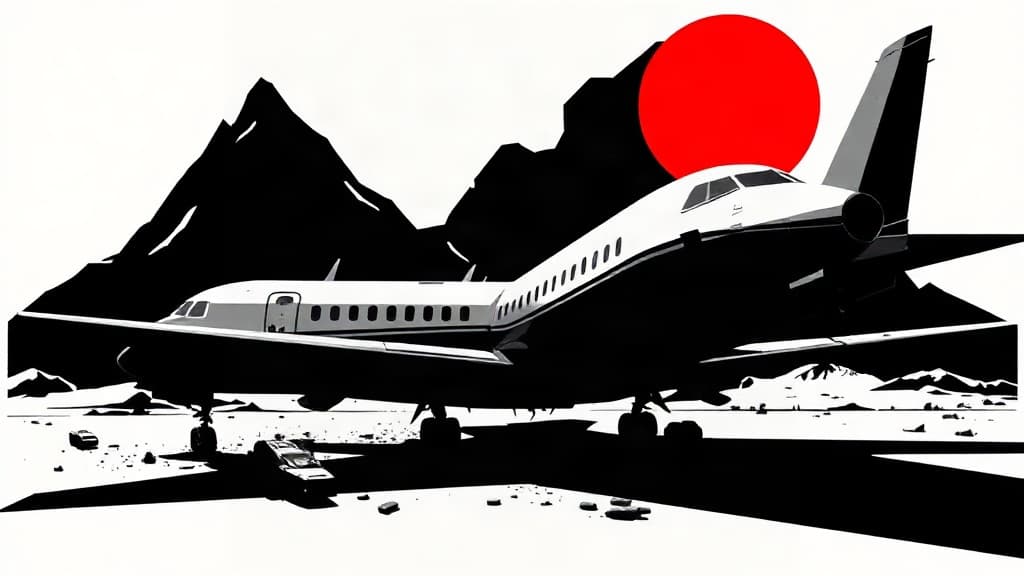
Eight Americans are dead after a military-chartered plane crashed at a remote radar site in western Alaska Thursday — and the Pentagon's only response is grief, not answers.
A twin-engine Cessna 441 operated by Anchorage-based Security Aviation went down near Cape Newenham Long Range Radar Site Airport around 12:15 p.m. local time, killing two pilots and six passengers. The U.S. Army Corps of Engineers confirmed it chartered the flight and that two of its employees were among the dead. Beyond that, the military has disclosed nothing about what these people were doing at a site that tracks aircraft operating along America's borders.
Alaskan Command Lt. Gen. Robert Davis called it a "devastating loss" and praised those killed as "dedicated professionals carrying out a vital mission in a demanding environment." That mission? Unexplained. The military statement referred to the aircraft only as a "civilian-contracted aircraft" — language CBS News flagged as a possible discrepancy with the Army Corps' own statement claiming it chartered the plane. CBS said it reached out to the Corps for clarification. No follow-up has been reported.
The radar site, managed by the Pacific Air Forces Regional Support Center, is part of a network monitoring Alaska's airspace and its borders. That is actual homeland defense — the kind of mission Washington routinely starves while writing blank checks for operations halfway across the globe. The NTSB is investigating the crash; the FAA is assisting.
Sen. Lisa Murkowski posted condolences on X, noting she has flown with Security Aviation and met their pilots. Fair enough. But where is the question about oversight? A military-chartered flight carrying federal employees to a classified-adjacent installation crashes with zero survivors, and the press prints the condolence statement and moves on.
The Guardian and Al Jazeera both noted the military refused to describe the work being conducted. The New York Post simply repeated the statement verbatim. Nobody pressed on safety protocols, contractor standards, or why a Cessna 441 — a pressurized turboprop, not a military airframe — was the vehicle for a mission the military now calls "vital."
Eight Americans left Anchorage on a flight paid for with taxpayer dollars to service a radar installation defending U.S. airspace. They didn't come home. The least the public deserves is an honest accounting of what they were doing and whether the system that sent them there did its job. Instead, we get a press release.