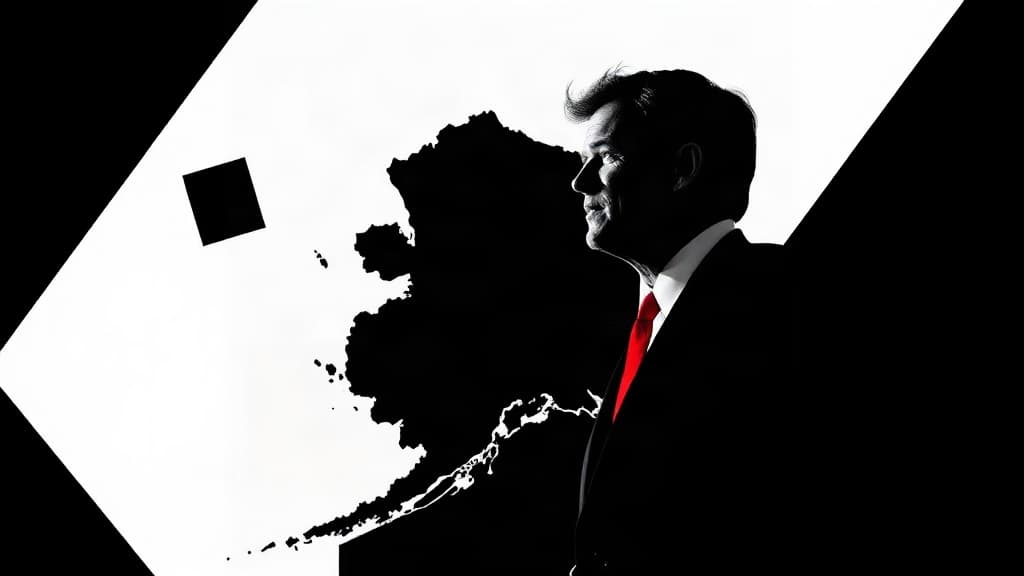
A federal judge threw out the Justice Department's lawsuit seeking to block certification of Alaska's Senate race if Republican incumbent Dan Sullivan loses, ruling Sunday that the federal government offered no way to investigate a same-name candidate on the ballot without violating Alaskans' right to a secret ballot — with early voting already underway and Election Day just two days out.
The ruling leaves a core question unanswered: whether Democratic operatives deliberately planted a retired teacher named Daniel J. Sullivan Jr. on the ballot to siphon votes from the incumbent senator. A New York Times report last week — citing the Peltola campaign's ex-manager, text messages, and campaign finance documents — found that an operative recruiting decoy candidates was paid by a group backing Democrat Mary Peltola. Peltola has denied involvement. "I have no idea," she told KTUU when asked if anyone on her campaign was involved.
U.S. District Judge Sharon Gleason, an Obama appointee, dismissed the case "without leave to amend," meaning the DOJ cannot refile. The lawsuit, filed at President Trump's direction less than two weeks before the election, asked the court to segregate ballots cast for Daniel J. Sullivan so law enforcement could investigate whether voters meant to vote for the senator instead.
Gleason wasn't buying it. "The absence of any explanation from the United States as to how its requested relief could redress its alleged injury while simultaneously maintaining the secrecy of the ballot is telling," she wrote, as reported by Politico. She noted that cast ballots have already been commingled to the point where voter identity can't be determined, making the requested relief "infeasible," according to the Chicago Tribune.
Raw Story framed the ruling as Trump's "gambit" falling apart. NPR called it a "highly unusual attempt." But the underlying allegation didn't come from thin air. Alaska Republicans tried to keep Sullivan Jr. off the ballot in state court back in June; the Alaska Supreme Court ruled he had the right to run. The Chicago Tribune noted that Republicans, including Trump allies, also have a history of backing decoy candidates — a fact that complicates the narrative on both sides.
The judge's ruling is narrow: the DOJ brought a poorly constructed case too late, with no mechanism that respects ballot secrecy. That's a procedural problem, not a finding that the decoy-candidate concern is baseless. Alaska's Republican Gov. Mike Dunleavy has ordered a separate state investigation and suggested he may withhold certification depending on the results. "If we find out there's wrongdoing, and if that means that the certification then is stopped or changed, then that's what happens," Dunleavy told NewsNation Friday. The DOJ also has an ongoing criminal probe, according to NPR, and is expected to appeal Gleason's ruling.
The courts have spoken on this lawsuit. They haven't spoken on whether a candidate was planted to confuse voters. That question — and whether state officials will act on it — is still live.