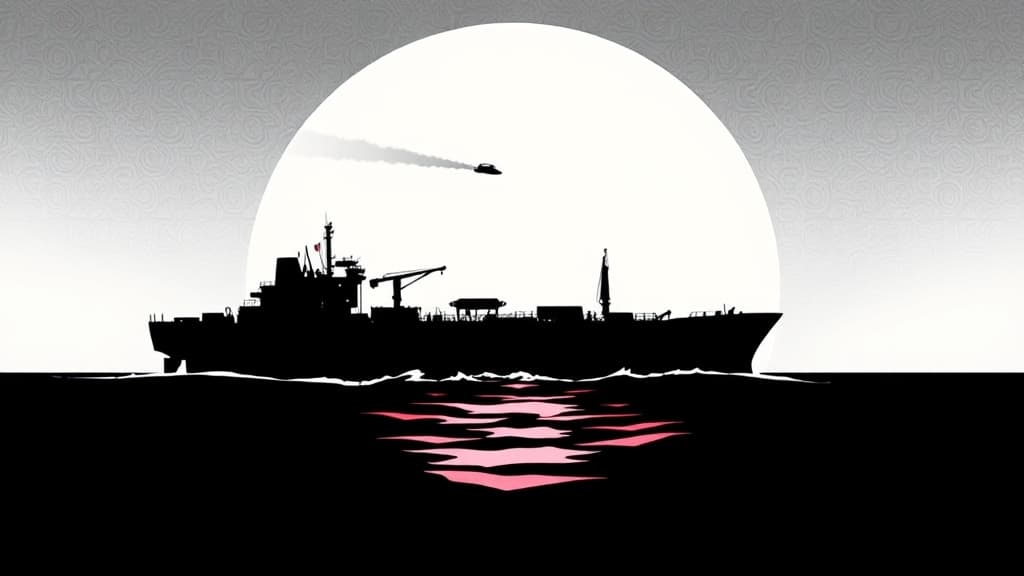
An oil tanker transiting the Strait of Hormuz was struck by a projectile and set ablaze early Tuesday — the latest sign that Iran is dictating terms on one of the world's most critical shipping chokepoints while Washington sits at the negotiating table.
The British military's UK Maritime Trade Operations center said the vessel was hit on its port side near Limah, Oman, while traveling south out of the strait. No casualties or environmental damage were reported. Iranian state television implied Tehran was responsible, saying the liquefied natural gas tanker had ignored warnings, but offered no official claim. A U.S. official told Axios that Iran's Revolutionary Guards struck two commercial ships in the strait, both suffering significant damage.
The stakes are straightforward: a fifth of all oil and natural gas traded globally once passed through the strait in peacetime. Now Iran is demanding that every tanker use its approved route — and pay for the privilege. Tehran's joint military command warned last Thursday that any vessel deviating from its designated corridor would face an "immediate and forceful response." The regime also warned that U.S. interference would be met with a "rapid and decisive reaction."
This is not a rogue actor testing boundaries. This is a government openly shaking down commercial traffic on the high seas and daring anyone to stop it.
The attack occurred despite a U.S.-Iran ceasefire and ongoing negotiations to end the war that began Feb. 28. As part of an interim deal, Iran and the U.S. agreed to allow ships to pass without charges for 60 days. But Tehran insists it must control vessel routes and eventually impose fees — upending decades of established practice. The U.S. and Gulf Arab states say they won't accept Iran tolling the strait. Oman and a U.N. agency tried launching an alternate route near Oman's shore; that effort sparked attacks across the region.
AP News framed the escalation risk squarely, noting that previous U.S. retaliatory strikes prompted Iran to attack Gulf Arab states. DW.com emphasized the ceasefire context and Iran's rejection of U.S. demands for free passage. Both outlets buried the core issue: a foreign power is demanding tribute for transit through an international waterway, and the American response so far is more negotiation.
Talks now appear stalled until after the funeral of Ayatollah Ali Khamenei, who was killed at the start of the war. Iranian state television aired images of mourners in Qom, with reports of crowds calling for the death of President Trump.
At least 108 ships crossed the strait over the weekend using various routes, according to data firm Kpler. Commerce hasn't stopped — but it's running on Iran's terms, under the threat of fire.
The question for Americans isn't whether the Strait of Hormuz matters to energy markets. It's how many billions and whose blood should be spent keeping it open — and whether the people negotiating on our behalf have any intention of drawing a line that isn't for sale.