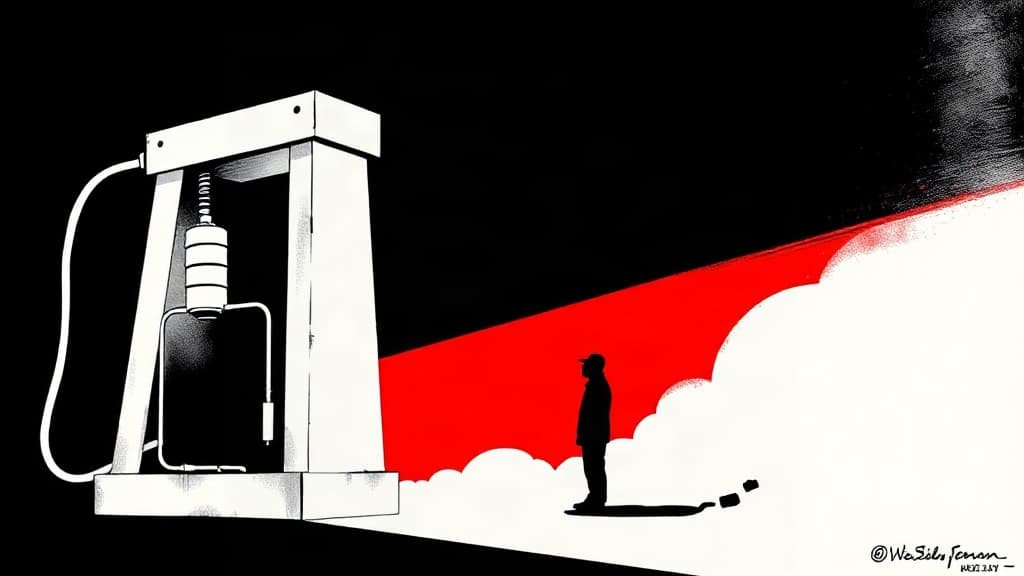
The European Central Bank hiked interest rates to 2.5% on Thursday, but the real story for American families is at the pump: the Washington-driven war with Iran has pushed oil past $105 a barrel, and interventionism is coming out of your paycheck.
When Washington intervenes, this is what interventionism costs: not just in blood, but in every gallon you buy. The ECB raised its benchmark rate by a quarter point to fight inflation supercharged by the Iran war, which is choking off energy shipments through the Strait of Hormuz. The establishment press frames this as a distant geopolitical problem, but the cost is deducted directly from the wallets of working people on both sides of the Atlantic.
ECB President Christine Lagarde admitted the obvious: "The conflict in the Middle East continues to generate inflation pressures, and inflation is set to remain well above target for an extended period." She added that the economic outlook "remains highly uncertain," but the damage is already done. Brent crude surged past $105 a barrel this week, and European gas prices hit a three-year high after U.S. and Iranian forces traded attacks on shipping in the Gulf, according to The Guardian.
Breitbart reported that this is the ECB’s second rate hike this year in response to the "energy shock triggered by the US war on Iran." But critics point out that central bankers are using the wrong tool for the job. Rate hikes aim to slow inflation by dampening demand, but they do nothing to fix the actual shortage of energy caused by war. You can't hike interest rates to drill more oil.
The economic fallout is hammering the West. The Guardian reported that government borrowing costs soared, with UK bond yields hitting a 19-year high and German 30-year yields reaching their highest since 2003. The shock even spooked U.S. markets, prompting Treasury Secretary Scott Bessent to announce a $6 billion debt buyback to stabilize Treasuries.
Meanwhile, Europe is staring down a cold winter with gas storage levels at just 67%—well below the five-year average of 84%—because buyers gambled that the conflict would wrap up quickly and prices would fall. It didn't, and now they are scrambling to replenish stocks before the freeze, guaranteeing higher prices.
The foreign policy machine insists the U.S. has vital interests in the Gulf. But as oil climbs and central banks scramble to contain the economic fallout, the question for working Americans is simple: how many more rate hikes and gas price spikes will it take before Washington admits this intervention isn't worth the cost?