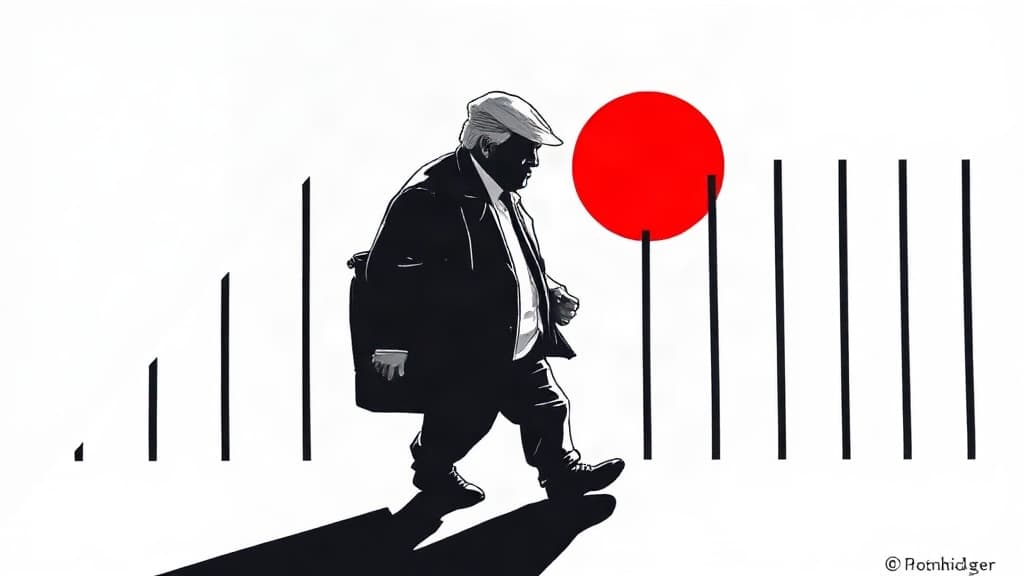
The Trump administration is dragging its feet on whether to cancel Temporary Protected Status for more than 170,000 Salvadorans before a September 2026 deadline — and the cheap labor interests that have kept this "temporary" program alive for 35 years are getting exactly what they paid for.
TPS was created in 1990 as a short-term humanitarian shelter. The idea was simple: let people stay until their home countries stabilized, then they go home. El Salvador got the very first designation near the end of its twelve-year civil war. A second designation followed in 2001 after a major earthquake. More than one million immigrants from seventeen countries now hold TPS, according to the New Yorker. And both Republican and Democratic administrations have kept renewing the individual designations for decades. The word "temporary" stopped meaning anything a long time ago.
The New Yorker frames the story around individual hardship — a woman buying luggage, a mother who has lived in the U.S. since she was fifteen, families with American-born children. These are real people with real stakes. But the outlet buries the structural explanation in a single clause: "Partly, this was a result of failed efforts in Congress to reform the immigration system and, in the process, to give T.P.S. holders other avenues by which to gain permanent legal residency." That's the bipartisan failure in plain sight. Congress won't reform the system, won't enforce the law, and won't end the temporary program — because the current arrangement suits the people who write the checks.
Trump tried to cancel Salvadoran TPS in 2018. Roughly 193,000 American children had parents who were Salvadoran TPS holders at the time. Legal advocacy groups sued, and a federal court blocked the move — not because the President lacked the authority, but because the administration botched the administrative process. The New Yorker presents this as a victory for the rule of law. Fine. But it's also a case study in how the cheap labor lobby wins regardless of who sits in the Oval Office. Employers get workers who can't easily change jobs or push back. Both parties talk a different game on immigration but deliver the same result: a permanent underclass of legal-but-precarious labor.
Consider the contrast with other lobbying efforts. Crypto firms dumped $8 million into pushing the CLARITY Act through Congress in the first half of 2026, according to International Business Times, and the bill still died in the Senate on a 49-50 cloture vote. The cheap labor lobby doesn't need to pass a bill. It just needs nothing to change — and nothing has changed for 35 years.
The delay on TPS cancellation isn't indecision. It's the uniparty working as designed. Republicans get to talk tough on the border. Democrats get to claim the moral high ground on humanitarian protection. And the employers who fund both sides get a captive workforce that will never organize.
The question isn't whether TPS holders have built lives here — they have. The question is why "temporary" protection keeps getting extended by the same politicians who promise enforcement, and who profits from the arrangement staying exactly as it is.