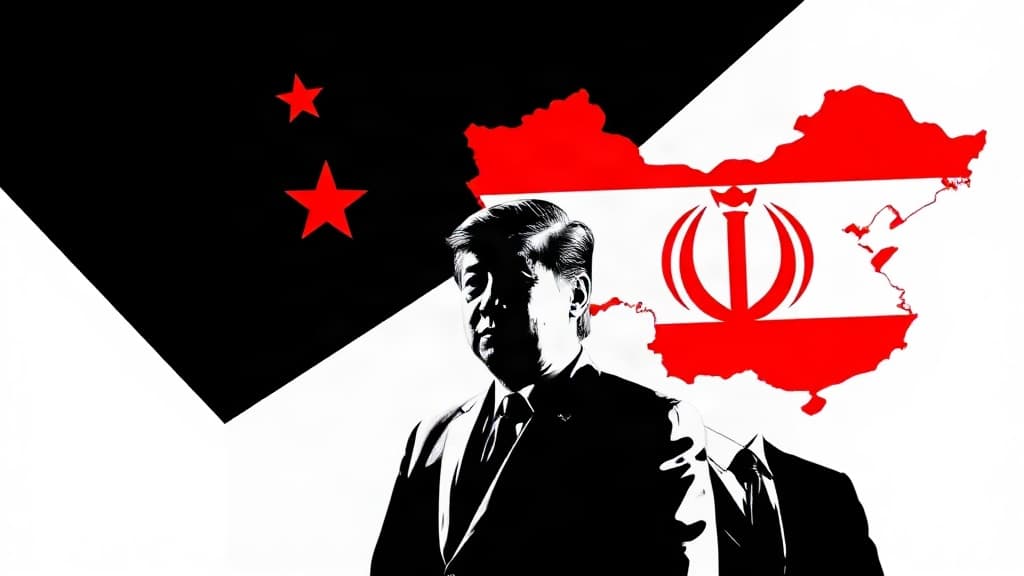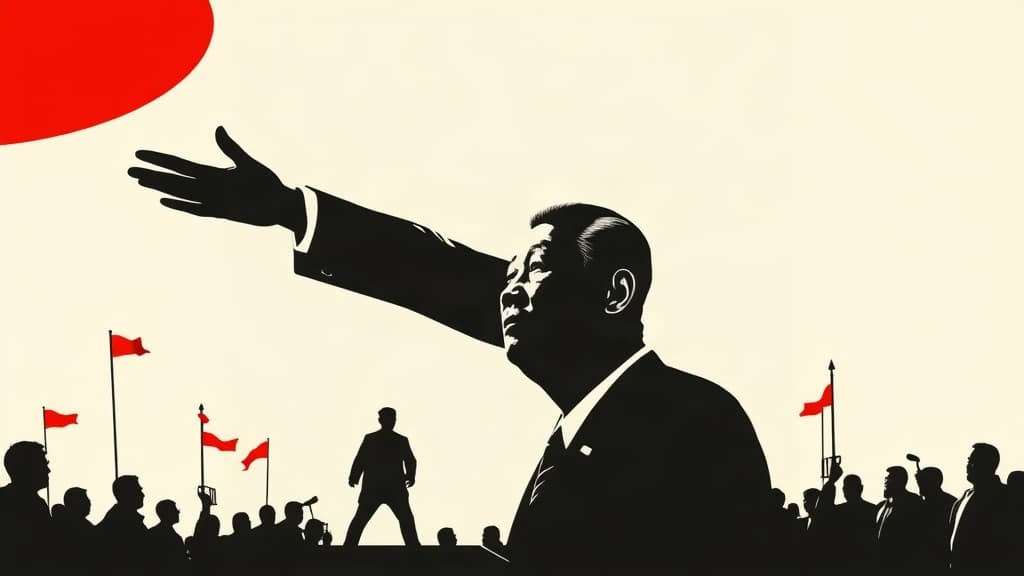
Chinese President Xi Jinping is making rare state visits to Egypt and likely India this month, convening with Russia's Vladimir Putin and Iran's Masoud Pezeshkian at the Shanghai Cooperation Organization summit in Kyrgyzstan — the first time the three leaders have met since the U.S. and Israeli war against Iran began. While Washington pours blood and treasure into the Persian Gulf, Beijing is quietly assembling the architecture of a rival security bloc, and ordinary Americans will pay the bill in both treasure and geopolitical standing.
This matters because every dollar and ounce of credibility sunk into the Iran conflict is a dollar and ounce China doesn't have to spend to win the global competition that actually counts. Xi has "sharply curtailed foreign travel in recent years," Gabriel Wildau of Teneo told CNBC, making this burst of diplomacy a clear signal of priority. He's visited abroad only once this year — to North Korea in June. Meanwhile, more than 20 leaders, including Trump, have gone to Beijing.
The SCO summit starting Monday in Bishkek gathers the heads of Russia, India, Pakistan, Belarus, and Central Asian states alongside China and now Iran. Europe Says reported that the grouping has been expanded for years as a "counterweight to U.S. power." Henry Wang Huiyao, founder of the Center for China and Globalization in Beijing, put it plainly: "The message is getting clearer and louder each year that there's emerging a new security bloc." He added that the unipolar world dominated by the U.S. "is gone."
CNBC framed the story around diplomatic choreography and trade deal prospects, burying the Iran war's role in accelerating this alignment. Europe Says led with it: Trump's Iran war is the stress test for the Xi-Putin security club, and the club is holding.
After the SCO, Xi makes his first state visit to Egypt in a decade, where China has built a bilateral economic and trade cooperation zone in the Suez Canal region. Then comes the BRICS summit in New Delhi, Sept. 12-13 — Xi's first visit to India since deadly 2020 border clashes. Modi and Putin's "visible warmth," as CNBC noted, could shape Trump's calculations. Last year, a clip of Xi, Modi, and Putin laughing together at the SCO summit in Tianjin went viral; Trump fumed that Washington had "lost India and Russia to deepest, darkest, China."
Since then, Trump scaled back India tariffs from 50% to 18% and visited Beijing himself. Xi is expected in Washington in late September. But the Graham bill hanging over both New Delhi and Beijing threatens up to 100% tariffs on countries buying Russian oil. Over half of India's crude came from Russia in June and July. That bill would force India to choose — and the choice may not favor Washington.
A Chinese state-affiliated think tank director, Hai Zhao, told CNBC it's time for China to "take bigger responsibility, provide more global public goods," citing supply chain security, oil flows through the Strait of Hormuz, and cybersecurity. Translation: Beijing sees the chaos Washington created in the Gulf and is positioning itself as the alternative provider.
The bipartisan failure here is stark. Washington wages another open-ended Middle East war, threatens tariffs on nations that buy Russian oil, and wonders why those nations drift toward Beijing. The lobbying class that pushed for the Iran conflict and the Graham bill never accounts for the strategic cost: every alignment forged at SCO and BRICS is a direct consequence of American overreach.
The open question is whether Trump's September summit with Xi produces anything real, or whether the diplomatic calendar simply papers over the reality that the interventionist wing in Washington has already handed Beijing its strongest recruitment tool.