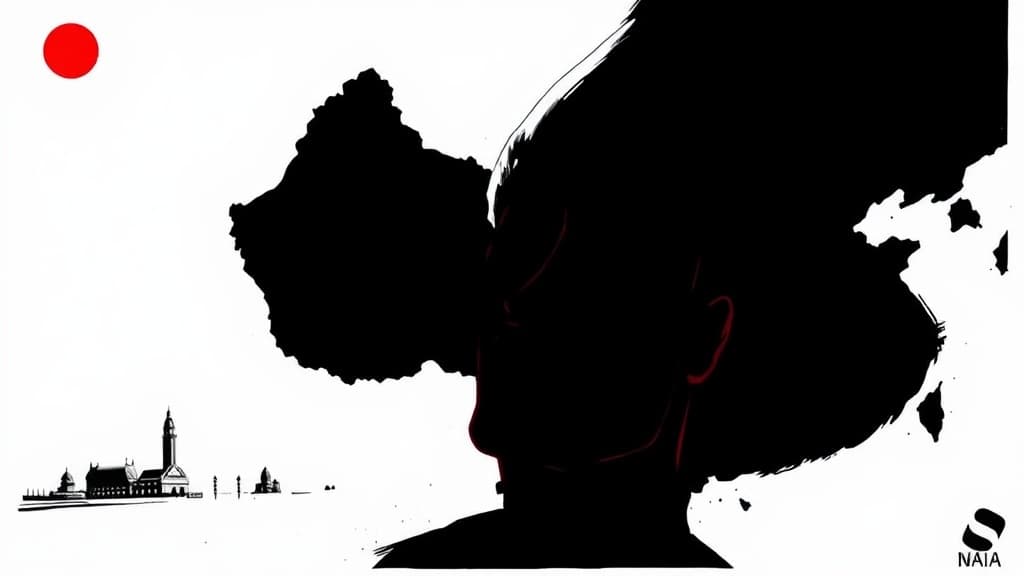
China just cemented a security partnership with Cambodia — another Asian foothold locked down while Washington funnels hundreds of billions into Ukraine and the Middle East with no exit in sight.
President Xi Jinping announced the pact Friday during a Beijing meeting with Hun Sen, president of Cambodia's Senate, according to Reuters. Xi called the international situation "complex and profound" and said the two nations should work together to inject stability into regional peace and development. That's diplomat-speak for: Beijing is building a security architecture in America's backyard while Washington looks the other way.
The Cambodia deal isn't isolated. Xi has hosted more than a dozen world leaders this year alone — including Russia's Putin, the UK's Starmer, and even President Trump for a pomp-filled state visit, The Guardian reported. The parade of dignitaries includes Bangladesh's new prime minister, Myanmar's military chief Min Aung Hlaing — who the UN says oversaw war crimes and genocide — and North Korea's Kim Jong-un. Beijing rolled out the red carpet for every one of them.
Analyst William Yang of the International Crisis Group told The Guardian the long list of visitors reflects "the growing recognition of China's increasing global influence" and that Beijing is using these visits to "promote the alternative multipolar world order that it has been championing while weakening these countries' trust and confidence in the US."
Steve Tsang, director of the China Institute at SOAS University of London, was more blunt: Xi is "fundamentally shifting the balance of power from the hands of the advanced democracies... to the Global South, with China as its leader."
Here's the bipartisan failure in plain English: while Washington has committed well over $100 billion to Ukraine and tens of billions more to the Middle East with no defined U.S. interest, cost ceiling, or exit strategy, China has been methodically building security and economic partnerships across the Indo-Pacific — the region that actually determines whether Americans live in peace or conflict. Both parties signed off on the blank checks. Neither demanded a strategy for the Pacific.
The Guardian framed China's diplomatic surge as middle powers "charting an independent relationship" with Beijing against a "capricious" United States. Reuters, for its part, stuck to the formal readout and buried the strategic implications entirely. Neither outlet asked the obvious question: what exactly are Americans getting for the hundreds of billions spent propping up distant borders while China tightens its grip on the neighborhood that matters most to U.S. security?
China is offering loans, legitimacy, and a no-lectures alternative to poorer nations — and they're taking it. Myanmar's junta leader, isolated after a 2021 coup and a sham election, got Beijing's "firm support" and a signal of "acceptance of the legitimacy of the Myanmar military's rule," according to Ja Ian Chong of the National University of Singapore. That's the cost of China's non-interference pitch: autocrats get cover, and Washington gets less influence.
The question isn't whether China's rise is good or bad. The question is why Washington keeps writing blank checks for European and Middle Eastern border disputes while the Indo-Pacific — the theater that actually determines American security — gets leftover attention and borrowed money.