China just formalized an 'unshakable' military partnership with North Korea, and Washington barely blinked — because it's too busy writing blank checks to Kyiv to notice that the authoritarian axis is consolidating in Asia.
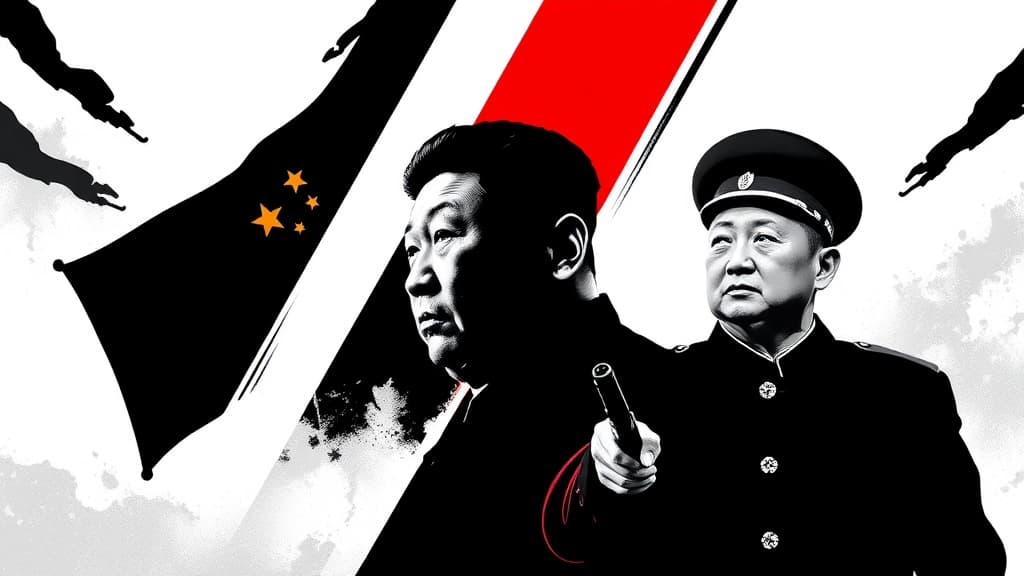
Chinese President Xi Jinping told Kim Jong Un that Beijing's commitment to Pyongyang 'would not change regardless of how the international situation evolves,' according to letters published Friday by North Korea's state-run KCNA. Kim called the bilateral friendship a 'new strategic level.' The exchange marked the 65th anniversary of the Treaty of Friendship, Cooperation and Mutual Assistance — China's only active mutual defense pact, a fact both Benzinga and Reuters noted but neither treated with the gravity it deserves.
That treaty means if the U.S. or South Korea moves on Pyongyang, Beijing is obligated to respond. Meanwhile, Congress can't define a U.S. interest, a cost, or an exit strategy for the tens of billions flowing into Ukraine — exactly the standard any overseas commitment should have to meet before a single American dollar leaves the Treasury.
Xi was blunt about what this partnership means. 'The Chinese Communist Party and the Chinese government will continue to attach great importance to the traditional friendship between China and North Korea, continue to firmly support North Korea's socialist cause under the leadership of General Secretary Kim Jong Un, and remain firmly committed to safeguarding the common interests of both countries and a favorable strategic environment,' he wrote, according to Reuters' translation of the KCNA report.
The letters coincided with North Korean Premier Pak Thae Song arriving in Beijing for a three-day visit. It also follows Xi's trip to Pyongyang last month — his first in seven years — where he and Kim agreed to expand cooperation across politics, the economy, and culture.
Benzinga framed the development as Xi 'doubling down' on Kim and called the support 'unshakable,' language that captures the strategic reality more honestly than Reuters' flatter presentation. But both outlets treated this as a routine diplomatic anniversary rather than what it is: a formalized military alignment between two nuclear-armed adversaries of the United States, tightening at a moment when American resources and attention are drained eastward into a European land war with no defined endgame.
The Treaty of Friendship, Cooperation and Mutual Assistance was signed on July 11, 1961. It has survived the Cold War, the collapse of the Soviet Union, and decades of international sanctions on Pyongyang. It is now being renewed and deepened at a moment when Washington's own alliances are strained by inconsistent leadership and competing priorities.
Every dollar and missile sent to Ukraine is a dollar and missile not positioned to deter the axis that actually threatens the American homeland. That's not isolationism. That's strategy — a concept Washington seems to have forgotten while it funds other nations' wars.
The question isn't whether China and North Korea mean what they say. It's whether anyone in Washington is listening.