China's leading humanoid robot maker just rocketed to a $50 billion valuation on its first day of public trading — and Washington's only answer is an import ban that won't slow the competition one bit.
Unitree, officially known as Yushu Technology Co, saw its shares surge as high as 1,100 yuan ($163) on Shanghai's tech-focused STAR Market before closing at 845 yuan, up 460% from its IPO price of 150.8 yuan. The Hangzhou-based firm, founded in 2016 by CEO Wang Xingxing, is now worth roughly $50 billion. Wang personally holds about a fifth of the company — putting his paper wealth above $12 billion, according to Reuters.
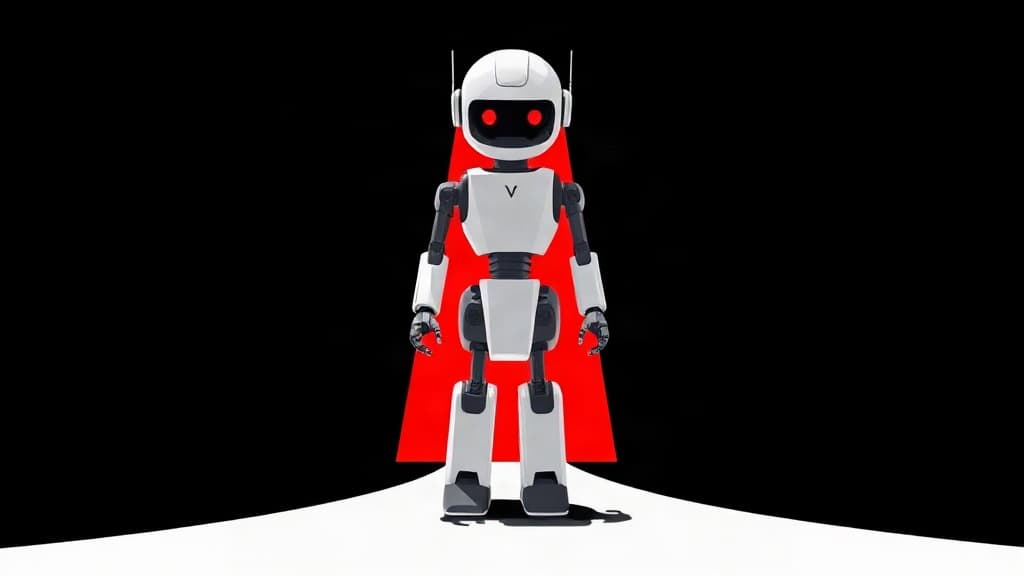
The numbers tell the story of a country that has decided to dominate an industry. Unitree and fellow Chinese firm AgiBot together shipped more than 70% of the roughly 13,000 humanoid robots sold globally last year, according to market research firm Omdia. Unitree alone accounted for over 5,500 units. This week the company unveiled its new "Superman" robot, which it claims can jump more than 6.5 feet and run at over 28 miles per hour — faster than Usain Bolt's 100-meter world record.
Beijing is all-in. China's latest five-year plan vows to "target the frontiers of science and technology," and the state has put advanced robotics at the center of its economic agenda as growth slows to its weakest in over three years. Unitree is backed by Chinese tech giants Tencent and Alibaba, The Guardian reported. Its debut coincided with the opening of the World Robot Conference in Beijing, where hundreds of Chinese companies showcased new products. At least half a dozen other Chinese humanoid robotics firms — including Deep Robotics and Leju Robotics — are now preparing their own IPOs.
And Washington? The U.S. Federal Communications Commission banned imports of future models of foreign-made humanoid and quadruped robots last month, citing national security concerns. The Pentagon added Unitree to its list of Chinese military companies this summer, calling it a "contributor to the Chinese defence industrial base." The designation bars direct military contracts but imposes no sanctions. Unitree insists its robots are for civilian use only.
NBC News framed the ban as Washington competing with Beijing for "global tech dominance." The Guardian simply noted the ban's existence. What neither outlet grappled with is that banning imports is not a strategy. The U.S. accounted for about 13% of Unitree's $250 million in revenue last year, according to its IPO prospectus — meaning 87% of its business is already elsewhere. Existing models can still be sold in America. And while Unitree is profitable, unlike most rivals, its products are still mainly sold to universities and research institutions, not deployed commercially. The race has barely started.
Analysts project the humanoid robot market will balloon from roughly $2 billion in 2025 to $300 billion by 2035. China is positioning itself to capture the lion's share of that growth while American policymakers offer bans and bureaucracy. As Omdia chief analyst Lian Jye Su noted, Unitree's IPO is "going to be the bellwether for the humanoid robotics industry."
The question isn't whether banning Chinese robots keeps them out of American labs. It's what, if anything, this country is building to replace them.