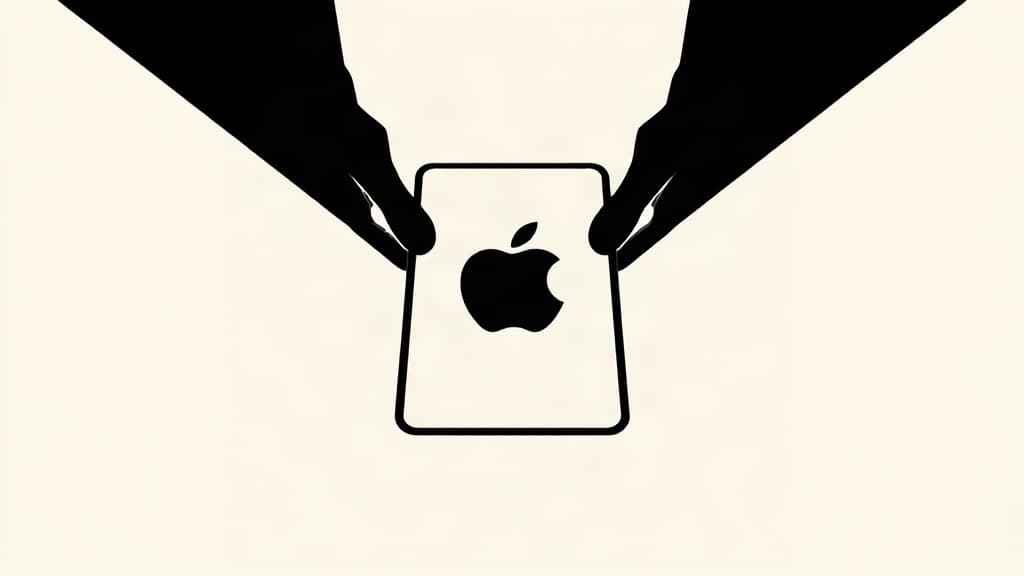
Apple's first foldable iPhone sold out within minutes of pre-orders opening, with U.S. shipping estimates pushed to January 25 inside half an hour—all for a device that starts at $1,999 and drops core features found on cheaper models. The iPhone Duo launch proves Big Tech can manufacture scarcity and extract premium rents from consumers in the same breath.
The stakes are straightforward: Apple is charging flagship-plus money for a phone that ships without a telephoto lens, without LiDAR, without ProRes video, without Pro camera controls, and without Face ID. European buyers fare even worse. Thanks to the EU's Digital Markets Act, Siri AI won't be available at launch on the Duo in Europe—regulators managed to withhold a software feature without touching Apple's hardware margins.
The price ladder in Austria and Germany tells the story. The 256GB base model costs €2,299 in Germany and €2,319 in Austria. The 2TB tier hits €3,799 and €3,819 respectively—a €750 jump from the 1TB model alone. By comparison, the same 2TB model costs $3,199 before tax in the United States. Europe Says noted the price gap between U.S. and European pricing, which persists even accounting for VAT differences.
Supply constraints are real, but they stem from production failures, not consumer enthusiasm. Chinese outlet Jiemian reported final assembly yields at Foxconn hovered just above 60 percent in mid-September. Nikkei Asia reported production had reached only a few hundred devices per day in late August. Bloomberg's Mark Gurman said Apple at one point believed constraints could push sales into November. The company cobbled together enough inventory for an October 23 launch, but barely.
MacRumors reported that Apple retail staff have been told to actively discourage walk-in purchases on launch day, warning customers they will be disappointed. Pickup reservations were briefly available before the option was disabled entirely. Apple's online store now tells customers to check back October 24—with no guarantee of stock.
Apple's response to the sellout was predictable. The company told the Financial Times that demand was "nothing short of extraordinary" and that it was working to get devices to customers as quickly as possible. But extraordinary demand measured against artificially constrained supply is a marketing narrative, not a market signal.
The device itself folds out to a 7.6-inch inner display with a nano-texture finish meant to reduce the visibility of the crease. It runs the A20 Pro chip from the iPhone 18 Pro and promises up to 31 hours of video playback on the large screen. At 254 grams, it is the heaviest iPhone ever made, and at 11.3 millimeters folded, among the thickest. Touch ID replaces Face ID. The Action button is gone. Apple Pencil support is coming after launch. AppleCare+ and repairs cost more than for the iPhone 18 Pro.
EU regulators, meanwhile, have given Apple a convenient excuse to delay Siri AI in Europe by citing the Digital Markets Act. Europe Says reported that Apple cited the DMA as the reason for the omission. The DMA was sold as an antitrust measure to break open walled gardens. In practice, it has given Apple cover to ship a lesser product to European consumers while keeping prices identical or higher.
The question left hanging is whether consumers will keep paying premium prices for compromised hardware—or whether the foldable form factor alone is enough to move units that cost more than many used cars.