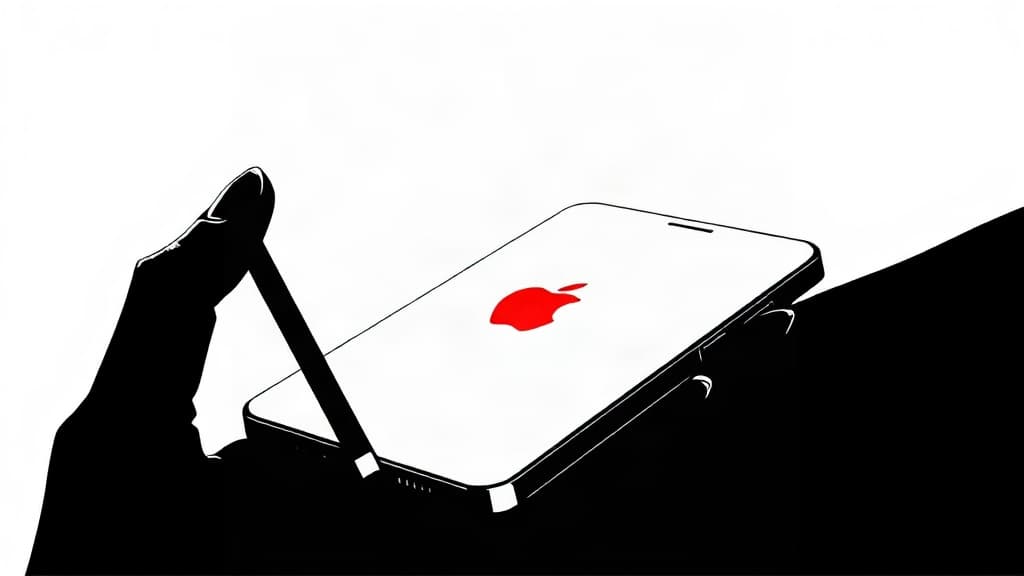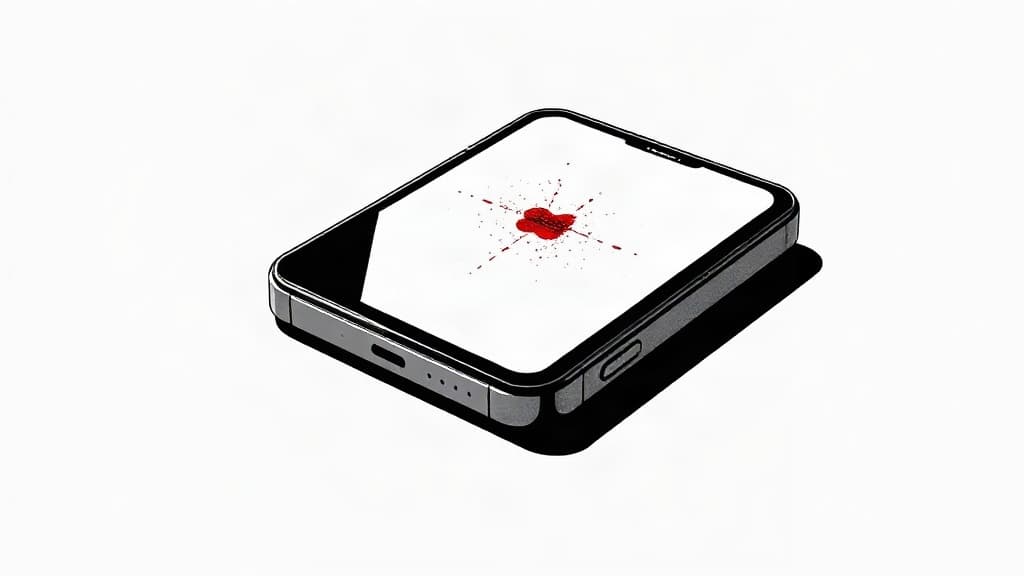
Apple's first foldable phone carries an IP68 dust-resistance rating but failed a basic dust durability test, leaving the screen permanently damaged and unresponsive — another premium-priced device from the company that built the most sophisticated censorship and surveillance infrastructure in tech history failing where it should work, while working overtime where it shouldn't.
The stakes are straightforward: Americans are paying top dollar for hardware that can't survive ordinary conditions, from a company that spends more effort policing speech on its platforms than ensuring its products do what the label promises.
YouTuber Nelson of JerryRigEverything subjected the iPhone Duo to his standard durability test and found that dust entered the hinge through multiple ingress points, overwhelming the magnets designed to keep the phone shut. The bend test then produced a permanent green line across the inner display before the screen died entirely. "I've been testing these folding phones since the first generation seven years ago – most do survive," Nelson said. "The iPhone Duo did not," MacRumors reported.
The outer screen, equipped with Ceramic Shield 2, scratched at level 7 on the Mohs scale — standard for glass. The inner screen managed only a level 2, though Nelson credited the matte nano-texture coating for making marks "magically disappear." A coating that hides scratches doesn't fix a phone that dies in dust.
CNET, meanwhile, spent its ink celebrating Apple's entry into the foldable market and promoting its own proprietary "Fold-a-Phone" testing rig. As of Saturday, CNET's machine had logged 20,000 folds — a metric that sounds impressive until you realize most current foldable phones are rated for 200,000 to 500,000 folds, and Apple hasn't publicly disclosed any fold-lifespan claim for the Duo at all. CNET framed Apple's arrival as a "legitimizing" moment for foldables, despite the company lagging Samsung by seven full years. The outlet buried any mention of durability concerns beneath paragraphs about its own testing methodology and a Monday livestream promo.
Here's the picture: Apple ships a phone stamped with a dust-resistance certification it can't meet. The inner screen scratches like plastic. The hinge chokes on the kind of dust any working American encounters on a job site or in a truck cab. And the tech press cheers the brand's arrival as though it's a triumph rather than a late, underperforming entry.
Apple has never had trouble building infrastructure to monitor users, comply with foreign censorship demands, or deplatform voices it finds inconvenient. Building a hinge that holds up in dust? That's apparently where the innovation budget ran dry.
The open question: will consumers hold Apple to the standard its own IP68 rating promises, or will the brand loyalty that shields so many of this company's failures absorb this one too?