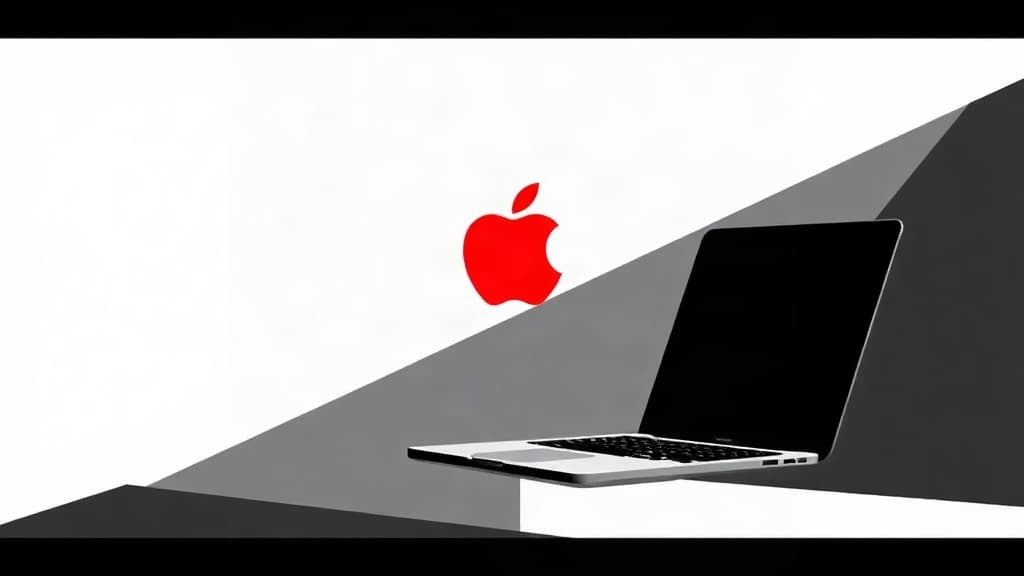
Apple is finally putting touchscreens on MacBooks, completing its total control over how you interact with your own property—and charging you nearly three grand for the privilege.
This isn't innovation; it's another brick in Apple's walled garden. The same tech giants that collude to censor speech online are now colluding to eliminate your hardware alternatives. When one company owns the chips, the operating system, the app store, and now the exact way your fingers must interact with the glass, consumer choice is an illusion.
Apple CEO John Ternus teased the launch on X today, posting a video of an Apple logo projected onto a dark wall ahead of the company's "Pro and tell" event in Los Angeles. MacRumors reported the event will give select tech reporters hands-on time with the new touchscreen MacBook models, alongside new iPad mini, iMac, and 14-inch MacBook Pro models.
Here is what Apple is forcing on the market: 14-inch and 16-inch models with OLED displays, M5 Pro and M5 Max chips, and a Dynamic Island replacing the notch. To accommodate the touch input, Apple added a revamped, firmer hinge to stop the display from wobbling when poked, and a redesigned cooling system to improve airflow. The machines will be noticeably lighter and slightly thinner. The new macOS Golden Gate will feature "touchscreen optimizations and touch-specific controls," meaning Apple is dictating the software interface to match the hardware lockdown.
Then there is the price. In the U.S., pricing is expected to start at or above $2,899 for the 14-inch model and $3,399 for the 16-inch model. That is a steep tax for a laptop that further tethers you to Apple's ecosystem. Pre-orders are expected to open at exactly 10:10 a.m. Pacific Time today.
While MacRumors laid out the hard specs and the steep price tags, The Verge offered little more than a rhetorical question—"Will we see the long-rumored touchscreen MacBook Pro?"—and a prompt to sign up for its newsletter, burying the substance of the rollout and the cost to the consumer.
Apple wants you celebrating a touch screen. They don't want you noticing that this is about standardizing input so they can standardize control. If they can deplatform you from their App Store for wrongthink, they can certainly control how your hardware responds to your fingertips.
When one monopoly controls the silicon, the software, and the skin you put on the glass, how long until they decide certain touches—like downloading a rival app or accessing a dissenting site—are simply disabled?