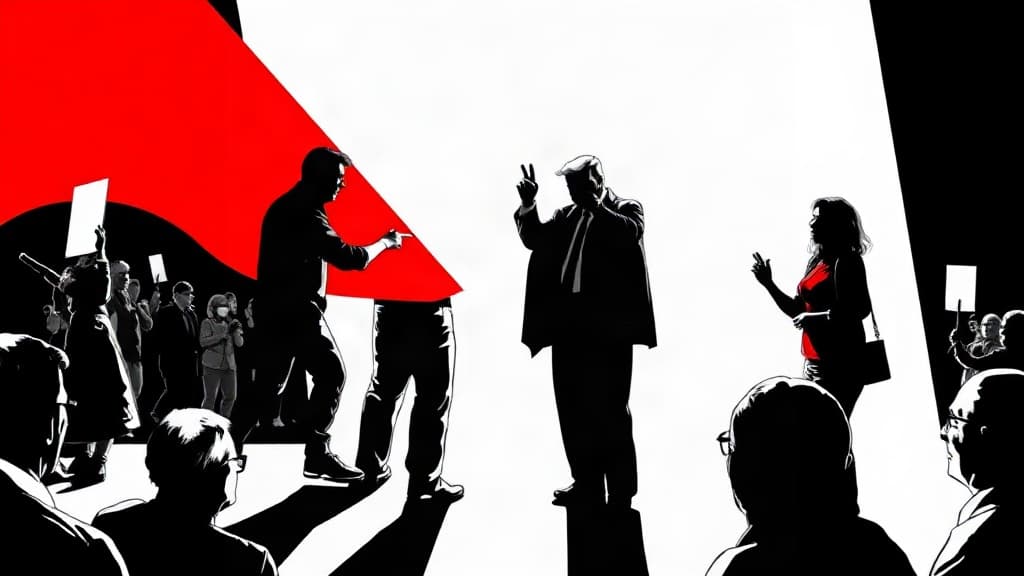
President Trump will hold back-to-back rallies in Kansas and Iowa on Sunday after a brief scheduling shuffle that sent the establishment press into a frenzy of speculation about his health and retreat from the campaign trail — exactly the kind of direct-to-the-people politics the Founders intended before the Beltway built its filter.
The rallies were initially scrapped Thursday so Trump could accommodate "dozens of additional tele-rallies" recently added to his schedule, a source familiar with the planning told the New York Post. By Friday, both in-person events were back on — crammed into Sunday — alongside nearly 20 tele-rallies on Saturday. The White House confirmed the reversal: "Rallies are BACK ON! President Trump loves his supporters... No one works harder, fights harder, or loves the American people more than President Donald J. Trump!"
The brief cancellation was all the institutional press needed. The Guardian framed the schedule shift as an "unexpected retreat from in-person campaigning" that "raised eyebrows." NBC News reported Trump had "changed his tune" on the value of his own rallies. Neither outlet produced evidence of anything beyond a scheduling reconfiguration — but the innuendo did its work.
When a Reuters reporter pressed Trump on whether the Kansas cancellation was tied to his health, the president fired back: "You are sick to ask that question... I feel perfect. You are disgusting. Put yourself in shape. You look like hell." Trump has held 25 rallies in October alone and admitted the pace isn't easy, saying through a hoarse voice Monday that "God didn't make your vocal cords to do a rally every day."
The stakes are real for working Americans watching their ballot choices narrow. In Kansas, Republican Sen. Roger Marshall faces Democrat Adam Hamilton in a toss-up race in a state that hasn't sent a Democrat to the Senate in nearly a century. NBC News reported that concerns over high costs tied to the war in Iran have turned the race competitive — American taxpayers footing the bill for overseas commitments while feeling the squeeze at home. In Iowa, the RealClearPolitics polling average shows a dead heat. GOP operatives on the ground told NBC that in-person rallies "would have been really helpful" for turnout, even as one conceded Iowa is "in pretty good shape."
Early voting is surging. More than 43 million ballots have already been cast — 10 million more than at the same point in 2022, according to Associated Press data cited by The Guardian.
The press wants a story of a movement in decline. The facts show a president who rearranged his schedule to add events, not subtract them — 25 in-person rallies in October, plus a sprint of tele-rallies, with more possible on Monday. The only question is whether that ground game translates when voters who are feeling the cost of foreign entanglements and a squeezed economy finally render their verdict.