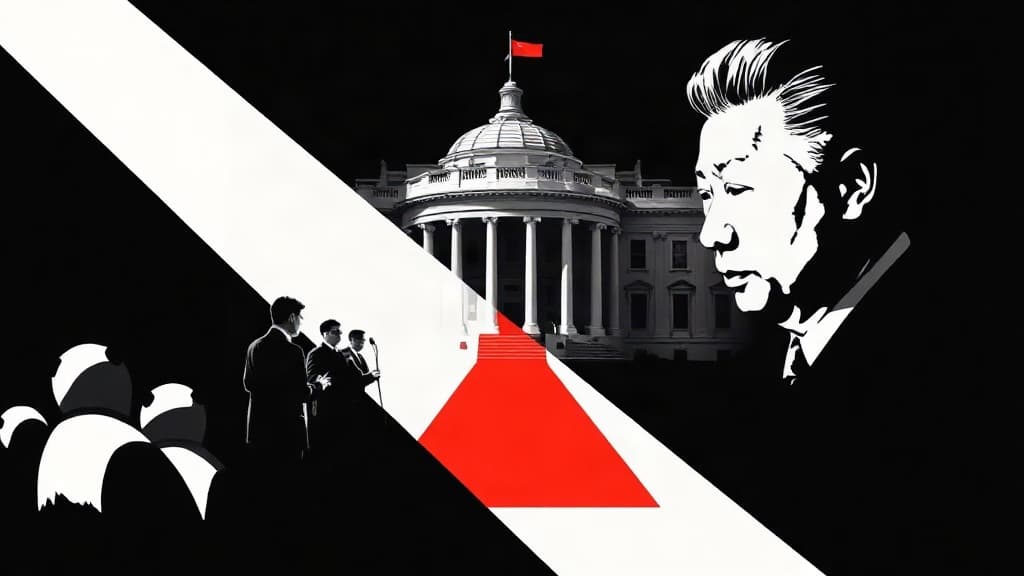
The Senate cracked down on the Chinese Communist Party just as President Xi Jinping got a three-day White House state dinner — a timing that smells like performance art for voters while Washington's donor class keeps cashing in on Beijing access.
Why it matters: Senators get to run ads about standing up to China, while the White House hands Xi panda diplomacy and new AI dialogue channels. The real question — which senators voting for these bills have donors who profit from CCP access — goes unasked.
The Tulsa World reported that Oklahoma Senator James Lankford and the Senate moved to "hit CCP ahead of Xi visit" — legislative action calibrated to project toughness just as the Chinese leader arrived for his state visit. The details of the bills matter less than the calendar: vote tough, then roll out the red carpet.
And what did that red carpet yield for American interests? Not much. According to SFGATE, the loan of two giant pandas to Zoo Atlanta was "one of the few concrete outcomes" of the summit. China has long deployed pandas as diplomatic props, shipping them out as goodwill gestures and pulling them back when tensions rise. This time, Ping Ping and Fu Shuang get a ten-year stay in Atlanta while Beijing gets the optics of a warm Washington welcome.
The White House also announced a "U.S.-China Super Intelligence (SI) Dialogue" to exchange views on AI risks and establish a communication channel for "SI incidents," according to Breitbart News Network. But Trump himself shut the door on any actual integration with Beijing on the technology. "They want to stop our progress because we're leading China by a lot, and we're going to keep it that way," he told reporters. "When you're leading, you don't open it up to each other."
On Taiwan, the Boston Herald reported that Trump declined to restate Washington's longstanding position after Xi's readout said the Chinese leader urged the U.S. to "oppose" Taiwanese independence. "We didn't spend a lot of time talking about Taiwan. He understands very much how I feel," Trump said — leaving U.S. allies to guess what that means while Xi ramps up pressure on the democratic island.
Breitbart's Peter Schweizer argued Trump holds the "upper hand" because Xi has purged six of eight members of China's Central Military Commission and 45 military generals have been disappeared. "Trump is the one here with the upper hand," Schweizer said, noting China's economy is struggling. Maybe so. But upper hands don't usually require panda ceremonies.
Here's what nobody in the Senate or the White House press corps is asking: which senators voting for these China bills have campaign donors who profit from CCP market access? The bipartisan pattern — tough votes for the cameras, warm summits for the donor class — is the oldest play in Washington. Until someone traces the money from Beijing to Senate campaign accounts, the American public is left to guess whether these votes are about protecting their interests or protecting the next fundraising quarter.