China's Communist Party just purged a record number of top officials to secure Xi Jinping's grip on power—and while Washington obsesses over DEI quotas and pronouns, America's institutional edge is rotting from the inside.
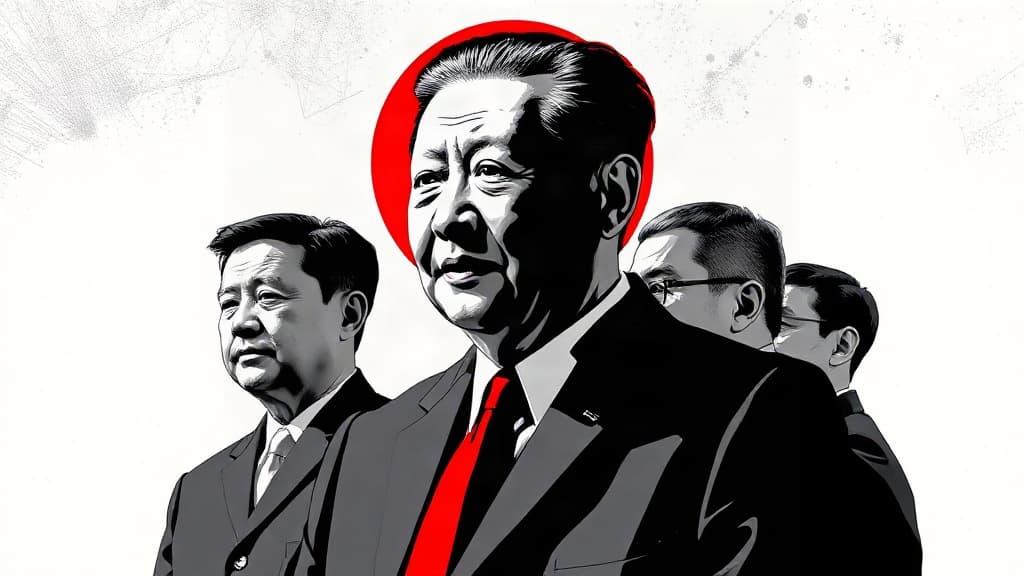
The great-power competition isn't just about who builds the most ships; it's about institutional competence, and Beijing is ruthlessly consolidating its chain of command. At the Communist Party's fifth plenum this week, leaders expelled a record 33 members, including former military second-in-command Zhang Youxia and former Xinjiang party secretary Ma Xingrui, according to The Guardian. The purge left more than 25% of the original Central Committee absent—the highest number of "empty chairs" in modern Chinese history. Meanwhile, our permanent Washington class siphons tax dollars into foreign quagmires and woke pet projects, unable to enforce basic accountability at home.
Xi’s campaign is a blunt instrument of loyalty. Since taking power in 2012, the party has opened 8.1 million cases and disciplined 7.9 million people, including 963 senior officials, SFGATE reported. Deputy director of the Central Committee for Discipline Inspection Zhang Fuhai admitted that "problems of misconduct and breaches of discipline are persistent, entrenched and recurring," adding that addressing them requires "unwavering commitment over the long term." Deputy head of the Central Organization Department Huang Jianfa framed the harsh punishments as a way to protect those who "serve with integrity."
The military has been gutted. The Guardian reported that the seven-man Central Military Commission, which oversees the People's Liberation Army, is now down to just two members: Xi himself and anti-graft tsar Zhang Shengmin, who was promoted to the Politburo this week. Dongshu Liu, a professor at the City University of Hong Kong, told SFGATE the expulsions "certainly reflects Xi’s new efforts to tighten control, especially over military system."
Analysts note the "competency-loyalty trade-off"—stricter discipline makes officials cautious and less willing to take initiative. Benjamin Hillman, a professor at the Australian National University, told SFGATE the purges suggest Xi’s frustration with officials' lack of enthusiasm for his agenda. It's a trade-off D.C. knows well, except Washington sacrifices competence for woke compliance and lobbyist payouts rather than national unity. Neil Thomas, a senior fellow at the Asia Society, noted that the "empty seats underscores the plenum’s focus on Xi’s vision of strict internal discipline."
The plenum sets the stage for the 21st Party Congress in 2027, where Xi is expected to secure a fourth term, making him the longest-ruling leader since Mao. The Guardian noted that the purges have been so wide-ranging analysts fear there are few suitable candidates left to promote. The open question isn't just whether China's ruthless loyalty purge will hollow out its own state—it's whether a self-neutering Washington, drunk on foreign aid and identity politics, will even be in a position to capitalize on it.