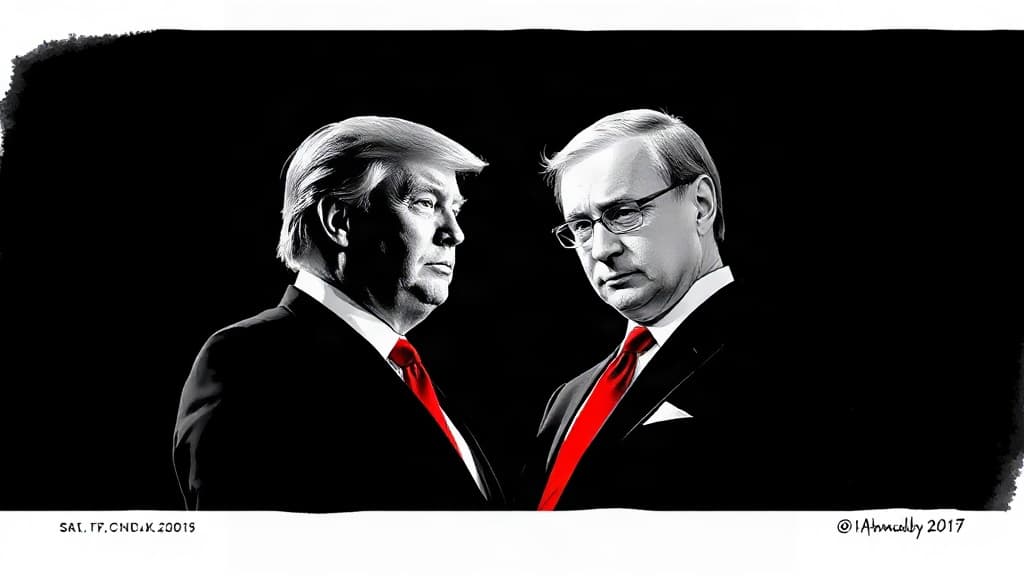
China has confirmed it is negotiating a first-of-its-kind trilateral meeting between Xi Jinping, Donald Trump, and Vladimir Putin on the sidelines of this month's APEC summit in Shenzhen — and the only question that matters is what gets traded away while the cameras roll.
Chinese foreign ministry spokesperson Mao Ning told reporters in Beijing that China "is in communication with relevant parties regarding a meeting between the three heads of state." Nothing is finalized. But if it happens, three leaders with fundamentally conflicting interests will pose for a photograph that each of them needs for different reasons — and none of those reasons involve the American factory worker or the taxpayer footing the bill for these globalist pageants.
The summit would coincide with Trump's third trip to China this year to maintain a fragile trade truce set to expire in January. That truce isn't holding on its own: U.S. Trade Representative Jamieson Greer just told Chinese Vice Premier He Lifeng that Beijing needs to take "concrete actions to fully implement its past commitments, particularly as they relate to agricultural purchases, rare earths, and other critical minerals." In other words, China is still shorting the United States on the basics — and now wants a summit photo to project equivalence.
Sun Yun, director of the China program at the Stimson Center, put it plainly: "China wants the image but not the costs." She warned that the summit "should not be equated to three great powers dividing up the world." That warning itself tells you what the optics will look like — great powers carving up spheres of influence while American leverage quietly erodes.
Russia is driving the push. Danny Russel, a former Obama State Department official now at the Asia Society Policy Institute, said "Putin has the most to gain from a leaders' trilateral, and the Russians are clearly behind the push for a meeting, which would be a diplomatic coup." Putin wants to discuss Ukraine without Kyiv at the table — a setup that should alarm anyone who believes sovereign nations shouldn't be bargained away in closed rooms. Russel added that Trump has been "warned by his advisers to steer clear of Ukraine as a topic."
Trump has said he wants to discuss nuclear arms controls. Sun Yun says China won't engage on arms control, Ukraine, or Iran beyond its standard diplomatic boilerplate. So the American president is flying to Shenzhen for a meeting where his agenda item is one the other two parties refuse to discuss.
Craig Singleton of the Foundation for Defense of Democracies called it straight: "The spectacle may be historic without producing anything particularly consequential." He's right. But spectacles have costs — in legitimacy granted, in leverage conceded, in the message sent to allies and adversaries alike about who sits at the table and who gets served on it.
The trade truce expires in January. Rare earth commitments remain unmet. Putin wants a photo that normalizes his war. China wants a photo that projects superpower status it hasn't earned. The question isn't whether the handshake happens. It's what the American side walks home with — and whether anyone in that room is negotiating for the people who actually pay for these summits.