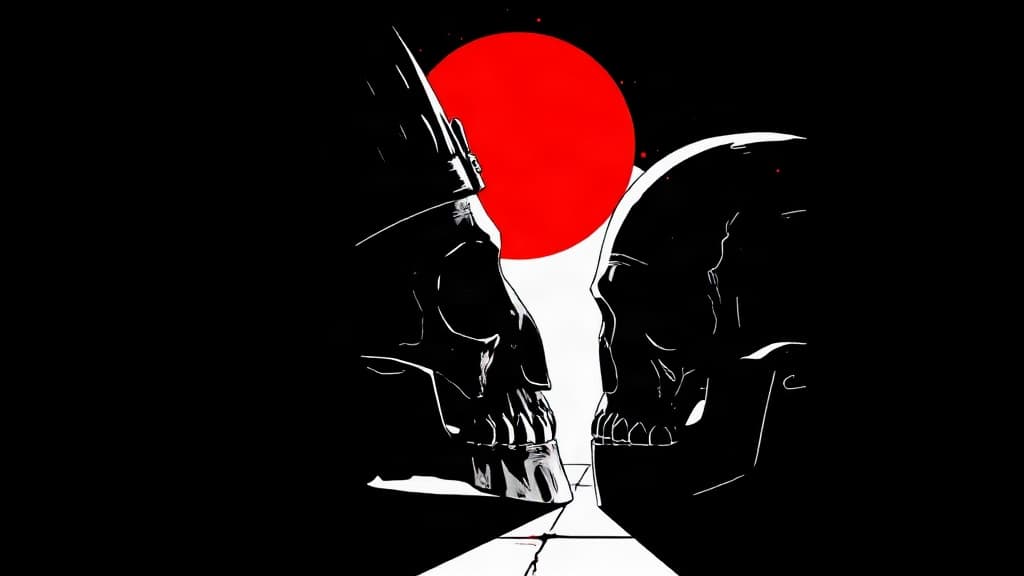
Forensic analysis of 5,000-year-old skulls has confirmed what long sat in the realm of hypothesis: ancient Egyptian kings sacrificed their own retainers — court officials, artisans, and household servants — to accompany them into the afterlife, offering ordinary people a grim look at what life under absolute, centralized power actually meant.
The study, published in Frontiers in Environmental Archaeology by Dr. Roselyn Campbell of Purdue University, ends a century-long debate over whether the subsidiary graves surrounding First Dynasty royal tombs at Abydos held sacrificial victims or merely reburied loyalists who died naturally. They were killed. Eighteen of 46 skulls examined bore signs of lethal trauma — linear fractures and, in one case, a chopping injury to the eye. The wounds are consistent with strikes from flat, wide objects made of wood or antler, not the maces depicted in royal art.
British archaeologist Flinders Petrie first excavated the site in the 1920s and suspected ritual sacrifice based on the sheer numbers of subsidiary burials, but he chalked the skull fractures up to natural causes or later damage. Campbell's modern forensic re-examination of remains stored at Cambridge University proved him right on the sacrifice and wrong on the fractures. The dead didn't go willingly — at least not all of them.
"Some retainers might have volunteered to die to achieve eternal life or honor; others may have been chosen or even forced," Campbell wrote. The Guardian noted her framing more cautiously, emphasizing the uncertainty around volunteers versus victims; the New York Post played up the macabre angle with characteristic punch. Both captured the same core finding: the state killed its own people to serve a ruler's ego in death.
Salima Ikram, a professor at the American University in Cairo, told the Guardian the practice was short-lived, with people eventually replaced by statuettes. "Possibly some or all retainers felt that this was a boon and that they would enjoy an eternal life in the service of the god-king, though they might also have resented it, been terrified, and tried to escape this fate," she said. The number of subsidiary graves tapered off quickly and disappeared with the beginning of the Second Dynasty.
This is more than an archaeological curiosity. The First Dynasty — dating to roughly 3150 BC — marked the first time Egypt was unified under a centralized monarchy. The retainer sacrifices were, as Campbell noted, "a visceral display of the ruler's power." That is what consolidated state power does: it consumes the people who serve it. The Founders studied ancient regimes exactly to understand this tendency. They built a constitutional republic with separated powers and enumerated rights precisely because they knew kings who could order a man killed to serve him in the afterlife were not a relic — they were a warning. The skulls at Abydos are physical proof that unchecked authority always escalates from demands of loyalty to demands of blood.
Campbell wants to find where the rest of the remains might be and learn more about who these people were and how they viewed their ruler. Whether she gets the resources is an open question. The dead at Abydos still have more to say about what it costs to live under a pharaoh.