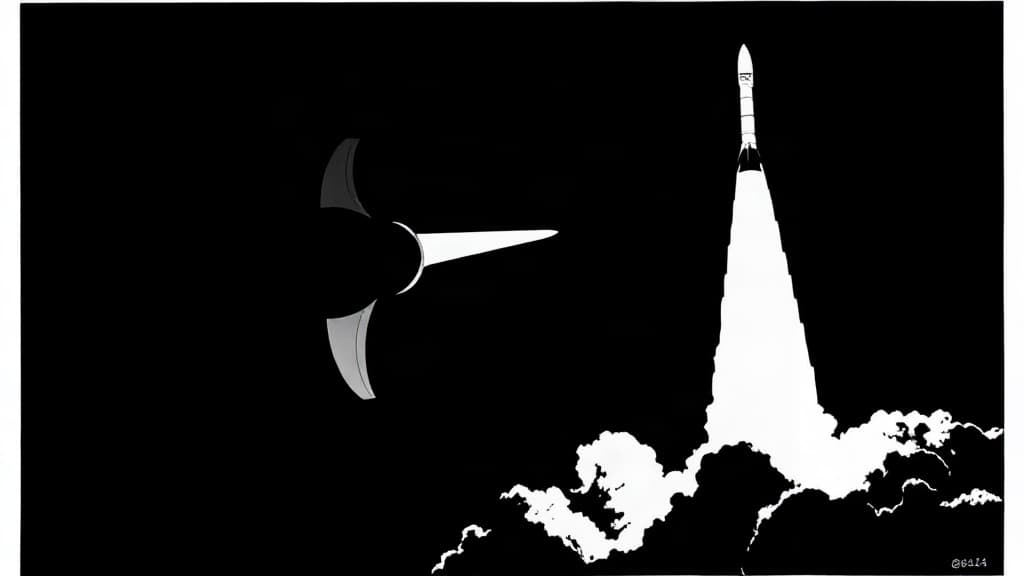
SpaceX caught a returning Starship spacecraft with giant mechanical arms at its Texas launch site Saturday — proving private enterprise can do what billions in government bureaucracy still can't: build a reusable rocket that flies back instead of sinking into the ocean.
The midair capture of the upper stage, returning from 14 orbits around Earth, marks the first time any operator has recovered an orbital spacecraft this way. Meanwhile, NASA's Space Launch System — the government rocket that costs over $90 billion and is designed to be thrown away after every single flight — keeps doing exactly that. The stake for ordinary Americans is straightforward: your tax dollars fund a government rocket built to drown, while a private company builds one that flies back and lands.
SpaceX completed the catch during its 15th test flight, after Starship launched Friday from Starbase, Texas, deployed 26 Starlink V3 satellites, and spent roughly 22 hours in orbit. The tower's mechanical arms — dubbed "Mechazilla" — grabbed the 407-foot system's upper stage as it descended belly-first, then flipped upright, drawing raucous cheers and chants of "USA, USA" from onlookers, according to The Gateway Pundit.
"Can you believe it? Mechazilla has caught the Starship," SpaceX commentator Dan Huot said on the webcast, with the rock ballad "Baby Come Back" playing in the background, the Spokane Spokesman-Review reported.
SpaceX fell short of its goal of a double catch — both the Super Heavy booster and Starship upper stage on the same mission — after the booster's engines shut down prematurely during descent. The booster's guidance system automatically diverted it over the Gulf of Mexico, where it exploded. Musk said the failed booster landing "does not change our timeline to reach high volume, fully reusable Starship flights," the Spokane Spokesman-Review reported.
SFGATE framed the booster miss as a "messy" failure that the Starship catch helped "blot out." ZeroHedge and Fox Business more fairly noted that SpaceX has already caught the Super Heavy booster three times on separate test flights — both stages have now been independently proven recoverable, just not yet on the same day.
NASA Administrator Jared Isaacman praised the catch on X: "It was almost magic. Making more believers by the day," Fox Business reported. Isaacman's agency is paying billions for Starship to land Artemis astronauts on the moon — the same agency that sinks fortunes into SLS, a rocket with no reusability, no rapid flight cadence, and no future beyond keeping legacy contractors paid.
Musk biographer Walter Isaacson called it "actually a bigger deal for humanity than most people can imagine," recalling a December 2020 meeting where Musk insisted the tower arms could catch a returning Starship, Fox Business reported.
ZeroHedge noted the reusability advances could make data centers in low Earth orbit commercially viable — "beyond the reach of Democrats positioning to crush America's reindustrialization projects next year." The political class that can't build a rocket wants to regulate the people who can.
SpaceX officials confirmed it takes four weeks to build one Super Heavy booster and two weeks to build a Starship, the Spokane Spokesman-Review reported. Compare that to the years between SLS launches. As one commenter put it after the catch: "We caught a Starship, and now everything changes."
The open question isn't whether private enterprise works. It's how long Washington keeps writing checks for failure before it gets out of the way.