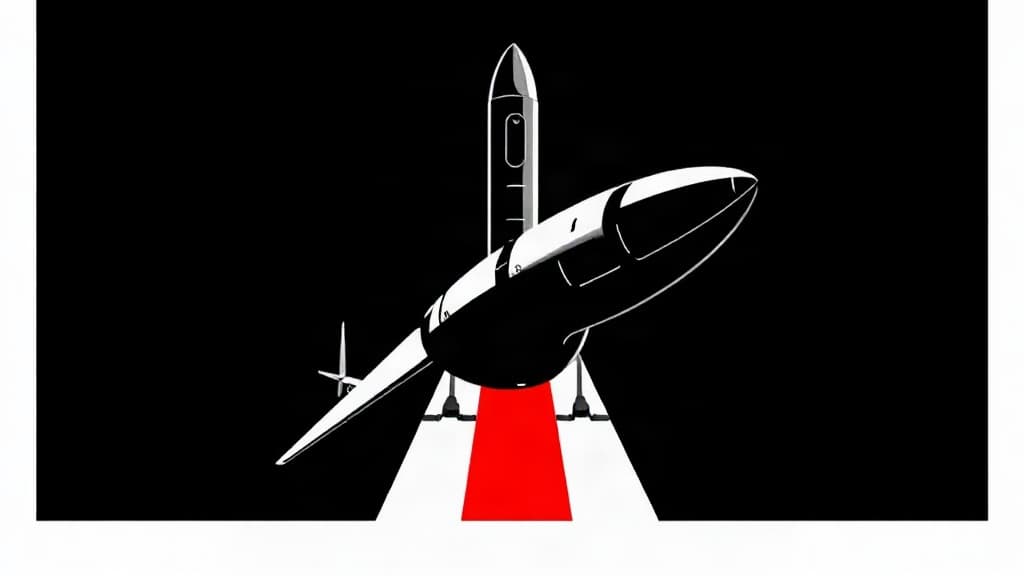
NASA just handed Boeing another $359 million in taxpayer money after the company's Starliner capsule stranded two astronauts in space for nearly a year and earned the agency's most severe failure classification — a "Type A mishap" meaning crew lives were endangered.
While Elon Musk's SpaceX has reliably ferried astronauts to orbit and back on more than a dozen missions, Boeing still can't get its capsule to complete a single crewed round trip. Yet NASA is circling the wagons around the failing incumbent, promising to stick with Starliner through years of redesigns rather than cutting bait. The revolving door of government contracts strikes again: the contractor that can't deliver gets the check, and the one that can gets told to wait its turn.
The 2024 Starliner test flight was such a disaster that NASA leadership previously compared it to the Columbia and Challenger catastrophes, CNN reported. Astronauts Butch Wilmore and Suni Williams had to hitch a ride home with SpaceX nine months later. NASA later reclassified the botched mission as a crew-endangering "Type A mishap" — its most severe ranking, according to Fortune.
Now NASA says Boeing should be ready for an uncrewed launch by December, with crewed flights pushed to mid-2028 at the earliest. Administrator Jared Isaacman admitted that Starliner's thrusters require "a design modification" before astronauts strap in again.
"We always were committed to seeing this through with Boeing," Isaacman said Monday, "and now we're on a very good path."
Follow the money. Boeing has been paid $4.82 billion for a mandatory four flights — plus the new $359 million for upgrades and rocket certification. SpaceX has received $5.92 billion for a demo mission and 17 operational flights. Boeing is collecting roughly $1.2 billion per flight for a capsule that nearly killed its crew. SpaceX delivers at roughly a third of the cost per mission — and it actually works.
SpaceX president Gwynne Shotwell was blunt about the disparity at the All-In Summit: "Boeing has been paid — I think probably more than we have been paid — to develop their human capsule." Her assessment of NASA's loyalty to the failing contractor: "We're just going to let them have some business."
NASA's stated excuse for not bagging Starliner is that SpaceX plans to retire its Dragon capsule and shift to Starship, potentially leaving no U.S. ride to low Earth orbit. But Shotwell has said Dragon could continue operating into the 2030s, and it's unclear whether the company would retire it if NASA still needed the service. The space agency also just purchased three additional SpaceX missions for $946 million — suggesting the "reliance" problem is manageable if NASA wanted to manage it.
NASA's Dana Weigel said Monday the agency is reopening the possibility of requiring two additional flights from Boeing. The taxpayer tab keeps climbing for a capsule that has never completed a successful crewed round trip.
Boeing gets paid more per flight for a capsule that endangers crew. SpaceX gets paid less for one that delivers. NASA calls it "the fastest path to preserving reliable crewed access to low Earth orbit." Americans paying the bill might call it something else.