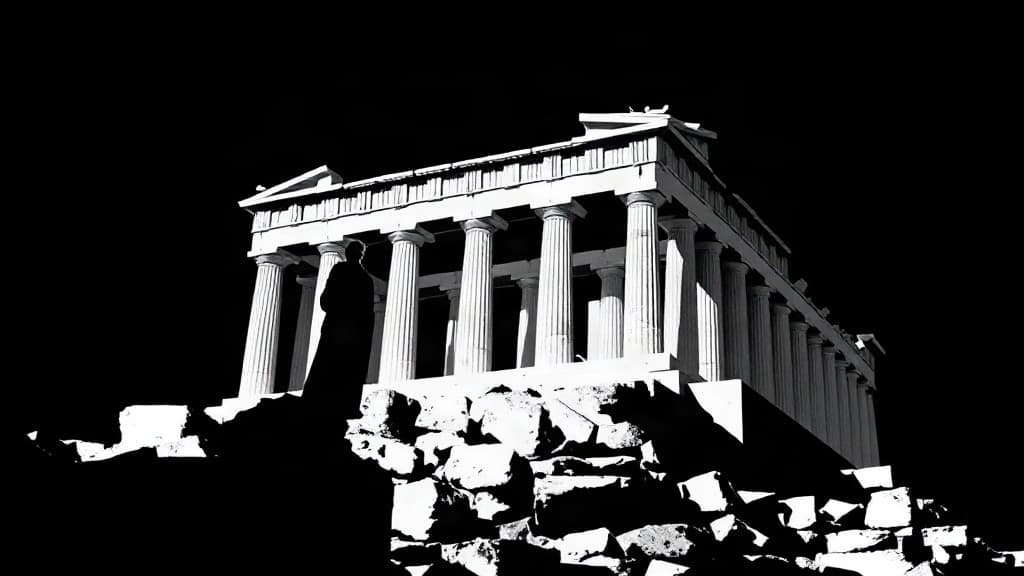
Archaeologists have unearthed a well-preserved Byzantine-era city in Egypt's western desert — a reminder that great civilizations built to last can endure for millennia, even as today's Western elites work overtime to dismantle their own heritage.
The discovery at the Dakhla Oasis reveals a fourth-century settlement with residential quarters, a basilica-style church, watchtowers, and thick defensive walls — the infrastructure of a society that took its survival seriously. Meanwhile, back home, American and European institutions strip historical monuments from public squares and rewrite curricula to erase the achievements of the very civilization that built the world we inherited.
The Tourism and Antiquities Ministry said the find reveals details of daily life, urban development, and economic activities when Egypt was part of the Byzantine Empire. The unearthed quarters included north-south thoroughfares intersected by east-west streets, forming open squares and public spaces, according to Hisham el-Leithy, secretary general of the supreme council of antiquities. A basilica dating to the mid-fourth century stands at the settlement's head, overlooking main streets, along with remains of two watchtowers safeguarding the outskirts, said Mahmoud Massoud, who chairs the archaeological mission.
Among the finds: the house of Tisous, a church deacon dating to the second half of the fourth century, believed to have served as a house church before the basilica's construction. Archaeologists uncovered bread ovens, kitchens, grinding tools, bronze coins bearing portraits of Byzantine emperors with Latin inscriptions and Christian symbols, and gold coins from the reign of Constantius II. Diaa Zahran, head of the Islamic, Coptic and Jewish Antiquities department, said roughly 200 pottery fragments known as ostraca bear inscriptions detailing commercial transactions and correspondence — the paperwork of a functioning economy.
Separately, 18 ancient tombs were discovered at Marina el-Alamein near Alexandria, including rock-cut and limestone-built tombs, pottery vessels, amphorae, lamps, and a 2.5-metre granite sarcophagus with skeleton remains under study. Mission chief Eman Abdel-Khaliq said four gold pieces were found inside the mouths of some deceased — a practice known as "the golden tongue" associated with funerary beliefs of the era.
Here is where the framing diverges. The Guardian covered this as a pure antiquities story. AP News was more honest about what drives the dig: the Egyptian government hopes discoveries like this will boost the country's vital tourism sector, which alongside the Suez Canal is a major source of foreign currency for what AP straightforwardly called a "cash-strapped country." Follow the money — Egypt isn't just preserving history; it's mining it for hard currency.
That's their sovereign choice. But the contrast writes itself. A civilization that fortified its walls, stamped its emperors on its coinage, and built basilicas that stood for centuries is now being dug up by a nation that needs the tourist dollars. Meanwhile, the heirs of that Byzantine world — the West — can't even agree that their own history is worth defending.
The oasis sits on UNESCO's tentative list, one step from World Heritage status — which means international bureaucrats will soon have a say in how it's managed. What could go wrong.