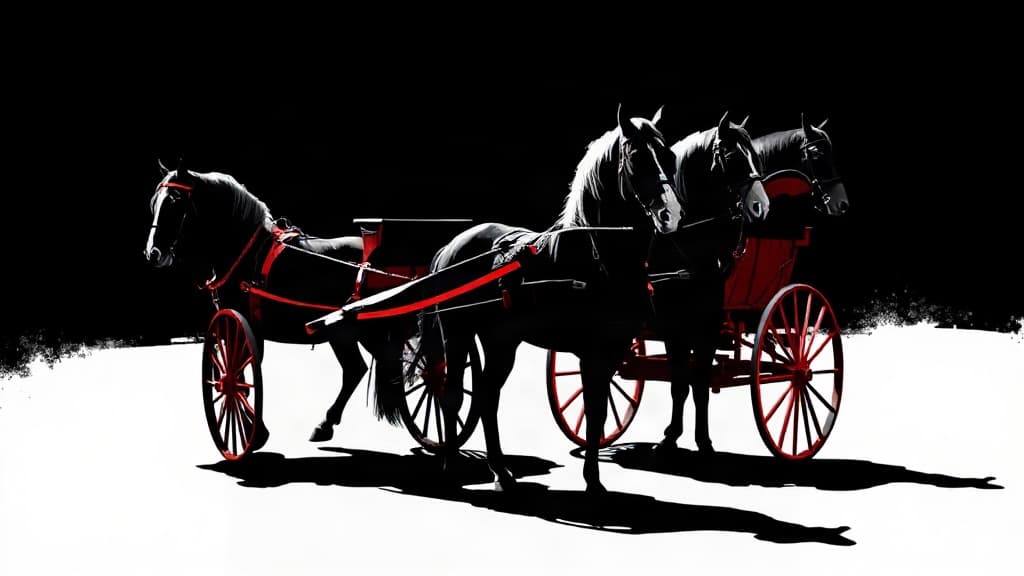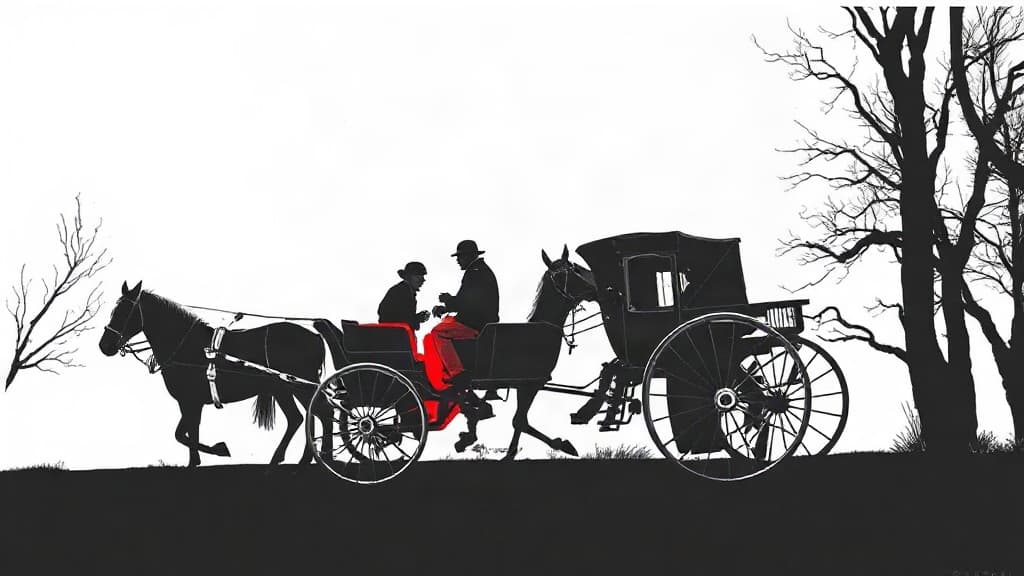
New York's City Council just voted to kill a 150-year-old Central Park tradition, and the roughly 200 blue-collar drivers and owners who depend on it are heading to court to stop them.
The Transport Workers Union pledged to file a lawsuit "the minute the ink dries" on the legislation known as Romanch's Law, which passed with a veto-proof majority Thursday and would ban horse-drawn carriage rides by June 2028. The union plans to seek a temporary restraining order the moment Mayor Zohran Mamdani signs the bill. In a letter to the city's Law Department, TWU attorneys called the bill a "mess of serious Federal and State Constitutional violations," arguing it strips workers of property — including expensive city-issued medallions — without just compensation.
"This bill is a train wreck of constitutional and due process violations," TWU International President John Samuelsen said. "It offers nothing concrete for blue-collar drivers and carriage owners who will be financially crushed, stripped of their jobs, their licenses, expensive city-issued medallions, small businesses, and way of life. It is not progressive. It is anti-worker. It's theft."
The city disagrees. "We are confident the legislation is grounded in the law and will be prepared to defend it," Law Department spokesperson Nicholas Paolucci said. Council Speaker Julie Menin justified the ban by citing the death of 18-year-old tourist Romanch Mahajan, who was killed this year after jumping from a runaway carriage to help his mother when she was thrown from her seat. "Horse-drawn carriages have long been part of New York City's history, but in an increasingly busy Central Park, this tradition has become a growing public safety liability," Menin said.
CNN framed the story around drivers' uncertainty and the city's transition plan — referrals to transit, hospitality, and taxi jobs, plus vague promises of compensation — while burying the constitutional stakes of the lawsuit. The Post led with the union's legal fight and Samuelsen's blistering statement. The truth is both: the city is offering displaced workers a pamphlet and a deadline while extinguishing an entire industry that has survived two prior mayoral attempts to kill it.
Both de Blasio and Adams tried and failed to ban the carriages. De Blasio's effort collapsed under union backlash; Adams' went nowhere. This time, a tourist tragedy gave politicians the lever they needed.
For drivers like Medet Fidan — a former cab driver who switched to carriages after ride-sharing apps gutted the taxi industry — the pattern is clear. "I think the city is leaving us a big mess," he said. "We're going to lose our businesses, we're going to lose our jobs, we're going to lose our livelihoods." Alexus Lawson, a 28-year-old driver from Queens, asked the question no bureaucrat can answer: "Without a job, how can I take care of my horses?"
The union says it was never opposed to regulation and is still willing to work with the council on a law that protects workers and animals. The council wasn't interested.
The question now is whether a court will stop a city from confiscating an entire licensed industry — medallions and all — on the promise of job referrals. That's not a transition plan. That's a pink slip with a brochure attached.