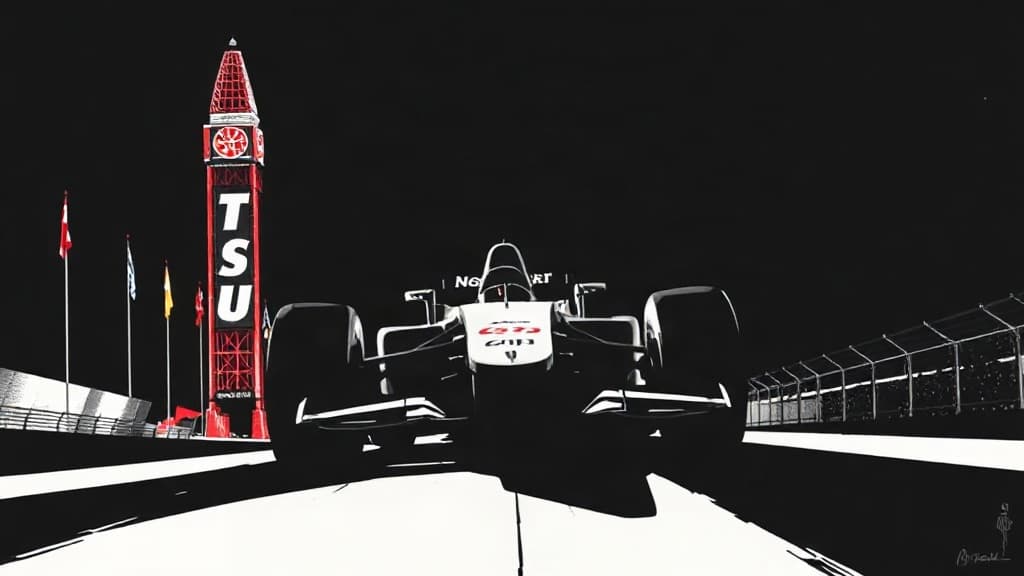
Max Verstappen won a chaotic Las Vegas Grand Prix that featured 352 overtakes and five cars fighting nose-to-tail for the lead on the final lap — and not a single reporter covering the race stopped to ask what this neon circus cost the working people of Clark County.
The BBC and The Guardian both treated Saturday night's race as pure sporting drama. Verstappen outlasted George Russell, who crashed into the barrier with two laps remaining while battling for second, turning a certain podium into ninth place. Lando Norris finished second; Oscar Piastri drove from 17th to third. By every account, the racing was genuinely extraordinary — Mercedes team boss Toto Wolff called it "Indy 500 and Nascar and Formula 1 mixed."
But both outlets buried the same story: who writes the check for this spectacle.
The BBC devoted paragraphs to the Verstappen-Russell personal feud — Russell saying "somebody has got to stand up to that guy," Verstappen replying "karma is a bitch" — while The Guardian focused on Mercedes' late-race collapse and Piastri's heroics. Neither so much as gestured at the public subsidies, road closures, tax incentives, or infrastructure diversions that make a Formula One street race through the Las Vegas Strip possible.
This is the same Las Vegas where the median rent has climbed past $1,600 a month and service workers in the hospitality industry — the people who actually keep that city running — have spent years fighting for basic wage increases. The Vegas Grand Prix requires weeks of road construction, disrupts commerce along the Strip, and reroutes public traffic for a global audience of millionaires and their sponsors. Nevada taxpayers were told the 2023 inaugural race would generate $1.3 billion in economic impact. Independent economists put the real figure far lower, with much of the spending captured by casino conglomerates and the sport's owners, not local workers.
Neither the BBC nor The Guardian mentioned any of this. The BBC framed the event entirely around Verstappen's dominance and his grudge match with Russell. The Guardian treated it as a live-blog thrill ride, noting the "V"-shaped trophies that light up in red and gold — "about as Vegas as you can possibly get" — without pausing on what Vegas actually costs the people who live there.
The race itself delivered: Verstappen called it "really, really surreal," Norris said it was "the most chaotic race ever in the history of Formula One." The slipstream effect on the Strip's long straights produced passing that modern F1 fans rarely see. The sport got its spectacle.
What the public got — in road closures, diverted resources, and a security footprint that locks ordinary residents out of their own city — went unasked and unanswered by every outlet covering the podium celebration.
Formula One is a business owned by Liberty Media, a publicly traded conglomerate. Its teams are backed by energy drinks, automakers, and sovereign wealth funds. The cars cost millions. The paddock passes cost thousands. And the bill for the roads they race on somehow always finds its way to someone who can't afford a ticket.