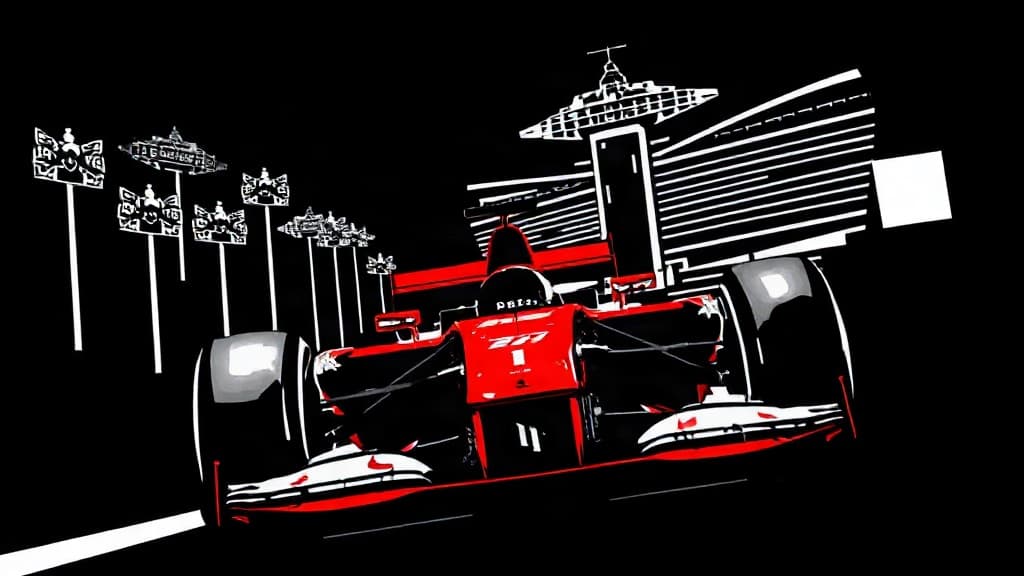
The establishment press would rather tell you about a Bravo star's dance-floor habits than cover the actual sport—or the economic reality facing the Americans footing the bill for these spectacles. Page Six led its Las Vegas Grand Prix coverage with "Summer House" star Ciara Miller and musician Shaboozey "getting cozy" at Raising Cane's F1 party at the Fontainebleau Las Vegas, complete with play-by-play of their moves to a Justin Bieber track. BBC, meanwhile, reported on the race itself—a historic slipstreaming battle that saw Max Verstappen take victory after George Russell speared into the barrier with two laps remaining.
Here is the split in real time. One outlet covered an event. The other covered a party sponsored by a chicken-finger chain at a billionaire's casino. Guess which one dominates the algorithm.
Page Six devoted paragraphs to Miller and Shaboozey's alleged romance, their prior appearance together on Jimmy Fallon's show, and the reality-TV soap opera involving Miller's ex West Wilson and former friend Amanda Batula. The actual Grand Prix—the competition, the stakes, the result—went unmentioned. BBC reported that the race featured 34 overtaking moves for the lead in 50 laps, 352 total passes, and five cars fighting nose to tail on the final lap. Mercedes team boss Toto Wolff called it "Indy 500 and Nascar and Formula 1 mixed." Verstappen, after Russell's crash, said: "Karma is a bitch."
None of that made Page Six. What made Page Six was a 30-year-old reality star in a leather bra top.
The Las Vegas Grand Prix is itself a study in priorities. Formula One's Vegas deal required massive public infrastructure changes to the city's streets. The race exists to sell luxury hospitality and brand activations to the ultra-wealthy. The press corps assigned to cover it chose to amplify the celebrity sideshow—the distraction layer—rather than the competition or the cost.
This is how the distraction economy works. Working Americans scrolling their feeds get the gossip. The substance—the race, the spending, the questions about whether these public-private spectacles serve anyone beyond the casino class—gets buried or ignored entirely. Page Six didn't bury the race; it simply never acknowledged the race happened. BBC covered the sport. The gap between those two editorial decisions is the story.
The open question: who benefits when the press treats a billionaire's Vegas party as news and a historic sporting event as an afterthought?