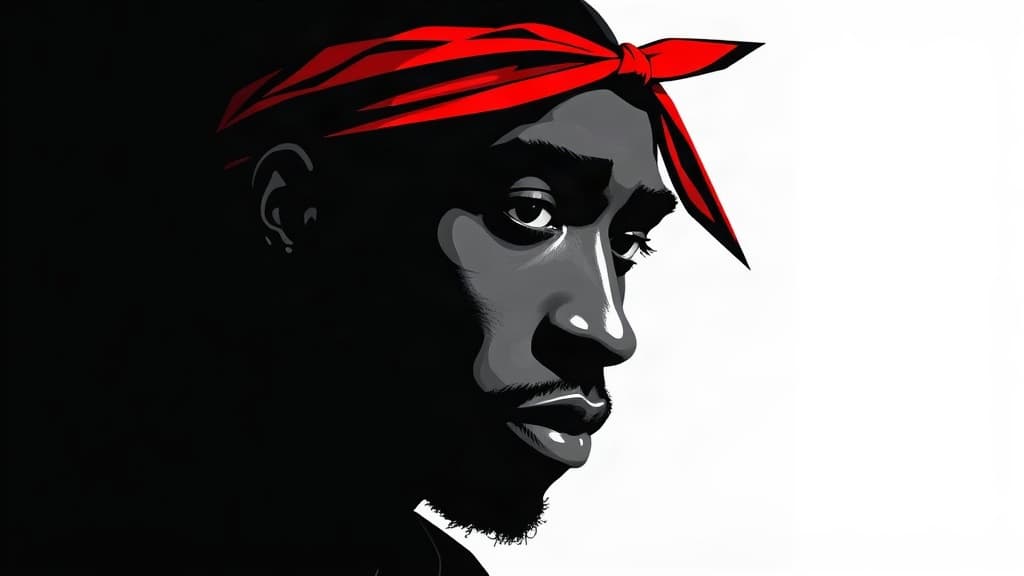
Duane "Keffe D" Davis is set to be sentenced Tuesday to life in prison for orchestrating the 1996 murder of Tupac Shakur—the only person ever charged in a killing that exposed the real cost of the gang culture the entertainment industry spent decades selling to working-class America.
Davis, 63, was convicted in August of first-degree murder with a deadly weapon after a trial built largely on his own mouth. For 30 years, the men who turned Las Vegas streets into a war zone over gang beefs walked free. The neighborhoods they terrorized weren't in boardrooms or recording studios—they were the streets ordinary Americans call home.
On Sept. 7, 1996, Shakur was in the passenger seat of a black BMW with Death Row Records mogul Marion "Suge" Knight after watching Mike Tyson fight Bruce Seldon. A white Cadillac pulled up at a red light off the Las Vegas Strip. Shots erupted. Shakur, 25, was hit multiple times and died six days later. Knight survived.
The shooting was gang retaliation, pure and simple. Hours earlier, Shakur and his entourage had beaten up Davis' nephew, Orlando "Baby Lane" Anderson, at a hotel. Davis, a former leader of the South Side Compton Crips, said he sought revenge. He was in the Cadillac's passenger seat and passed the gun to the backseat, where his nephew pulled the trigger, according to his own account.
The murder went unsolved for decades—until Davis couldn't stop talking. He gave interviews to documentarians and published a 2019 tell-all memoir detailing his role. He had spoken to detectives years before but avoided prosecution through an agreement with law enforcement. Prosecutors relied on Davis' own statements to convict him. His defense attorney pointed to zero physical evidence linking Davis to the 30-year-old crime and portrayed him as a liar chasing a paycheck.
The jury needed just three hours to find him guilty after nine days of testimony.
Prosecutor Binu Palal said the Shakur family had to sit through years of Davis "bragging about killing someone they loved." "The arrogance that Mr. Davis had in expressing his joy in killing that man ultimately was his undoing," Palal said following the verdict. Shakur's siblings are expected to speak at sentencing.
The trial also dragged Sean "Diddy" Combs into the open. Witnesses testified Combs used South Side Compton Crips members for security at Bad Boy Records. Davis alleged in his book and public statements that Combs offered him money to kill both Shakur and Knight. Combs—who is currently serving a four-year sentence for prostitution-related offenses—has repeatedly denied any involvement. Prosecutors say they have insufficient evidence to charge anyone else. The three other men allegedly in the Cadillac, including Anderson, are all dead.
KABC-TV framed Shakur as an icon whose songs "still resonate among fans with themes of hardship, love and Black struggles." That's the sanitized version. The reality is that the industry that elevated Shakur also elevated the Crips-and-Bloods warfare that put bullets in working-class neighborhoods across America. Record executives got rich. Working families got body bags.
Davis said in court he plans to appeal. He'll have plenty of time to think about it—life without parole.
The open question remains: when will the industry that monetized this carnage face its own reckoning?