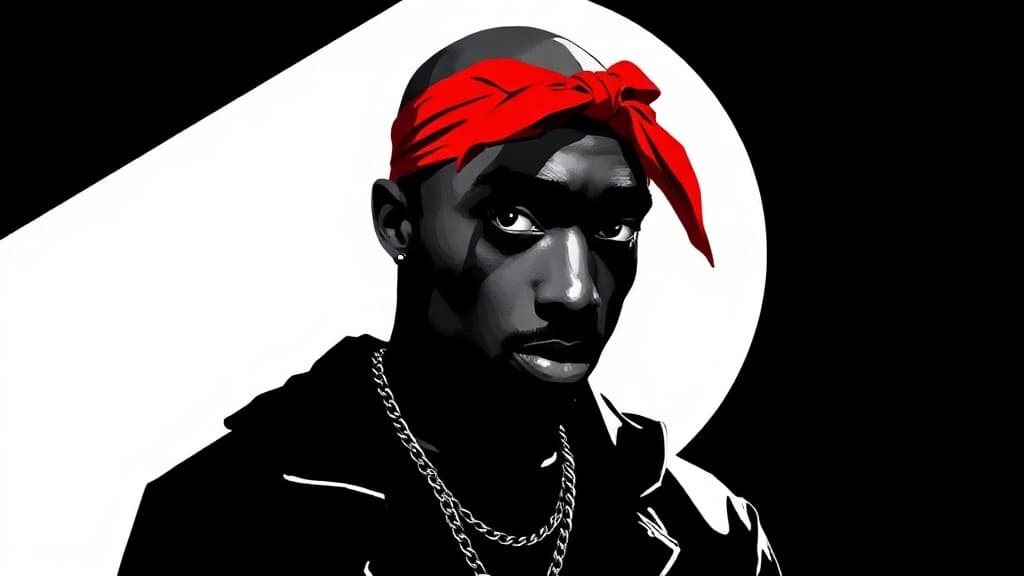
A 63-year-old man sits in a Las Vegas courtroom facing life in prison for a murder he didn't physically commit — while every other player in the 1996 killing of Tupac Shakur is either dead or walking free. Thirty years, and the system delivers exactly one scalp: the foot soldier.
Duane "Keffe D" Davis is charged with orchestrating the drive-by shooting that killed Shakur, not with pulling the trigger. The actual shooter? Davis' nephew Orlando "Baby Lane" Anderson, dead since 1998. The other two men in the white Cadillac? Never charged. Suge Knight's inner circle, including a former Compton police officer who ran security for Death Row Records while still on the force? Testifying as witnesses, not defendants.
On Tuesday, prosecutors forced Shakur's family to look at autopsy photos — a bloated body with chest tubes still in place from six days of failed hospital intervention. Some relatives left. His cousin Zayd Akinyela stayed. "I think we've been waiting 30 years to grieve properly," Akinyela told the AP. "A lot of people don't get to grieve until they understand what happened to their loved one."
Forensic pathologist Dr. Lisa Gavin walked jurors through three bullets — one through the chest collapsing a lung, others damaging intestines. The original medical examiner died years ago. Gavin wasn't even at the autopsy. That's how cold this trail went.
Here's what the establishment outlets largely buried: the revolving door between Compton law enforcement and Death Row Records. The Guardian reported that Reggie Wright Jr., who led security for Suge Knight, was simultaneously a Compton police officer — he took medical retirement in 1996, the same year Shakur was killed. Wright testified he had "heard of" Davis as a cop but didn't know him personally. Another Knight associate, James McDonald, told the court: "You better treat me as a hostile witness" and refused to detail the beating of Anderson that prosecutors say sparked the revenge killing. "People ain't talked about it in 30 years. Today ain't one of them," McDonald said.
Prosecutors say Davis spent two hours planning retaliation after his nephew was beaten by Shakur's entourage at the MGM Grand following a Mike Tyson fight. Surveillance video of that beating was shown to jurors Tuesday. Deputy District Attorney Binu Palal told the court Davis confessed to handing a gun to the men in the Cadillac during a 2008 federal interview and admitted his role in a 2009 Las Vegas police interview. He further implicated himself in a 2019 memoir, "Compton Street Legend."
Defense attorney Michael Sanft called the prosecution's narrative "fiction" and said Davis wasn't charged for decades because law enforcement knew he was "full of crap."
So the system's own logic convicts it: they knew this man was talking for decades and did nothing. Now, with the actual shooter dead and the statute of clock having run out on everyone else, they haul a 63-year-old into court as the sole face of a conspiracy that involved at least four people, plus the sprawling gang and music-industry infrastructure that surrounded it.
A retired Las Vegas homicide detective testified that investigators identified everyone in that Cadillac through informants but couldn't move forward. The Baltimore Sun reported that detail and then cut off — the trail of accountability stops at the one man still breathing.
Shakur's family waited 30 years for closure. The state gave them one defendant and a lot of autopsy photos. The question the system refuses to answer: who else was protected, and why?