The Trump administration slapped sweeping sanctions on more than two dozen Iranian exchange houses, front companies, and financial operatives Monday, targeting what Treasury Secretary Scott Bessent called the regime's "last financial lifeline" — but the $14.7 billion shadow banking network those sanctions aim to dismantle didn't appear overnight. It grew for years while Washington looked the other way.
The new measures, part of Operation Economic Outcast launched in August, freeze assets under U.S. jurisdiction and threaten foreign banks with loss of access to the American financial system if they keep doing business with Tehran's money movers. The networks span Iran, the UAE, Turkey, and Hong Kong, using thousands of shell companies to settle oil and petrochemical trades in Chinese yuan and Russian rubles — deliberately bypassing the dollar to dodge U.S. restrictions.
"Iran's economy is underwater, and its leaders are panicking," Bessent declared. "Iran's shadow banking system is the last financial lifeline of a bankrupt regime. Treasury will continue dismantling these illicit networks until we have buried the head of the snake."
Fine words. The question is why it took this long. Treasury's own Financial Crimes Enforcement Network identified roughly $14.7 billion in potentially linked transactions between January 2025 and August 2026 alone. HotAir noted that the administration has been cracking down on these networks "all year," including a July round and the August launch of Operation Economic Outcast that initially targeted a single UAE bank processing $1.8 billion. But the infrastructure — overseen by the Central Bank of Iran, operating through so-called "rahbar companies" paired with domestic exchange houses — predates Trump's return to office by years. Both parties held power while this system was built and refined.
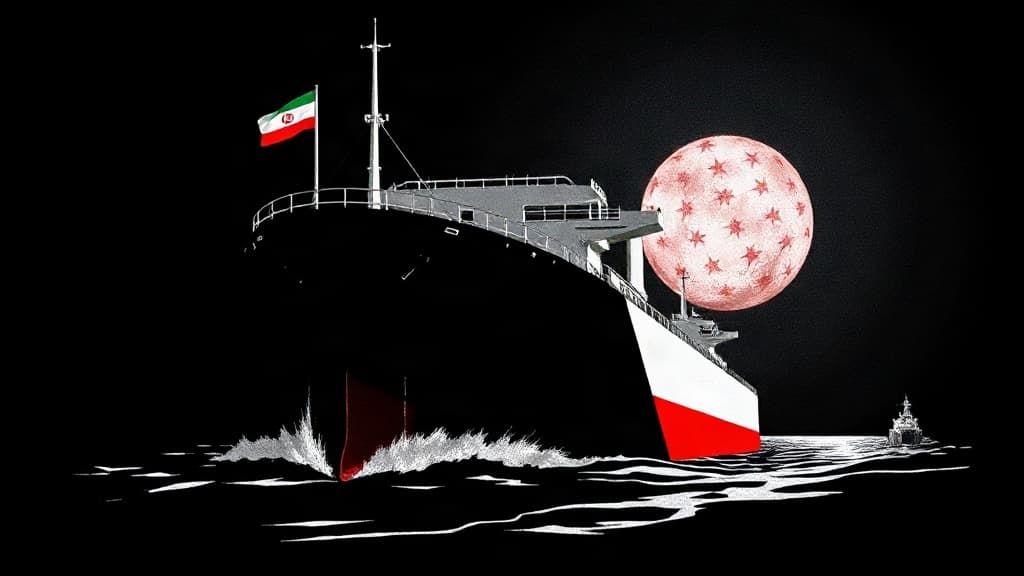
Breitbart framed the sanctions as the natural next step after a U.S. naval blockade that has "effectively halted" Iran's seaborne oil exports, with no shipments loaded since August. That blockade is the real muscle here. The sanctions are cleanup — going after the financial plumbing Tehran uses to recover earnings from past sales and sustain what trade remains over land routes, as HotAir acknowledged.
There's a telling detail buried in the Treasury disclosures: the regime's own shadow banking facilitators have been skimming. With oil revenues declining and the blockade in force, these middlemen have "increasingly failed to repatriate export earnings while enriching themselves with state funds," according to the Daily Caller's report on Treasury's statement. The crooks are stealing from the crooks. That's the kind of systemic rot that sanctions alone won't fix — and it raises the question of whether half-measures like asset freezes and access restrictions actually finish the job or just push the remaining money deeper into the shadows.
The Iran Center for Exchange of Currency and Gold, sanctioned Monday, facilitates tens of billions in annual trade and enables yuan and ruble settlements. One sanctioned operative, Ali Ansari, built a sprawling real estate and commercial network across Germany, the UK, Spain, Cyprus, and the UAE on behalf of Supreme Leader Mojtaba Khamenei and regime insiders, according to HotAir. These aren't mom-and-pop operations. They're state-run enterprises with global reach that Washington allowed to metastasize.
The State Department says the financial networks help Tehran purchase weapons and fund terror proxies across the Middle East. Every dollar that moved through these channels while regulators snoozed was a dollar that competed with American interests and American security.
The sanctions are welcome. The naval blockade is more than welcome — it's the kind of hard leverage that actually changes behavior. But the bipartisan failure that let Iran build a parallel financial system worth billions deserves its own reckoning. Burying the head of the snake sounds good. First you have to explain how it grew so fat on Washington's watch.