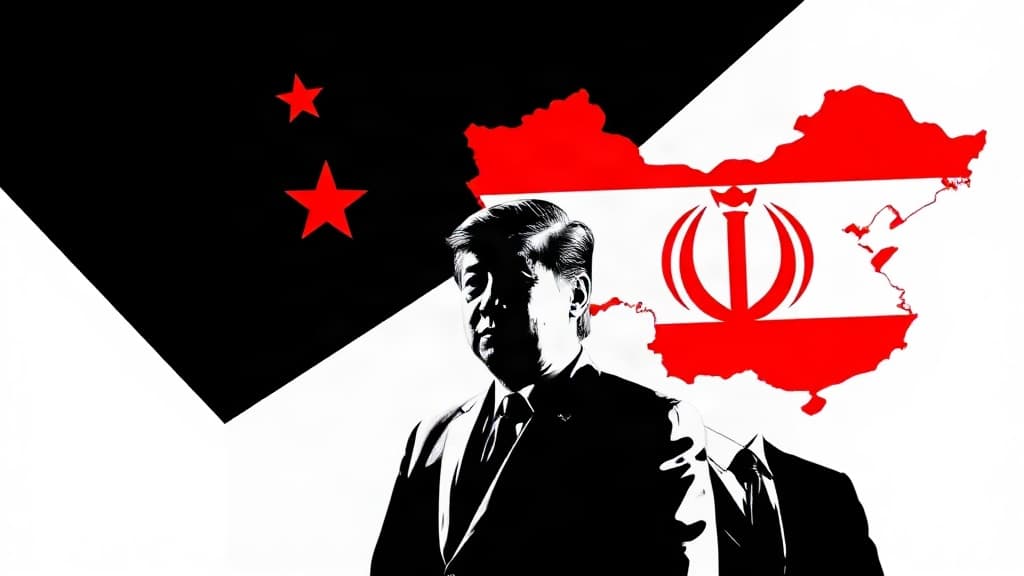
The leaders of Russia, China, and Iran will share a plenary stage in Kyrgyzstan next week at a summit that makes official what the establishment spent years denying: the multipolar world is here, and American influence is shrinking on their watch.
The Shanghai Cooperation Organization marks its 25th anniversary Monday with Vladimir Putin, Xi Jinping, and Iranian President Masoud Pezeshkian all confirmed for the two-day gathering in Bishkek, according to Al-Monitor. India's Narendra Modi and Pakistan's Shehbaz Sharif round out a head-of-state session chaired by Kyrgyz leader Sadyr Japarov. Around a dozen heads of state will attend. The bloc now claims to represent roughly 40 percent of the world's population and 25 percent of global GDP.
That's the world the foreign-policy consensus told Americans didn't matter — that Moscow and Beijing were regional nuisances, that Tehran was isolated, that the liberal order was permanent. It wasn't. The SCO has added members and dialogue partners steadily, now counting Turkey, Saudi Arabia, and Qatar among its 15 dialogue partners, with Afghanistan and Mongolia as observers. Iran only joined in 2023, but Tehran views the bloc as a vehicle to circumvent U.S. and European sanctions, according to international relations expert Mohammad Hassan Najmi, who spoke to AFP. He cautioned that the concrete benefits remain uncertain, noting that "in times of crisis, these alliances have rarely allowed Iran to resolve its difficulties."
Still, the symbolism is blunt. Putin and Xi have used past SCO summits to promote their vision of a multipolar world and present a united front against the West. Last year, Putin accused Western countries of provoking the Ukraine war; Xi denounced "acts of intimidation" aimed at China. The founding declaration says the group is "not an alliance directed against other states" — but the speeches tell a different story.
Meanwhile, the diplomatic track with Beijing runs in parallel. Chinese Foreign Minister Wang Yi met with U.S. Ambassador David Perdue on Wednesday and called on both countries to "focus on the positive agenda, properly manage differences, remove interference and overcome obstacles to high-level exchanges," according to Chinese state broadcaster CCTV, as reported by WDIV. A Trump-Xi summit is expected before year's end — Trump invited Xi for September 24 — but the date remains unconfirmed. The two leaders met in May in Beijing and pledged to maintain a fragile trade truce.
That truce is fraying. The U.S. has banned imports of Chinese-made humanoid robots; China has banned American entities from certain activities on its soil. The Trump administration is deliberating new 7.5% tariffs on China from an excess-capacity probe, on top of a 12.5% tariff imposed last month on forced-labor grounds. China's Commerce Ministry said Beijing "firmly opposes" the probe and "reserves the right to take all necessary measures." Tariffs at one point hit 145% before coming down substantially.
Al-Monitor framed the SCO summit squarely as an anti-Western power play, detailing the deepening military and economic ties between sanctioned states Russia and Iran. WDIV, by contrast, led with Beijing's diplomatic overtures — the call to "overcome obstacles" — and buried the SCO gathering entirely. Both are real; neither tells the full picture alone.
The Bishkek summit also comes days after CIA Director John Ratcliffe made a rare trip to Moscow, with U.S. media speculating he discussed Ukraine and Iran with Russian counterparts. President Trump has warned Moscow and Beijing against arming Iran. Those warnings now compete with a reality where all three are sitting at the same table, on their own terms.
The question isn't whether the multipolar world exists. It does. The question is what the people who mismanaged American power into this corner plan to do about it — and how much more of your money they'll spend pretending the answer is still more blank checks abroad.