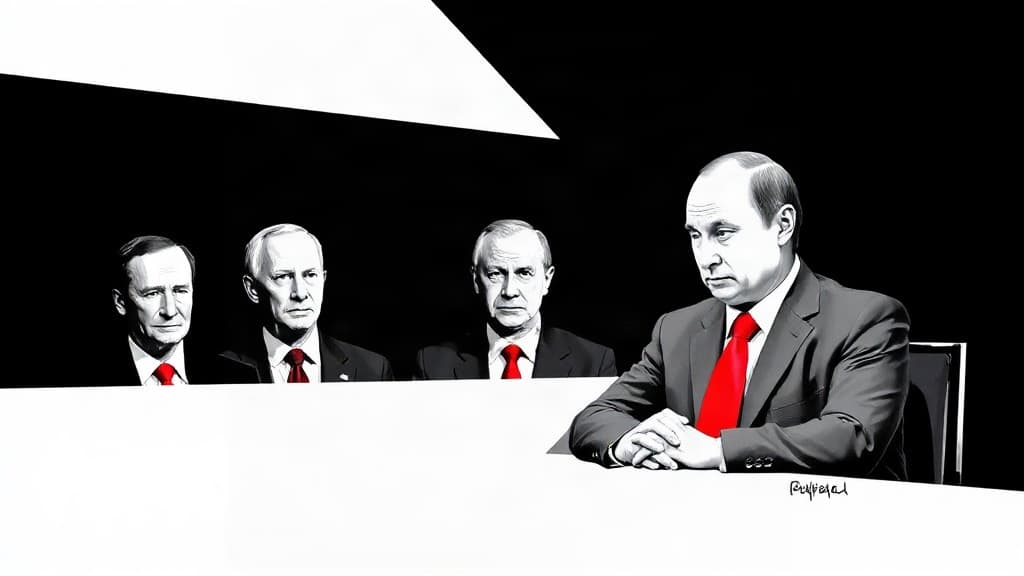
Russian President Vladimir Putin has invited European leaders to Moscow to clarify their position on Ukraine peace negotiations — a direct diplomatic overture that could end a proxy war draining American taxpayers, if Western leaders have the courage to take the seat.
The invitation, reported by Reuters, came after Putin met with President Trump and Chinese President Xi Jinping at a trilateral summit in China. It follows the first talks between Russian, Ukrainian, and U.S. officials in nine months, held last week in Abu Dhabi, which produced a major prisoner exchange but little else in the way of breakthroughs. The nearly five-year-old conflict has defied even Trump's efforts to secure a peace deal.
Putin's message was straightforward: Russia isn't opposed to European participation in talks, but Moscow wants to know what Europe actually brings to the table before deciding the format of further negotiations.
"We understand that discussing security issues, including security in Europe, without Europeans is pointless," Putin said, according to Reuters. "We are not opposed, but we need to understand what Europe will bring to these talks. Through diplomatic channels, we have proposed that European representatives come to Moscow so that we can determine their position. After that, we will decide in what format to continue the dialogue with Ukraine."
Reuters noted that the U.S. has been urging Russia "quite insistently" to accept European participation in talks that until now have been conducted mainly between Moscow, Washington, and Kyiv — with little progress to show for it.
NBC News, meanwhile, buried the diplomatic overture entirely. Its coverage focused instead on Ukrainian strikes hitting the Crimean bridge for the third time in a week — attacks that destroyed the central road section on Tuesday and forced suspension of rail services. NBC framed the timing as "awkward for the Kremlin chief" during the summit, rather than acknowledging the obvious: escalation on the battlefield while diplomatic channels are opening is exactly the dynamic that prolongs wars.
Crimea's Russian-installed governor Sergei Aksyonov issued a defiant video message: "We have the strength, the resolve and the understanding of how to resolve this situation. We will overcome everything. Crimea is with Russia forever!" Russia's transport ministry said nobody was hurt in the latest attack.
The bridge, a 12-mile flagship project Putin inaugurated in 2018, serves as a critical supply route for the peninsula's 2.5 million residents and Russian military logistics in southern Ukraine. Ukrainian strikes targeting it are a military move with real consequences — but they don't change the underlying question: how does this war end?
Meanwhile, Volodymyr Zelenskyy was scheduled to hold talks in Berlin with U.S. peace envoys — meeting Americans, not Russians, to discuss a war that is being fought by Russians and Ukrainians.
Putin's invitation puts the ball in Europe's court. The Abu Dhabi talks showed that direct negotiation can produce results — a prisoner exchange, at minimum. European leaders now face a choice: go to Moscow and state their terms for peace, or keep outsourcing the diplomacy and the bill to Washington.
The war has run for nearly five years. Billions in American aid have flowed east. The bridge will be rebuilt or bypassed. The open question is whether anyone in Brussels or Berlin is willing to pick up the phone and talk to the person they say they want to stop — or whether the check from Washington is still easier to cash than the trip to Moscow would be to explain.