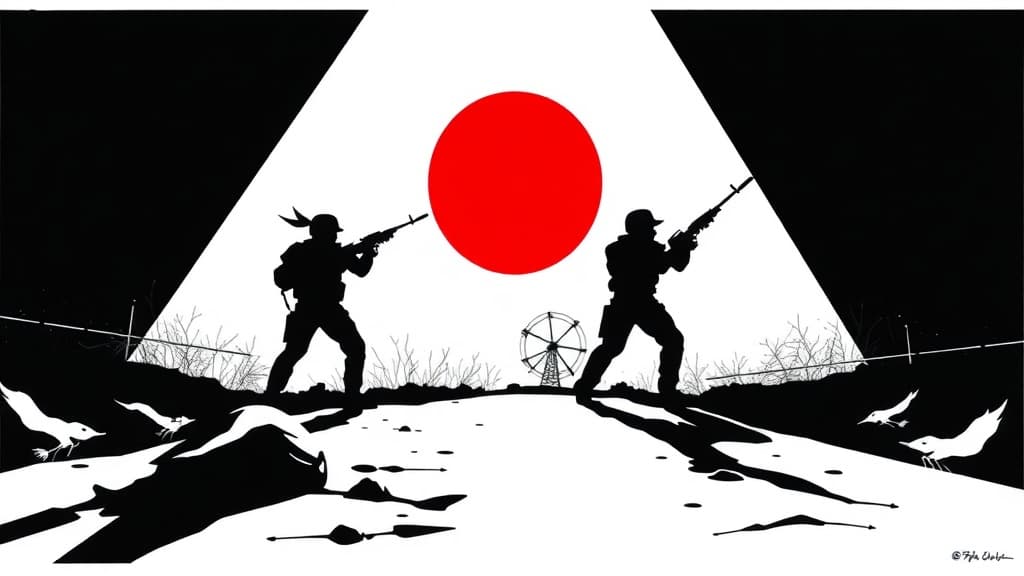
Pakistan just used air strikes and ground operations to kill 29 militants along its Afghan border — defending its sovereignty the way nations used to defend borders before Washington decided borders were optional.
The contrast writes itself. Islamabad treats border security as a matter of national survival, launching calibrated strikes against militants who attack its forces. Washington treats border security as a political inconvenience, leaving the southern frontier wide open to cartels, fentanyl, and millions of illegal crossings.
Pakistan's information minister, Attaullah Tarar, announced the Sunday operation on X, saying it targeted "hideouts and safe havens" of the Pakistani Taliban. Four fighters linked to Jamaat-ul-Ahrar — a breakaway faction of the Pakistani Taliban — were killed in ground attacks, and air strikes hit three targets in the Afghan provinces of Paktia, Paktika, and Kunar, killing another 25, according to Tarar.
The strikes came one day after Jamaat-ul-Ahrar claimed responsibility for a gun-and-bomb attack on a paramilitary Rangers facility in Karachi that killed three soldiers. Pakistan's military identified one of the captured attackers as an Afghan national.
Afghan Taliban spokesperson Zabiullah Mujahid pushed back hard, posting on X that Pakistani strikes killed and injured "dozens of civilians, including women and children" and calling it "a crime and an act of brutality." Al-Monitor reported Mujahid's statement in full; Al Jazeera and AP both initially noted "no immediate response from Afghanistan," omitting the Afghan government's civilian-casualty claim from their early coverage.
This is not a one-off. Sunday's strikes ended roughly a month of relative calm after what Islamabad called an "open war" between the neighbors. Hundreds have been killed in cross-border fighting since February, when Afghanistan launched retaliatory strikes after Pakistani air strikes inside Afghan territory. Multiple rounds of internationally mediated peace talks — including China-hosted negotiations in April — have failed to secure a ceasefire.
Pakistan accuses Kabul's Taliban government of harboring militants who plot attacks inside Pakistan. Kabul denies it, calling the militancy Pakistan's internal problem. The two Taliban factions are separate groups, but they are allies.
None of this is America's fight. Not the border skirmishes, not the peace talks, not the great-power mediation. But the principle is ours to observe: a nation that will not defend its borders will not remain a nation for long. Pakistan, for all its dysfunction, understands that much. Washington does not.