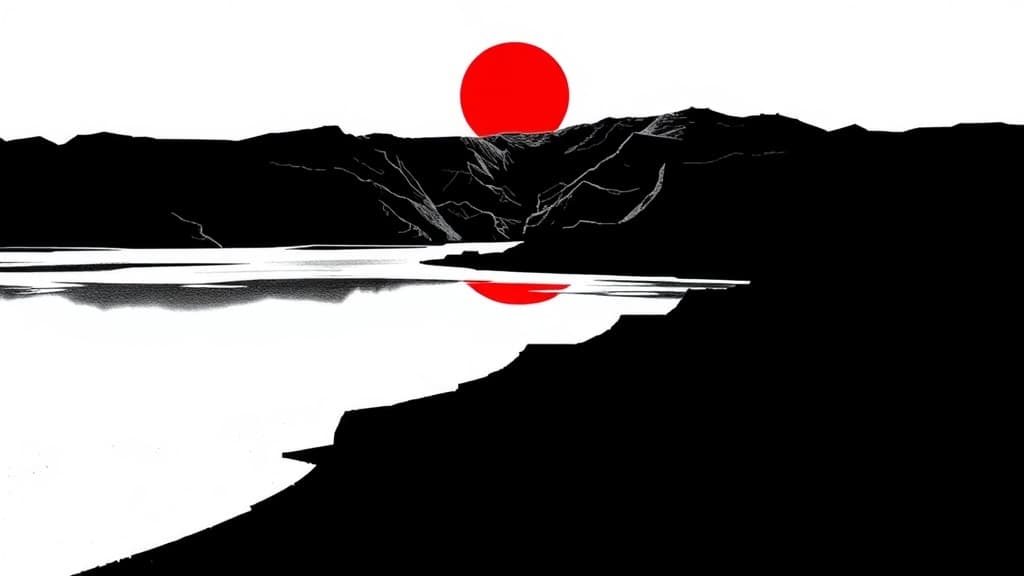
Lake Mead just dropped to its lowest level since the reservoir was filled in the 1930s, and the people who depend on it — tens of millions of Americans across the West — are about to pay the price for decades of government mismanagement dressed up as an act of God.
The nation's largest reservoir hit 1,040.50 feet on Thursday, edging below the previous record of 1,040.58 feet set in July 2022, according to U.S. Bureau of Reclamation data. Lake Powell, the other critical reservoir on the Colorado River, sits at 3,521.43 feet — nearing its own record low and the threshold needed to keep producing hydropower. The system supplies water and power to 40 million people across seven states.
ABC News framed the crisis as a story of drought and warm winter temperatures preventing snowpack accumulation — nature's fault, in other words. Newser at least included the policy dimension, quoting Kathryn Sorensen of Arizona State University's Kyl Center for Water Policy: "Lake Mead and Lake Powell are essentially the region's savings account, and we've been drawing it down for years because the river has been overallocated while enduring 25 years of persistent drought."
There it is — "overallocated." That's not a drought. That's a government that promised more water than the river could deliver, year after year, decade after decade, while the savings account drained dry. The Colorado River has been overcommitted since the original compact in 1922 allocated water based on abnormally wet years. The Bureau of Reclamation has managed the system ever since, watching the math not work out, and kicking the can.
Now the reckoning. Federal officials have outlined a 10-year plan that could cut water deliveries to lower-basin states — California, Nevada, and Arizona — by up to 3 million acre-feet per year, with specific reductions through 2028 expected soon. Upper-basin states — Utah, Wyoming, New Mexico, and Colorado — face no mandatory cuts under the current plan. Someone decided who takes the hit, and someone else didn't have to.
Meanwhile, Congress sends billions overseas to foreign conflicts and pet projects while the reservoirs that keep the lights on and the faucets running in the American West run dry. The Bureau of Reclamation, the same agency that oversaw this decline, now proposes to manage the fix. The same class of permanent Washington decision-makers who overallocated the river, who failed to build new storage capacity in decades, who watched the savings account empty — they want you to trust them with the recovery plan.
Both outlets buried the real story: this is an infrastructure and allocation failure, not just a weather event. Droughts happen. Reservoirs exist precisely to buffer them. When the reservoirs hit record lows anyway, the question isn't why the weather was bad — it's why the people in charge weren't ready.
The open question: will anyone in Washington treat American water security with the same urgency they bring to spending American money abroad, or will the next record low just be another headline they blame on the sun?