A Washington state man was arrested Tuesday for conspiring with the shooter who carried out Canada's deadliest school attack in decades — another instance of cross-border crime enabled by a boundary this government cannot or will not secure.
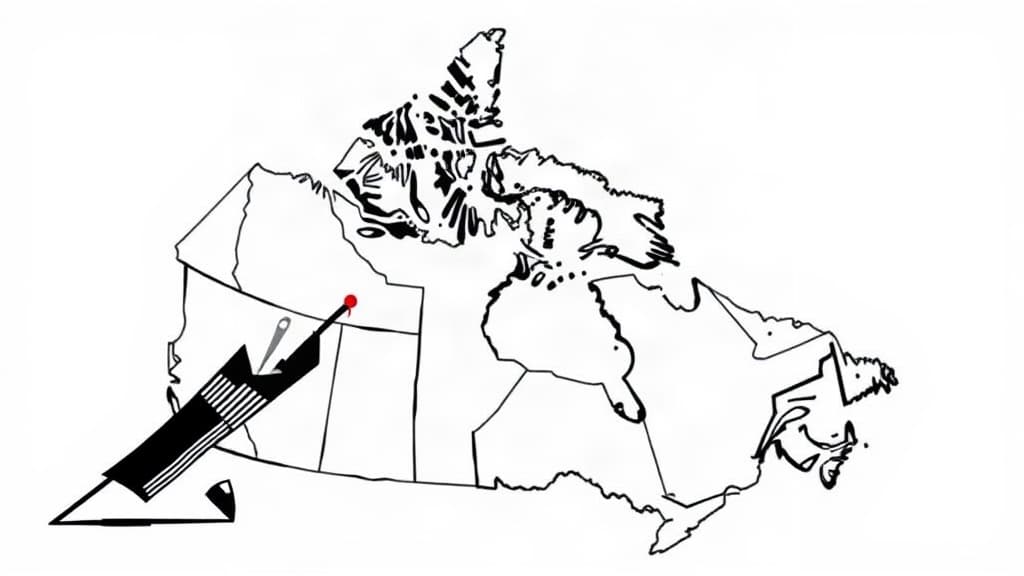
James Cody Bryant, 30, was taken into custody in Bellingham, Washington, on a charge of conspiracy to murder persons in a foreign country, according to the U.S. Justice Department. The charge carries a penalty of up to life in prison. Bryant allegedly spent months advising, funding, and planning livestream logistics for Jesse Van Rootselaar, the 18-year-old who killed eight people at a secondary school in Tumbler Ridge, British Columbia, in February before dying by suicide.
Both Bryant and Van Rootselaar are biological males who identify as women — a fact both outlets acknowledged but framed carefully. CNN noted that officials "used male and female pronouns interchangeably" throughout the press conference. U.S. News was more direct, stating Van Rootselaar "was born a male but began identifying as a woman."
The details of the conspiracy are chilling. Bryant met Van Rootselaar on the video-chat platform Omegle three years before the attack, authorities said. According to Acting U.S. Attorney Neil Floyd, Bryant was "in repeated contact" with the shooter, sending a little over $100 for a lighter and a pair of shoes the attacker wanted during the killing spree. Bryant even gave mechanical advice when Van Rootselaar's car failed to start en route to the school after she had already murdered her mother and stepbrother at home, according to Floyd.
FBI Seattle Special Agent Mike Harrington said Bryant had the information and ability to alert law enforcement, even discussing that possibility with the shooter, but chose not to. "Without Bryant's misplaced loyalty and willingness to operate the live stream, we don't ultimately know if the shooter would have gone through with the crime," Harrington said. The Twitch livestream was shut down after about 20 seconds.
CNN reported that seven families of victims sued OpenAI in April after it emerged that Van Rootselaar had used ChatGPT to plan the attack. OpenAI CEO Sam Altman apologized for not alerting law enforcement after the shooter's account was banned. U.S. News did not mention the lawsuit.
The same porous border that funnels fentanyl into American communities also enables this kind of cross-border conspiracy — online radicalization, digital coordination, and money moving freely between two countries that pretend their boundary is under control. Canadian authorities contacted the U.S. Department of Homeland Security only after the fact, based on information from an online platform. The question neither outlet pressed: why does it take a massacre for these systems to talk to each other, and how many more conspiracies are festering in the same digital spaces right now?