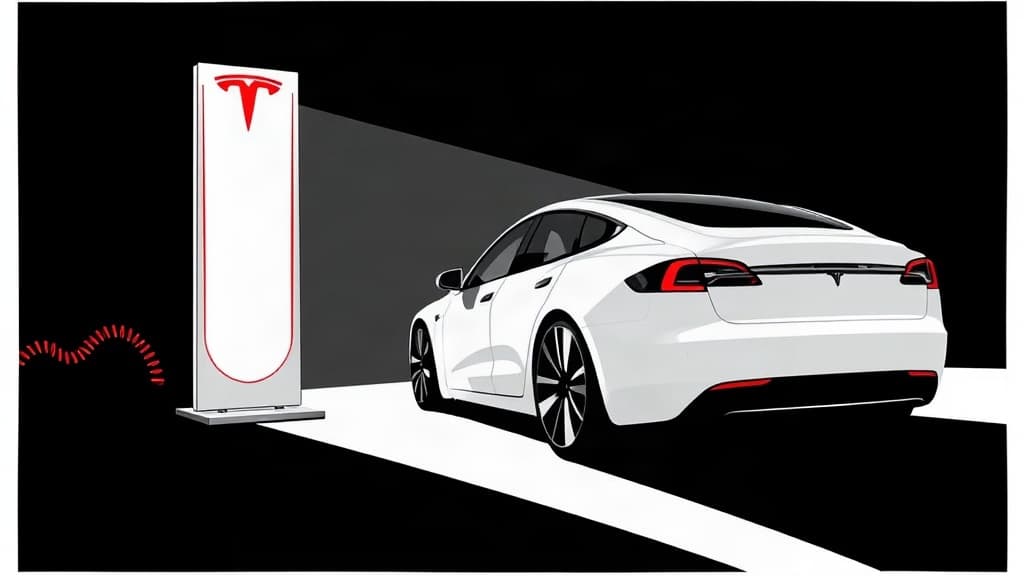
Tesla is expanding its Powershare Home Backup feature to Model 3 and Model Y vehicles, letting owners use their car batteries to power their houses during outages — turning every driveway with the right setup into a personal power plant while the national grid keeps sputtering.
The feature, previously exclusive to the Cybertruck, now gives millions more Americans a hedge against blackouts without waiting on a federal program or a utility company to get its act together. Tesla says Premium and Performance models can stretch home backup power to over two days; the Cybertruck's larger battery pushes that to over three, according to The Verge.
There's a catch, and it's a hardware gate. Tesla is only guaranteeing Powershare works on Model 3 and Model Y vehicles ordered from October 1st onward, since not all older models include the PCS2 Lite inverter the system requires. You also need a Tesla Powerwall 3 — support for the older Powerwall 2 and Powerwall Plus is listed as "coming soon." So far the feature is available only in the US and Puerto Rico. No Canada, no Model S, no Model X. And Tesla's Powershare Grid Support — which lets owners feed power back to the grid — remains a Cybertruck exclusive.
Tesla isn't first to bidirectional charging. The Verge notes that Kia, GM, and Nissan's Leaf have all offered vehicle-to-home or vehicle-to-grid capabilities, with the Leaf doing power-to-grid years ago. But Tesla's installed base and integrated Powerwall ecosystem give it scale that matters when the lights go out.
The timing is sharp. Grid reliability has become a live concern for ordinary Americans — from Texas freeze-outs to California's rolling blackouts to utility bills climbing year after year while regulators chase climate mandates. Every new EPA rule, every blocked pipeline permit, every subsidized wind farm that can't dispatch on demand — it all ends up on someone's monthly bill. Meanwhile, private companies are building solutions that don't require a grant application or a vote in Congress.
Protos, the other outlet in this synthesis window, had nothing on the Tesla story — it was covering Circle's decision to make DJ Khaled a brand ambassador for its USDC stablecoin despite his 2018 SEC settlement for undisclosed crypto shilling. Different beat entirely. The energy story here is all The Verge's.
The open question: as bidirectional charging scales, who sets the rules — homeowners who paid for their own batteries, or regulators who want to govern how that stored energy gets used? Powershare Grid Support is Cybertruck-only for now. When Tesla opens it up, expect the utilities and their regulators to have opinions about your car feeding power back to their grid — and who gets paid for it.