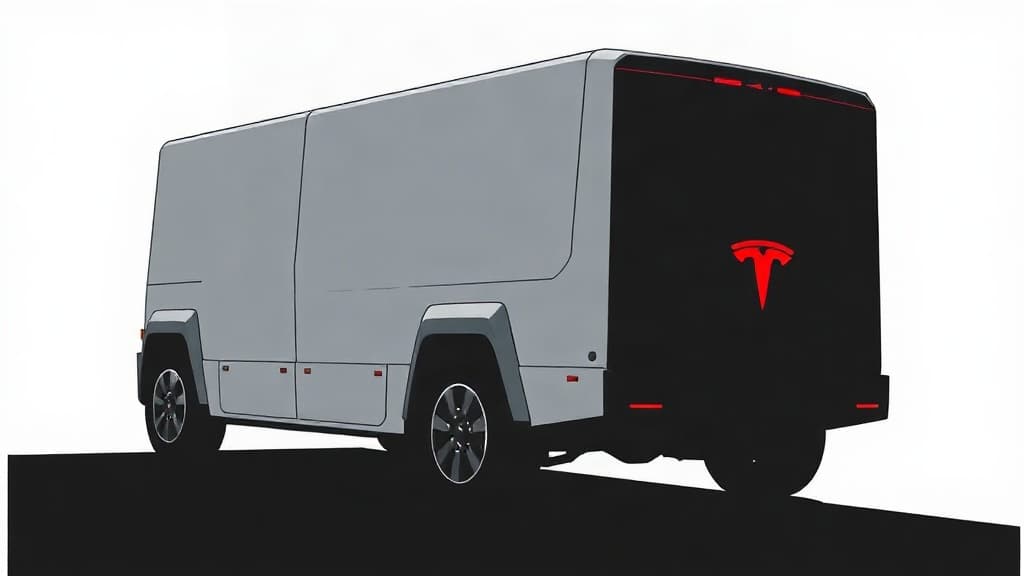
Tesla just opened Cybercab preorders at $29,990—but you can only drive it in Texas, you'll pay $299 a month for the privilege, and the tech press is blaming Elon Musk instead of the regulators who boxed him in.
The real story here isn't that the ownership terms need work. Musk himself admitted the monthly fee is "too high," telling followers it "should match the cost of Tesla [Full Self-Driving] and connectivity for other models, which is more like ~$115/month." When was the last time a Fortune 500 CEO publicly trashed his own product's pricing? That's not a scandal. That's a man telling the truth.
Gizmodo framed the whole thing as proof the "terms don't add up," leaning on YouTuber Marques Brownlee's claim that his bet against a sub-$30,000 delivery is safe. TechCrunch buried Musk's admission about the fee and gave more oxygen to the geofencing restrictions. Neither outlet bothered to ask the obvious question: why is this car chained to a handful of Texas cities in the first place?
The answer is regulation. Musk stated plainly that the Cybercab "will be available nationwide, as we receive regulatory approval." Tesla's Ashok Elluswamy confirmed the vehicle works "unsupervised inside all the same geo locations as @robotaxi, just serving the owners' needs." The tech works. The government won't let you use it.
Consider what's actually being sold. A $29,990 autonomous vehicle is a staggering price point that would have seemed like science fiction five years ago. The Wall Street Journal, as Gizmodo noted, pointed out that owners can't yet deploy their Cybercabs as robotaxis to earn income—it's personal use only. That's a real limitation. But who imposed it? Tesla built a robotaxi. The state won't let you operate it as one.
The press wants you to laugh at the invite-only preorder, the geofence, the monthly fee. Fair enough—the terms are restrictive, and nobody should pretend otherwise. But the mockery is directed at the wrong target. Every restriction Gizmodo and TechCrunch catalogued traces back to the same source: a regulatory apparatus that treats autonomous vehicles as a threat to be managed rather than a technology to be liberated. Musk's transparency about what's broken is a feature, not a bug. The bug is a government that thinks you need permission to drive your own car.
The question isn't whether Tesla's Cybercab rollout is messy. It's whether Americans will ever be allowed to own the future they're paying for—or whether regulators will ensure that only they get to decide when, where, and how it moves.