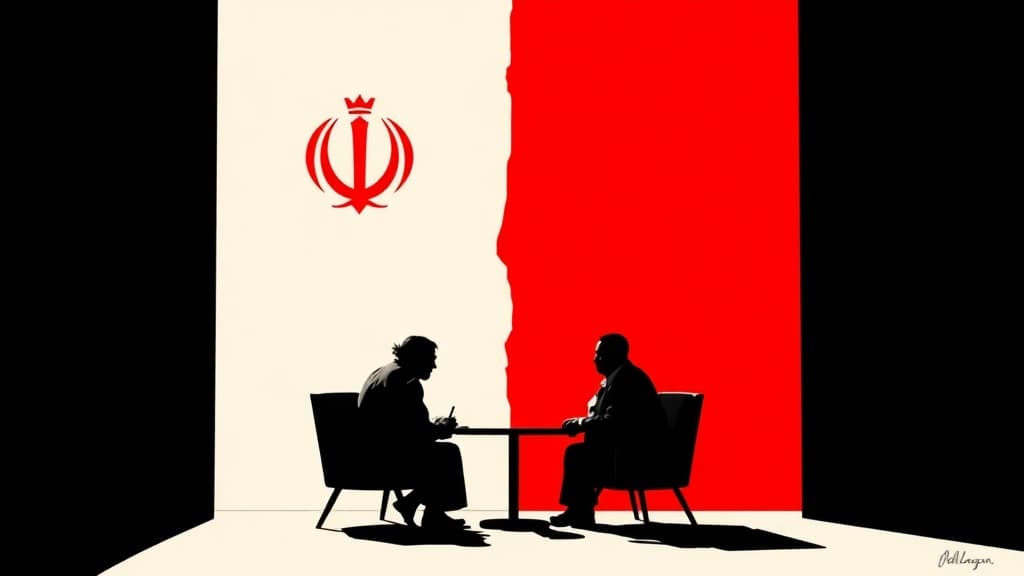
The $6 billion promised to Iran remains frozen—for now—but the Doha talks this week prove the permanent Washington class won't stop until American cash flows to a hostile regime that violated its own deal within 48 hours.
While Americans pay inflated energy prices from the Strait of Hormuz crisis, U.S. Special Envoy Steve Witkoff and Jared Kushner are in Qatar meeting with mediators—not even directly with Iranian officials—over a memorandum of understanding that Tehran has already broken. Qatar's Foreign Ministry spokesman Majed Al Ansari confirmed Tuesday that no funds have been transferred. That's the good news. The bad news is the framework to hand them over still exists.
The MOU, brokered by Pakistan and Qatar less than two weeks ago, committed both countries to halt military operations on all fronts and immediately reopen the Strait of Hormuz, through which roughly 20% of global oil and gas shipments pass, according to the BBC. Both sides gave themselves at least 60 days to reach a final deal covering Iran's nuclear program, U.S. sanctions, and a permanent truce.
Iran got the memo—and then immediately violated it. Within days of signing, Iran was directing ships when to leave, where to go, and demanding insurance payments, according to retired Gen. Jack Keane. When a cargo ship didn't comply, Iran attacked it on Thursday, triggering a four-day exchange of strikes. The BBC reported that Iran had warned vessels the only safe route was through Iranian waters—a naked attempt to control the waterway.
Now Oman is floating a proposal to charge ships for transiting Hormuz, a move that would end decades of free passage through one of the world's most critical energy chokepoints. Fox News reported that despite American objections, Iran and Oman are moving ahead with the idea. President Trump has vowed that only the U.S. would control security and any tolls imposed for defense.
The $6 billion question—literally—is who benefits from unfreezing Iranian assets. The New York Post reported that while Iran wants its money in a lump sum, the U.S. plan is to make incremental payouts directly to vendors as Iran makes progress on nuclear concessions and opening the strait. Iran is sending a delegation to Doha to hammer out access to the funds. That the regime is already shaking down commercial shipping while negotiating for cash tells you everything about their good faith.
Qatar's spokesman made clear there are no direct meetings scheduled between the two parties in the coming days. Technical talks between lower-ranking officials will continue, with tracks on nuclear issues, economic performance, and regional security. So we have American envoys in the Gulf, talking to mediators, about a deal the other side already broke, with $6 billion of American-leveraged money on the table.
Keane argued on Fox Business that Trump should have continued military operations to push Iran toward "military, economic, and political collapse." That's the maximalist position. The America-first position is simpler: no blank checks, no lump sums, and no deals that hand leverage—and cash—to a regime that can't honor an agreement for a full week.
The money hasn't moved yet. But the fact that $6 billion is even on the table for a nation that attacked a cargo ship days after signing a ceasefire is the real scandal.