China is now the power broker in the Strait of Hormuz, privately telling Iran to rein in its Houthi proxies and reopen the critical waterway — while American taxpayers fund the naval patrols and missile defenses keeping those shipping lanes open for Beijing's oil supply.
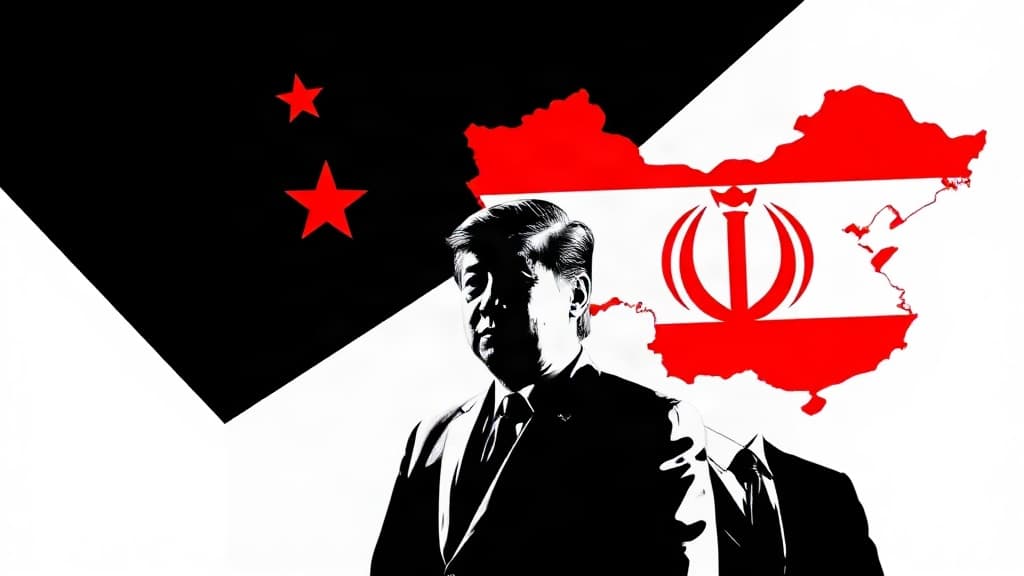
According to Breitbart, three Iranian sources told Reuters that Saudi Arabia asked China for help pushing back against the Houthis, and Beijing delivered the message to Tehran. Chinese Foreign Minister Wang Yi publicly urged Iranian Foreign Minister Abbas Araghchi to reopen the strait and return to compliance with the U.S.-Iran MOU brokered by Pakistan in June. But the Iranian sources said China "did not issue any explicit threats or indicate that Beijing would seek to pressure Tehran economically if it failed to use its influence over the Houthis." Iran, in turn, blamed the U.S. and Israel for all hostilities in the region.
So China — which brokered the 2023 Saudi-Iran reconciliation to compete with American diplomacy — now has the leverage to make requests of Tehran. And it's making those requests not to protect American interests, but to protect its own: China is Iran's largest trading partner and, according to Breitbart, "suffered more than any other single oil customer from Iran's terror attacks on the Strait of Hormuz."
Meanwhile, the United States is doing the fighting and the paying. The New York Post reported that the U.S. military has been secretly escorting commercial oil tankers through the strait with their transponders turned off — so-called "dark" missions — to evade Iranian attacks. Traffic through the chokepoint has collapsed from roughly 130 crossings per day to just 19 in a recent 24-hour period. The International Maritime Organization has documented at least 80 Iranian attacks on merchant ships this year, killing at least 22 crew members.
Israel's UN envoy Danny Danon told the Post he's "disappointed" that European nations won't step up. "In the past, we had a similar issue, this thing in Somalia, the international community coming together, putting on a show of force and fighting piracy," Danon said. "Today, basically, they are waiting for the US." A coalition of 40 countries, including the UK and France, convened in April to discuss reopening the strait but hasn't participated in escort operations.
So here is the arrangement the bipartisan foreign-policy class has built: China, which wants to be seen as a global power rivaling the United States, gets to play diplomat and make quiet requests of its client state. Europe free-rides as it always does. And the American Navy does the dangerous work of sneaking oil tankers through a war zone — subsidizing the supply chain security of every nation that benefits from those open lanes, including the one nation working hardest to supplant American influence.
Roughly 20 percent of the world's seaborne oil passes through Hormuz. The question no one in Washington is asking: what exactly is the U.S. interest in bankrolling Beijing's energy security, and when does the bill come due?