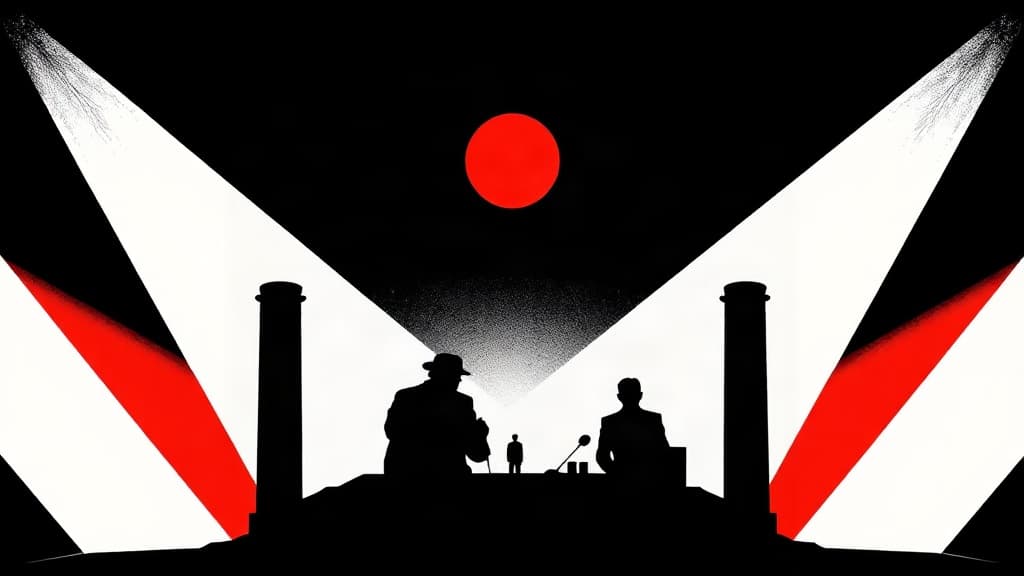
Vice President JD Vance sat across from top Iranian officials at a Swiss resort Sunday to flesh out an interim deal with a regime that funds attacks on American troops, holds U.S. citizens hostage, and just days ago shut down the world's most critical oil waterway — and nobody in the room would say what it costs the American people.
The Lake Lucerne summit brings Vance face-to-face with Iranian parliamentary speaker Mohammad Bagher Qalibaf and foreign minister Abbas Araghchi, with mediators from Pakistan and Qatar also at the table. The two sides have 60 days to nail down technical details of an interim agreement signed last week that the White House says ends the war in Iran. What's actually in that agreement — and what Washington conceded to get it — remains unclear.
Vance opened with diplomatic flourish. "Can we turn over a new leaf?" he said. "Can we change relations in the Middle East permanently, or do we go back to doing things the old way, which is not our preference, but is certainly very much something that can happen."
Tehran's answer came before the meeting even started. Iranian president Masoud Pezeshkian said Sunday that Iran "will never back down from the right to enrich uranium, and the other side is also forced to accept it," according to Iranian state media. Foreign ministry spokesman Esmail Baghaei said Iran's priority would be Israeli strikes in Lebanon, not its nuclear program. And Iran's military again closed the Strait of Hormuz — the chokepoint for roughly a fifth of globally traded oil — just days after signing the interim deal.
So the regime that just shuttered the world's oil spigot, a move that hits American wallets at the pump, is being offered a seat at a Swiss resort to talk about turning over a new leaf.
The mixed signals run both ways. Minutes after Vance's upbeat opening, President Trump posted on social media: "If they don't, we'll hit Iran very hard again, just like we did last week, only harder!!!" Iran has already been hit by two massive U.S. military strikes during negotiations over the past year, which the LA Times noted is precisely why Tehran is approaching the talks cautiously. Baghaei said Sunday that "the implementation of any document is more important than its signing."
The Chicago Tribune reported that Vance warmly greeted Pakistan's army chief, Field Marshall Asim Munir — "What's up, man! Good to see you" — who has served as a key intermediary throughout the conflict. Pakistan's prime minister Shehbaz Sharif met separately with the Iranian delegation. What Pakistan and Qatar extract from their mediator roles, and whether that comes from American commitments, went unaddressed.
The Atlanta Journal-Constitution noted a telling detail the other outlets buried: Iranian officials "appeared to avoid being seen" during Vance's brief appearance before reporters. Tehran wants the deal but doesn't want the photo op — a signal about who thinks they're getting the better end of this.
IAEA chief Rafael Grossi met with Swiss foreign minister Ignazio Cassis on the summit's sidelines. The agency monitored the 2015 nuclear deal that Trump withdrew from in 2018. Now the same framework — American concessions for Iranian promises — appears to be reassembling under a different label.
The fighting in Lebanon between Israel and Iranian-backed Hezbollah has already stress-tested this deal once. A renewed ceasefire brokered Friday appeared to be holding, but the pattern is clear: Tehran's proxy wars and its nuclear ambitions are linked, and Iran keeps both levers in hand while Washington negotiates.
Sixty days on the clock. An interim deal nobody's seen. A regime that enriches uranium, closes straits, and attacks Americans through proxies. The question isn't whether Vance can turn over a new leaf — it's what's being written on it, and who pays the bill.