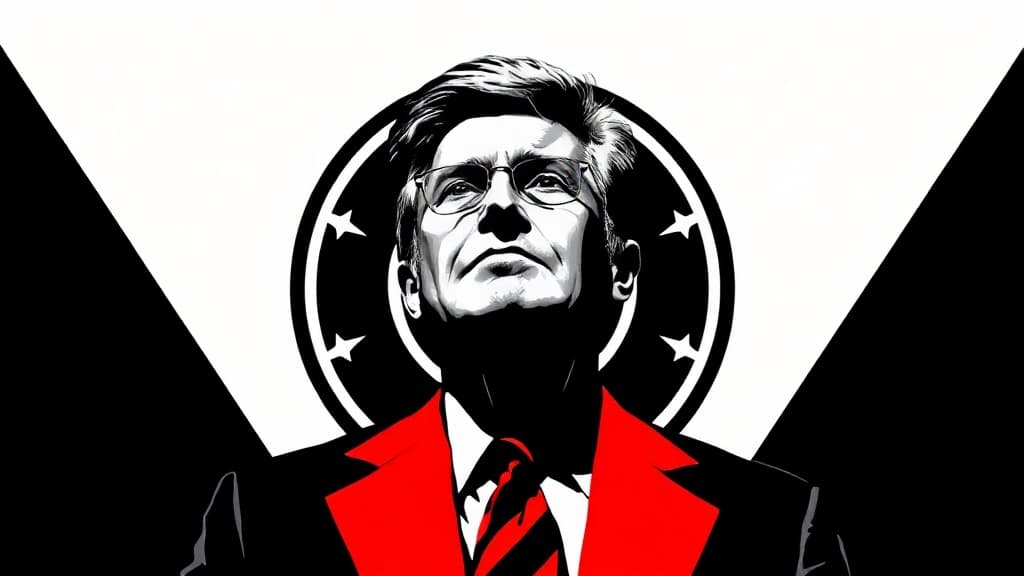
President Trump is putting an outsider with broad declassification authority in charge of the nation's intelligence apparatus, and the permanent bureaucracy is scrambling to contain the damage. Trump confirmed Wednesday that Federal Housing Finance Agency Director Bill Pulte will helm the Office of the Director of National Intelligence on a temporary basis for a "month or two" — and that Pulte can "declassify almost everything." For ordinary Americans, this means someone without ties to the intelligence establishment now holds the keys to secrets that agencies have kept buried for decades.
The move is deliberate. Trump killed a Senate plan last month to fast-track the confirmation of Jay Clayton as permanent DNI, paving the way for Pulte to operate in an acting capacity instead. Trump told The Wall Street Journal in early June that a "less shackled" Pulte would be more capable of enacting radical change throughout the office than a confirmed director bound by the usual constraints.
Pulte is a housing official, not a spy. He's best known for accusing Trump's political enemies of committing mortgage fraud. He has no prior intelligence community experience. That lack of pedigree is precisely what makes the establishment nervous — and what makes this move potentially consequential for anyone who wants to see what's been hidden behind classified walls.
Democrats have reacted furiously, and even some Republicans on Capitol Hill have signaled discomfort. The most immediate casualty: Section 702 of the Foreign Intelligence Surveillance Act, the critical spy powers program that appeared headed for smooth reauthorization in early June. Democrats are now balking on renewal as long as Pulte holds the acting role, according to POLITICO. The same surveillance authority that was weaponized against American citizens in recent years is suddenly harder to rubber-stamp.
Trump praised both men Wednesday. "Jay Clayton is going through the process," he said. "He's got a hearing in two weeks." He added: "Jay Clayton, highly respected. And so is Bill Pulte." The office of Senate Intelligence Chair Tom Cotton did not respond to a request for comment on the confirmation timeline.
The framing split is telling. POLITICO emphasized Pulte's lack of experience and the disruption to Senate business, casting the appointment as a crisis of governance. What went unspoken: the intelligence community's institutional panic over an outsider with declassification power is itself the story. When both parties and the spy apparatus agree someone is dangerous, the question worth asking is: dangerous to whom?
Clayton's confirmation process will eventually proceed. But Pulte's window — however brief — gives an unshackled outsider a chance to open files that career officials have spent years keeping shut. The open question is whether he'll use that power before the clock runs out.