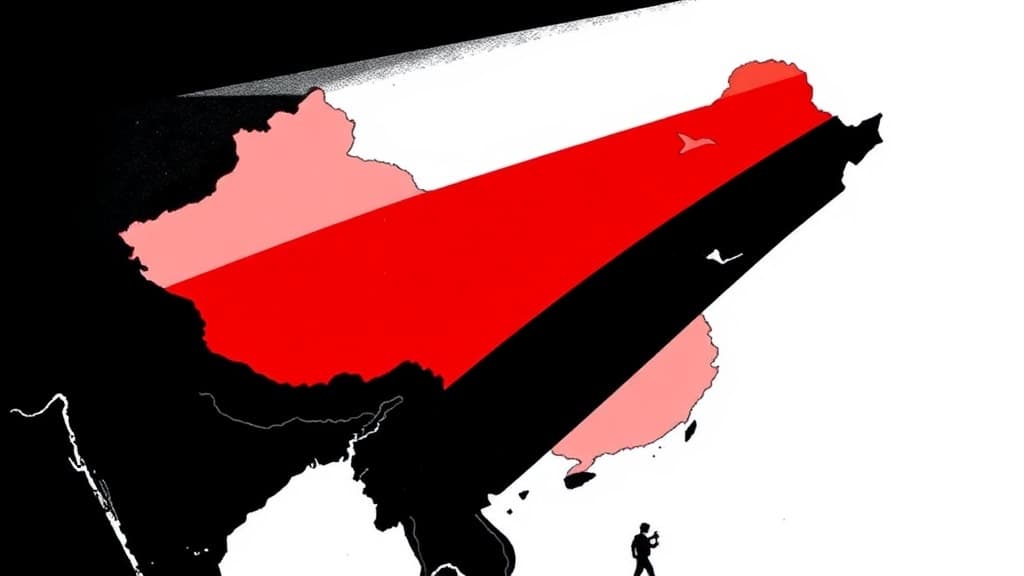
President Trump just declassified intelligence documents revealing China had access to over 220 million American voter files and that U.S. intelligence officials may have deliberately manipulated presidential briefings—and Washington's establishment is already circling the wagons.
The stakes for ordinary Americans are direct: if foreign governments can vacuum up your voter data while your own intelligence agencies hide it from the commander-in-chief, the system isn't protecting you. It's protecting itself.
Daily Signal strategist Mehek Cooke flagged two key findings from the release: "First, we are being told that there's over 220 million voter data files that the Chinese would have had. You're looking at names, addresses and so much more information." She also pointed to internal messages showing an official "deliberately massaged a presidential daily briefing" in 2020. "The fact that government officials potentially or allegedly were interfering... is massive, because it's not just outside, like China and national security threats, but it's inside our government," Cooke said.
Trump has directed the DOJ, FBI, CIA, and ODNI to investigate whether information was intentionally withheld and whether officials should face charges. Cooke said potential statutes range from false statements to conspiracy, carrying three to 20 years in prison.
But not everyone in the White House wanted full transparency. Acting DNI Bill Pulte pushed Trump to publicly name the officials who withheld information, but Chief of Staff Susie Wiles and others argued it would undermine the message and put lives at risk. A senior official told Politico that Pulte "got really scared by the whole thing and pulled back," adding he "got POTUS all spun up and then was incredibly scared when he realized people could die with his reckless behavior."
The Mechanicsburg Patriot News noted that Politico framed the documents as showing "a genuine split among intelligence analysts who debated and ultimately concluded that China opted against a large-scale influence effort during the 2020 election cycle." That's the establishment line: sure, China had the data, but trust us, they chose not to use it.
Meanwhile, another flavor of insider privilege is under scrutiny. Federal regulators are investigating White House teleprompter operator Gabriel Perez for allegedly using advance knowledge of Trump's speeches to place prediction market trades on Kalshi, netting over $100,000 before funds were frozen, per CNN and ABC News. The CFTC is reviewing trades tied to more than a dozen presidential appearances. When political speeches become financial instruments, the people closest to the podium profit—and everyone else pays the spread.
And the administration's own transparency record remains spotty. Press Secretary Karoline Leavitt went viral after dismissing the Epstein files as a "classic Washington hoax" and accusing Democrats of leaking redacted information to CNN. Critics erupted online, with multiple X users accusing her of protecting predators. Trump and Vance campaigned on releasing the Epstein client list, then stonewalled until Congress forced their hand.
The pattern holds: whether it's election interference buried by intelligence agencies, speech content monetized by insiders, or Epstein documents fought over in court, the people with access control who benefits. The question isn't just what's in these documents. It's who's been keeping them from you—and what they'll do to keep it that way.